More than 100,000 Americans will receive radiation treatment to the brain each year, according to Scientific Reports. Check out these nine tips from patients and caregivers to help you feel more prepared and less anxious about getting through your brain tumor radiation therapy sessions.
The content in this blog post is for informational and educational purposes only. It does not constitute medical advice. Please speak with your health care team to discuss your particular circumstances before making any decisions.
1. Focus on One Day at a Time
It’s normal to feel anxious and overwhelmed when facing the uncertainties of treatment and diagnosis. When worries about the future start to take over, try to bring your attention back to today.
In her book Let’s Talk Radiation Therapy, radiation therapist Margeaux Gregory writes, “When anxiety erupts like this, it can be challenging to find a way to quiet your mind so your body can relax. One method I’ve seen help people push past this anxiety in the treatment room is a shift in focus. Instead of trying to get answers for all the questions in your head, focus on one thing: getting through treatment today.”
Breaking your treatment into manageable, day-by-day steps can help make the process feel less daunting.
“Focus on winning the day mentally, physically, and emotionally, rather than looking at the number of sessions in your future,” suggested Tommy M., who was diagnosed with astrocytoma. “I found it far easier to just get through the day I was on rather than thinking of the 40 sessions ahead.”
Sean S., diagnosed with ependymoma at 19 and later facing recurrence at 25, echoed this mindset. He shared, “I stuck to a daily routine of rest, exercise, and golf training — my passion. Leaning on a passion during challenging times is what helped me so much with my mental and physical state.”
Tommy celebrated each week with small joys like a weekend meal with loved ones, while Sean leaned on golf and journaling. Both found strength by focusing on daily wins instead of the long road ahead.
“I made a countdown calendar of how many days I had left,” said Katrina S., who has astrocytoma. “I would cross off each day after treatment. It helped remind me there was an end to treatment, and it felt amazing crossing out the last day!”
2. Lean on Your Support System
Radiation therapy can be physically and emotionally demanding. In addition to getting transportation to and from your sessions, having others check in, prepare meals, or assist with daily tasks can give you more space to rest and focus on your healing.
“Know and believe you’re strong enough to get through it, and lean on your support system when you need to,” Tommy said. “If you’re lacking a support system, reach out to NBTS and utilize their network.”
Even small gestures — like a friend driving you to treatment or a family member bringing a comforting snack — can make a difference. Remember, leaning on others is a sign of strength, not weakness.
3. Listen to Music or an Audiobook
Music and audiobooks can be helpful tools to help you relax and stay distracted during radiation therapy. Most radiation treatment rooms have the opportunity to play music through the radio or even a streaming service, so ask your treatment team if they can change it to your preference.
“The technicians would allow me to select music to play while I underwent treatment,” said Barbara T., who received treatment for CNS lymphoma. “I am a Beyoncé fan, so they would cue it up and let it play. I would close my eyes and listen to the music until it was over.”
Whether it’s music or an audiobook, finding something that draws your attention away from the procedure can make your experience more manageable and comforting.
“There were days that I chose relaxing spa music, and other days I chose gangster rap,” shared Sara P., who has meningioma. “Whatever I was feeling, [I chose the music] to keep me comfortable.”
4. Calm Your Mind
Radiation sessions typically last 15 to 30 minutes, which can feel long when you’re feeling anxious. Finding ways to calm your mind can make each session more manageable.
For some people, focusing on breathing exercises helps pass the time.
“I practiced slow and steady breathing through the nose, envisioning my lungs filling with air and releasing to keep me calm,” Sara said. “I told myself that each calm breath brought me closer to the end of the treatment. My father passed away from a brain tumor, so I also pictured him with me, keeping me protected and calm.”
One patient found comfort in counting the clicks of the machine.
“My son said being fixed to the table helped him realize he would need a way to address his desire to know how much longer he had without being able to move,” shared Jaime S., whose son has glioblastoma. “He realized he could count the clicks of the machine on the first session to get the total and then would count every session to know how far along he was.”
Others use visualization or meditation to focus on positive imagery or empowering thoughts.
In the book Let’s Talk Radiation Therapy, radiation therapist Margeaux Gregory writes, “Some people find it helpful to check out mentally while in the room. To do this, think about any place that brings you joy. Imagine it vividly with smells, sights, and sounds, then envision yourself there and mentally leave the treatment room.”
Using these strategies — breathing, counting, or visualization — can help you feel more in control, reduce anxiety, and make each session more bearable.
5. Bring an Item with You
Bringing a small, comforting item to your radiation session can help you feel calmer and more grounded.
Margeaux wrote in her book Let’s Talk Radiation Therapy, “Some people bring in a small blanket, pillow, or stuffed animal that gives them peace and reminds them of their loved ones. Having a physical item that represents what motivates you to get through these treatments can be very powerful for conquering fears and pushing through to complete your treatments.”
Marie S., who has meningioma, used a small squeeze ball during her radiation sessions to help with claustrophobia, while Sara used warm blankets to stay comfortable in the cold room.
6. Talk to Your Team About Medication
For some people, anxiety or claustrophobia can make sessions especially challenging. It’s important to know that you don’t have to manage these feelings alone. Talk to your health care team to see if there is a medication or technique that could help.
“Don’t be afraid to ask your physician for medication to help you through this rough time,” said Amy H., who received radiation for ependymoma. “If it wasn’t for the medication to help me relax while receiving treatment, I don’t know if I could have gotten through it.”
And just because you need the medication upfront, it doesn’t mean you’ll need it the whole time.
“Ask a doctor if you feel like you can’t handle it,” said Stacy P., a nurse practitioner and grade 3 astrocytoma survivor. “There’s medication that you can take. By week two of radiation, I didn’t need the medicine anymore, once the fear of radiation faded.”
7. Make Friends with the Staff and Fellow Patients
Traditional and proton radiation therapy typically means daily visits over several weeks, and the people you see each day — both staff and fellow patients — can become an important source of comfort and encouragement. Building these connections can make the experience feel less isolating.
“Become friends with the people in the waiting room,” suggested Lisa G., who underwent radiation for infiltrative astrocytoma glioma. “Become friends with the office staff. Whenever you hear the bell ring in that hallway, you clap and cheer like you’ve known them your whole life.”
Tori K., who has glioblastoma, formed friendships with her radiation technicians.
“They are with you every day, and mine became true friends,” Tori said.
8. Signal to Your Technician
It’s normal to feel nervous about staying completely still during radiation. If there’s a reason you need to move, like feeling a sneeze coming on, signal to your radiation technician so they can pause the machine. They want to work with you to make sure you stay still so the radiation is delivered to the precise location.
“Not being able to lick my lips was horrible when I suddenly needed to,” said Chris R., who was diagnosed with glioblastoma. “I would make a signal, and they would pause the treatment on the spot. It’s reassuring to know you can.”
9. Itch Your Nose Right Before
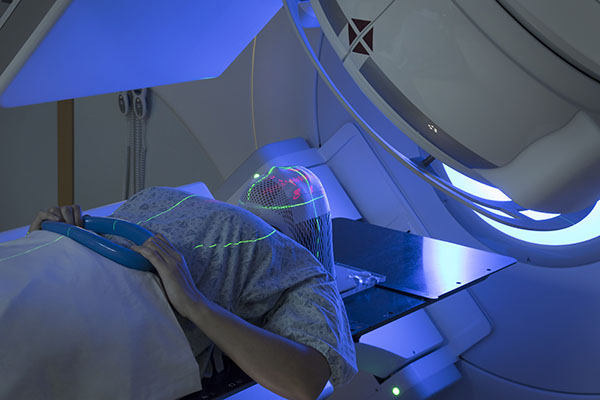
It might sound funny, but it’s true — the moment you’re fitted into the radiation mask, you’ll notice an itch.
Michael B., who went through radiation treatment for oligodendroglioma, shared, “Make sure you itch your nose before they put on the mask. If you don’t, guaranteed it will itch once the techs leave the room.”
A quick scratch before the session starts can save you some unnecessary discomfort.
Final Thoughts
Radiation therapy may feel overwhelming, but you’re not alone. These tips from patients and caregivers show that small strategies can make a difference. Lean on your support system, communicate with your care team, and remember every session is a step forward in your care.
In part four of our radiation therapy series, patients will share how they managed side effects from their radiation treatment.