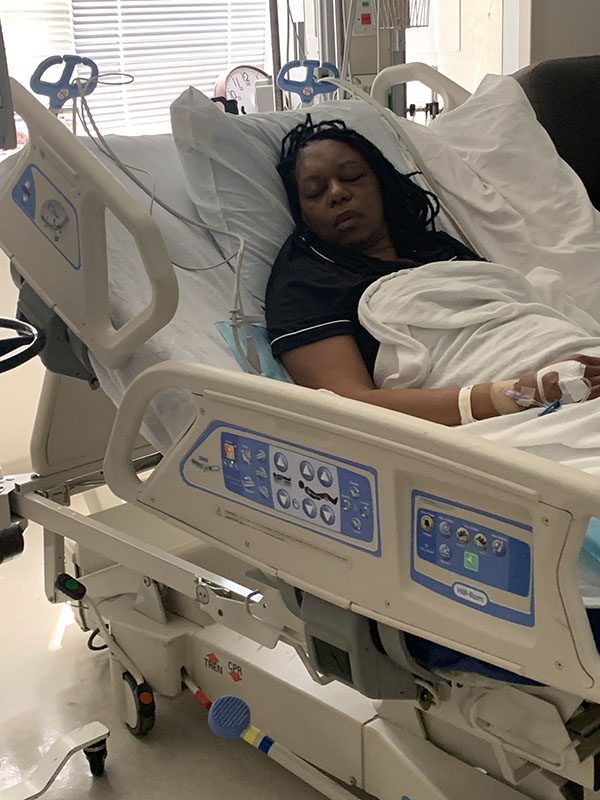
In 2022, I underwent my first brain surgery after being diagnosed with three hemangiomas, one dangerously close to my optic nerve, and two others we’re still monitoring. Later that year, or maybe early 2023, I started searching online, thinking, “There has to be some kind of support group out there.” That’s when I found the National Brain Tumor Society (NBTS).
Living with a brain tumor comes with so many unknowns. Even though my case wasn’t considered the most severe, I still needed support people who understood what I was going through and could help me make sense of it all. You hit rough patches, and in those moments, having someone who gets it really matters. Someone to walk beside you. Someone to hold your hand.
Joining NBTS’s Brain Tumor Support Conversations has been a true lifeline. It’s a space where I don’t have to explain what a “bad headache day” feels like. The people there just know. They’ve been there too. They understand the pain, the fear, the uncertainty, and that shared understanding is everything.
This community reminds me of the story of Moses. When his arms grew tired, Joshua came to hold them up. That’s exactly what these support conversations feel like — people lifting you up when you no longer have the strength to do it yourself.
If you’ve never joined one of these calls, imagine this: walking into a room full of people who truly understand what you’re going through. You sink into a soft, comfortable chair, and you just feel the love and compassion radiate even through Zoom. That’s what NBTS gives me. That sense of connection and care, even from miles away.
NBTS has also helped me in very practical ways. When I was first diagnosed, I didn’t know how to talk to my employer about it. I was scared. What would they think? Would I lose my job if I needed time off? The NBTS team walked me through how to have that conversation, and that guidance gave me the confidence I needed.
At the time, I was a nurse working with chemotherapy patients. While my employer initially seemed supportive, over time, things changed. They began scrutinizing everything, and eventually, I had to leave.
At my new job, I was honest from day one. I told them about my diagnosis and what I might need. Their response? “If you ever need time off, just tell us. It’s not a big deal.” The difference in support and understanding was night and day.
If someone asked me why they should support NBTS, I’d tell them this: research is essential. Without it, we don’t move forward. We don’t find better treatments. We don’t give people like me a real shot at a longer, healthier life.
The biggest gift NBTS has given me? The reassurance that I’m not alone. That even when I’m too tired to keep going on my own, there’s a community ready to lift me up.