This website uses cookies that help the website function and that help us understand how you interact with it. Please read our privacy policy for more information.
When a brain tumor diagnosis hits close to home, the first instinct is often to ask, “How can I help?” For the more than 1.3 million Americans living with a brain tumor, the answer is simple but urgent: they need more — more time and more treatment options.
While other cancers have seen major breakthroughs, survival rates for adult and pediatric patients with brain tumors have remained largely stagnant for 45 years. When so much feels out of control, fundraising to accelerate research offers a way to take power back.
At the National Brain Tumor Society (NBTS), we provide the platform for you to turn your desire for action into a real-world impact. Whether you’re joining a nationwide event or launching a personalized digital donation page, your fundraising today provides the critical spark needed to ignite the breakthroughs of tomorrow.
Why should I fundraise for brain cancer research in 2026?
1. Quicken the research timeline
While we’ve seen an increase in government funding for brain tumor research over the past 20 years, thanks in part to NBTS’s relentless advocacy, it’s not enough. Philanthropic brain tumor research funding plays an important role in fostering collaboration and expediency.
NBTS’s DNA Damage Response Consortium brings together best-in-class researchers, including Ranjit Bindra, MD, PhD, at Yale School of Medicine, to expedite the process of translating research discoveries into the clinical setting. NBTS funding drives the consortium’s work to cultivate a budding area of drug development targeting the DNA damage response networks in brain tumors.
“All funding is essential for our activities,” Dr. Bindra said. “Traditional grants given by the government are certainly important for our work, but to be able to take risks and ask questions and to move quickly requires support. Every dollar matters.”
2. Advance research to a clinical trial
Your fundraising can help bridge the gap between a promising idea in the lab and a life-changing clinical trial. For example, NBTS played multiple roles in advancing a drug called Voranigo (vorasidenib), including funding Memorial Sloan Kettering Cancer Center-supported laboratory work that helped propel this research from a phase II to a phase III trial.
“Voranigo is available because of years of groundbreaking research,” said Nick A., who started on the drug after a recurrence and fundraises for NBTS. “Being able to take a drug every night instead of surgery, chemo, or radiation has been really phenomenal. I’m committed to fundraising as well as spreading awareness about brain tumors and the need for ongoing research so drugs like Voranigo can exist.”
3. Fuel breakthroughs for brain metastases
Additionally, your fundraising efforts can extend beyond the primary brain tumor community. Advances in brain cancer treatment may also lead to more options for other cancers that metastasize to the brain. According to MD Anderson, more than 200,000 Americans will be diagnosed with brain metastases this year. Breast cancer, lung cancer, and melanoma are the cancers most likely to spread to the brain, and the brain tumor research you fund today could provide the answers those patients need in the future.
How can I start an online brain tumor fundraiser?
A personalized online donation page is a simple, high-impact way to share your story and invite your network to advance brain tumor research, advocacy, and community support.
Starting an online fundraiser for the National Brain Tumor Society is a quick, streamlined process that lets you focus on your story while we handle the technology. Whether you are commemorating a milestone (birthday, b’nai mitzvah, wedding, anniversary) or honoring someone impacted by a brain tumor, you can launch a donation page in a few quick clicks.
Personalize your fundraising page with your story and photo.
Share your page with friends and family via email and social media.
Watch your impact grow as your community joins you in fueling brain tumor research for the breakthroughs of tomorrow.
Is there a brain cancer walk or race near me?
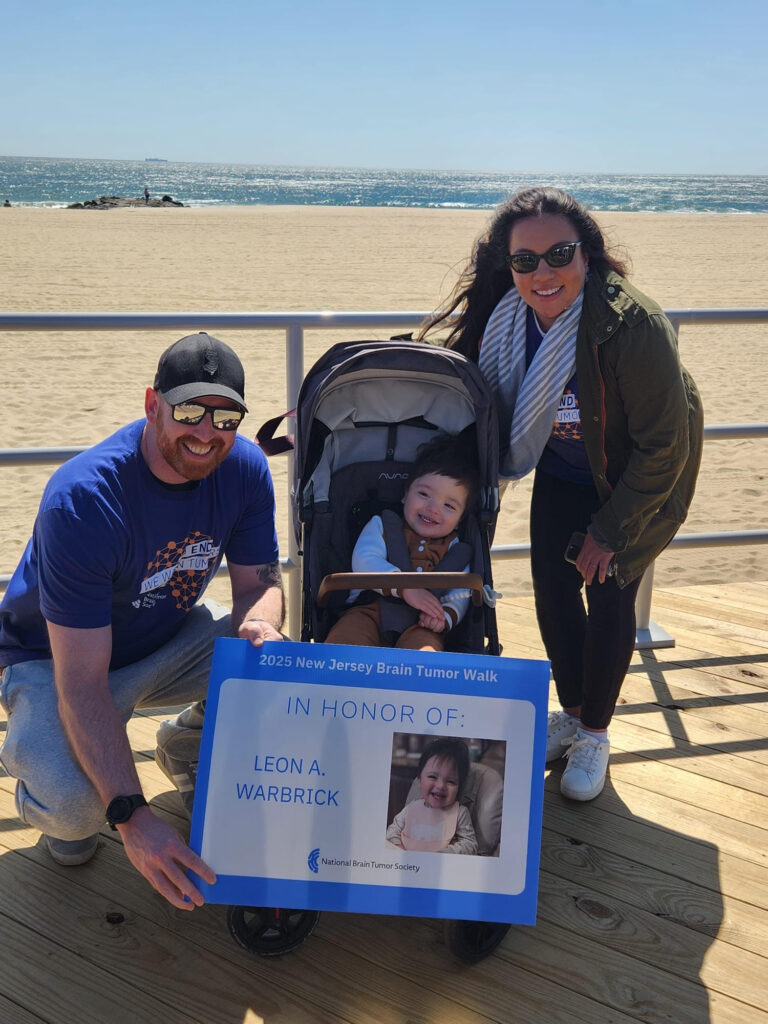
David, Leon, and Gabrielle
Join NBTS at one of our nationwide events to raise awareness and funds for brain tumor research, support services, and advocacy. Each event features a family-friendly gathering of celebration, remembrance, and hope. No matter where you are, your community is here — let’s walk, race, and ride to end brain tumors.
“We want to fundraise for NBTS [through the New Jersey Brain Tumor Walk] so other people can be as fortunate as we were to have a new medication on the market to treat Leon’s tumor,” said Gabrielle W., whose son Leon was diagnosed with a brain tumor. “We want to fund more top-tier research that can lead to newer studies in younger patients and newer medications. I like that NBTS has a specific targeted approach to brain tumors.”
In addition to NBTS-hosted events, we partner with local organizers across the country who host fundraisers in their communities to drive brain tumor discoveries forward.
I’m looking to take on a physical challenge like a marathon. What are my brain tumor fundraising options?
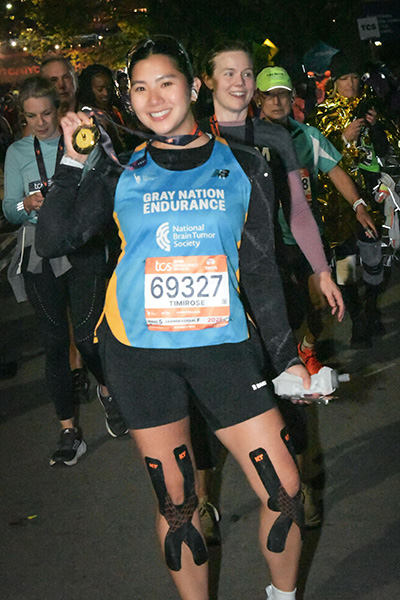
Timirose
Individuals can put meaning behind their miles through Gray Nation Endurance® (GNE), the official endurance program of NBTS.
You can apply for one of our GNE charity teams, such as the TCS New York City Marathon or one of the Walt Disney World® races, or select a race or endurance activity of your choosing. As a GNE athlete, you’ll take on a challenge that lets you be part of something bigger than yourself and helps fund critical research and support for those impacted by brain tumors.
“Being part of Gray Nation Endurance gave every mile a deeper purpose,” said Timirose B., who ran the 2025 TCS New York City Marathon with GNE. “It meant the world to have the opportunity to honor my brother Archie and carry his memory with me. Training and fundraising for NBTS allowed me to transform grief into action, to turn love and loss into something that could help others facing what our family went through. On marathon day, I felt Archie with me in the crowds, in the city’s energy, and in the moments I needed strength most. It was one of the most healing experiences of my life.”
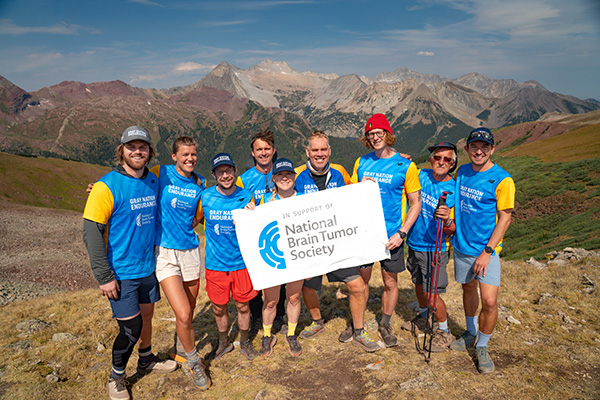
Hikers for Hope
Whether you run, ride, swim, hike, or paddle for NBTS, you can celebrate a survivor, pay tribute to a loved one, or make an overall difference with your miles. For example, a group of family and friends formed the Hikers for Hope GNE challenge, setting out to do the extreme because their loved one is living the extreme every day through recovery. Their past hikes include the Grand Canyon Rim to Rim to Rim, Mt. Rainier, the Grand Tetons, and the Four Pass Loop in Colorado.
“As much as this adventure was difficult, it nowhere near compares to what my brother Matt and other brain tumor survivors experience on a daily basis,” Ryan D. said. “We must continue to fight for more funding to improve research on the care and treatment of brain tumors.”
How can I turn my favorite hobby or interest into a brain cancer fundraiser?
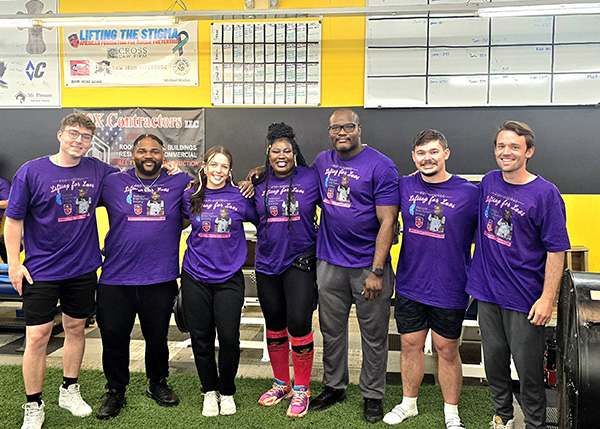
Lifting for Lavi
Across the country, people are gathering their communities and fueling the breakthroughs ahead by hosting 5Ks, sports tournaments, bake sales, and other events that align with their interests.
With Fundraise Your Way, your fundraiser reflects what and who you care about — and we provide the website, tools, and guidance to help you succeed.
Host a Gathering: Bring friends and family together for a dinner, backyard BBQ, trivia night, or happy hour. Check out our tips for turning simple gatherings into moments of impact.
Organize a Game or Tournament: From soccer to softball to golf, sporting events offer a unique way to rally your community, and we have a step-by-step guide on how you can get started today.
Fundraise YOUR Way: Not sure where to start? Our team is ready to brainstorm with you to create a fundraiser as unique and meaningful as your own story.
“My dad was diagnosed with a meningioma,” said Lido R., who organizes the annual Fight for the Brain Happy Hour. “That final year of his life in 2016, I think as a family, we felt completely out of control. Raising money to find cures for brain tumors that might stop other families from having to deal with this felt like something we could control.”
Will my fundraiser make a difference?
Absolutely. It’s a common misconception that only large donations can move the needle in cancer research. In reality, the “small” fundraiser is the foundation of our progress. When you start a fundraiser, you aren’t just raising money. You’re part of a grassroots movement that is working together to conquer and cure brain tumors — once and for all.
Each individual or community fundraiser adds up. In 2025 alone:
Fundraise Your Way organizers turned gatherings, community events, and personal milestones into a collective $1.02 million to make a difference.
Gray Nation Endurance athletes transformed their miles into $1.4 million for research, advocacy, and support.
Whether you raise $250 or $2,500, you are providing the resources that help a patient find a clinical trial or a researcher test a new theory. There is no such thing as a small contribution.
Why fundraise for NBTS over another organization?
NBTS focuses on groundbreaking research initiatives with the potential to translate promising science from the lab into treatments that improve survival and quality of life for patients of all ages. We strategically invest in several areas of research funding, including precision medicine, immunotherapy, tumor metabolism, DNA damage response networks, innovating clinical trials, and quality of life research.
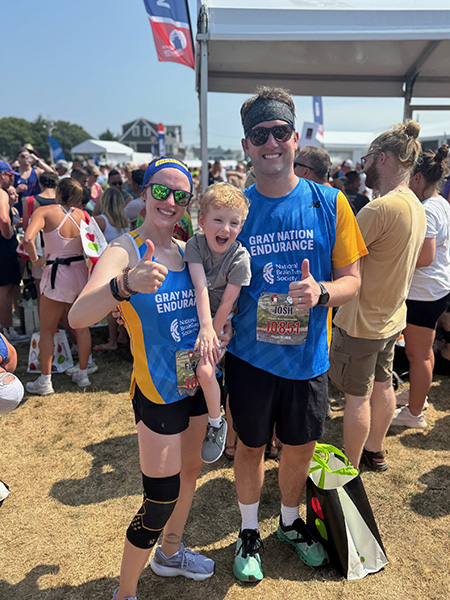
Josh with his wife and son
Within these research programs, initiatives, and projects, NBTS funds research across many tumor types, including the following in 2025: astrocytoma, atypical teratoid rhabdoid tumors (AT/RT), craniopharyngioma, diffuse midline gliomas (DMG/ DIPG), embryonal tumors, ependymoma, glioblastoma, medulloblastoma, meningioma, metastatic brain tumors, and oligodendroglioma.
While we have awarded more than $52 million in grants to hundreds of researchers throughout the U.S. and even globally, including $2.6 million in 2025, we know that it’s only part of the solution. The true power of your support lies in our ability to remove the obstacles that stand between a laboratory discovery and a patient.
“I got diagnosed when I had a 2-year-old, and you just start thinking about your life and what you might miss with his life — like his milestones based on your prognosis,” said Josh B., who became a GNE runner after his oligodendroglioma diagnosis. “I don’t want someone else to go through that, and that’s one of the reasons why I fundraise for NBTS … Past National Brain Tumor Society funding helped propel forward a clinical trial I had enrolled in, and the organization will continue to help fund future trials. Seeing NBTS out there advocating for brain tumor research funding on a federal level is important to me.”
1. NBTS advocates to increase brain tumor research funding
As the largest brain tumor patient advocacy organization in the U.S., we use donor support to champion systemic change in Washington, D.C., because the National Institutes of Health (NIH) is the largest funder of brain tumor research in the world, but that funding is not guaranteed.
Since 2011, when we launched our signature advocacy event Head to the Hill®, NBTS has helped increase annual federal funding for brain cancer research by nearly 75%.
In 2025, NBTS also worked with champions in Congress to re-introduce the Bolstering Research And Innovation Now (BRAIN) Act, a landmark bipartisan bill developed specifically to meet the unique needs of brain tumor researchers, clinicians, patients, and survivors.
2. NBTS convenes key groups together to advance research
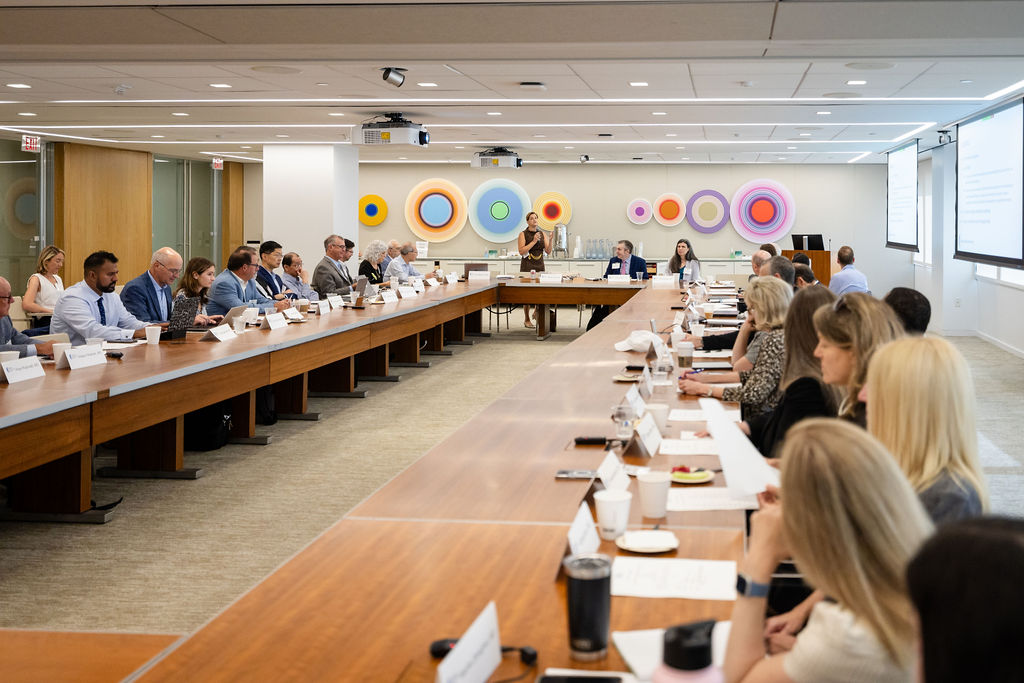
NBTS’s Research Roundtable
National Brain Tumor Society distinguishes itself through a strategic focus on translational research and cross-sector collaboration. In addition to providing direct funding for scientific investigations, NBTS actively works to accelerate the development of new therapies by fostering partnerships between academic researchers, the biopharmaceutical industry, and private investors. This approach is intended to address gaps in the traditional research pipeline, helping ensure that promising laboratory discoveries have a clearer path toward becoming viable treatments for patients with brain tumors.
Additionally, NBTS brings stakeholders together, including the Food and Drug Administration (FDA), NIH, biopharmaceutical companies both large and small, researchers, medical providers, and patients and care partners, to foster discussion and take unified action.
“The close collaboration between patients, clinicians, advocacy groups, and Servier has helped to propel the advancement of vorasidenib throughout the clinical development process,” said Islam Hassan, MD, Senior Medical Director, Vorasidenib Clinical Lead, Cancer Metabolism – LS/LCM, Servier Bio-innovation. “NBTS’s support for research, its convening role in bringing people together, and shared vision of patient centricity have been integral in the efforts to bring vorasidenib from bench to bedside.”
3. NBTS trains brain tumor research advocates
We believe that the people most impacted by this disease should have a seat at the table. Through our Brain Tumor Research Advocate program — the only one of its kind in the brain tumor space — we train survivors and caregivers to provide real-time input to scientists, ensuring that research is designed with the patient’s needs in mind.
“I found it extremely valuable to present at a real-time research review session,” said Caroline Crooms, MD, MPH, Icahn School of Medicine at Mount Sinai. “At the most basic level, having patient and care partner advocate input on whether or not the research was worthwhile was very meaningful and inspiring. Also, the research can never be successful if the intervention and the methods are not acceptable to their subjects, so getting that expert perspective was necessary.”
4. NBTS funds quality of life research
In addition to developing new treatments, NBTS remains committed to improving how patients live with brain tumors. In 2025, NBTS awarded its first-ever Quality of Life Research grants, with support from StacheStrong, designed to improve the day-to-day lives of patients and care partners facing brain tumors.
In 2026, we will open a new round of grants to conduct research on ways to improve aspects of survivorship, behavioral and emotional health, and support.
5. NBTS educates the community about biomarker testing and clinical trials
In 2024, the National Brain Tumor Society launched the MyTumorID® campaign as the first-ever public health campaign for the brain tumor community. The initiative aims to help patients with brain tumors and their care partners understand the importance of identifying tumor biomarkers and exploring treatment options, including clinical trials, to make informed decisions about their care.
“When my mother was first diagnosed, a few friends of mine suggested we put on a [clay shooting fundraiser] as a benefit to some charity,” said Erika P., who hosted her own Fundraise Your Way event after her mother was diagnosed with glioblastoma. “We chose the National Brain Tumor Society specifically because they did have a focus on biomarker testing. Not everyone knows to ask for biomarker testing, but they should.”
Get Started
Meaningful progress in brain tumor research requires sustained effort and collective investment. While the challenges are great, the potential for new breakthroughs has never been more promising.
Your fundraising allows NBTS to continue our relentless pursuit of better treatments and improved quality of life. By taking action today, you are providing the resources that allow researchers to take risks, advocates to be heard, and patients to access better care.
Every breakthrough begins with a community that refuses to wait. Be part of the next breakthrough.