When someone you love needs brain surgery, it’s normal to feel unsure of what to say or do. You may ask yourself, “How can I help? What actually makes a difference?”
The days leading up to and following a craniotomy can be physically and emotionally demanding — not just for patients but for their caregivers as well. These nine tips, gathered from brain tumor survivors and caregivers, offer practical, thoughtful ways to support someone through brain surgery and recovery.
Patients and care partners may want to read our National Brain Tumor Society blog post featuring 17 brain surgery tips from fellow patients and caregivers who have been there.
1. Organize or contribute to a meal train.
In the weeks and even months after surgery, patients and caregivers are focused on recovery and their next steps in treatment. While food is a necessary part of daily life, meal prep and cooking can be time-consuming and overwhelming when there are so many other critical priorities. Friends and extended family can help by organizing or contributing to a meal train.
“The biggest thing for us was the meal train,” said Melanie F., who has diffuse astrocytoma. “Friends would bring soup over on Monday and Wednesday, and then pasta on Friday. It was so nice not having to think about meals with everything else going on.”
Some patients find it helpful when meal trains include softer foods, avoid anything too spicy, and take personal food aversions into account.
“My taste buds are still off, and I have an aversion to salt and cinnamon,” said Lisa C., who was diagnosed with acoustic neuroma. “Avoid dropping off too many sweets!”
Some patients admitted that all the questions about what food friends should bring could be overwhelming, so they preferred receiving gift cards for local restaurants or delivery services like DoorDash, Grubhub, Instacart, and Uber Eats.
“I had several groups of people pool together money into a DoorDash gift card, and that helped me so much once my caregiver was not spending every day with me,” said Nicole S., who has astrocytoma. “Cooking was a difficult task for a while, and those gift cards helped me eat for months while I readjusted to normal life. “
2. Tackle household chores.
In the immediate aftermath of surgery, both the patient and caregiver will largely focus on recovery. Chores like doing the dishes, taking out the trash, picking up around the home, or grocery shopping can be difficult to prioritize.
“The most helpful thing for me was having everything around my house done, so I didn’t have to stress about getting it all done, and I could just rest,” said Liz R., who underwent a craniotomy for oligodendroglioma.
Ideas for household chores to do yourself or to pay for a service to do:
- Handle their laundry
- Pick up their groceries or order grocery delivery
- Run errands on their behalf
- Walk their dog or let their dogs outside
- Take out their trash each week
- Drive their car to a car wash or oil change
- Clean their home
- Mow the lawn
- Shovel snow
- Handle other yard work (e.g., leaf pickup)
- Assist with paperwork
Be specific when offering to help. Avoid vague statements like “reach out if you need anything,” which puts the onus on the patient or care partner. Instead, ask if you can help with a specific and actionable task. For example, say, “I’m going to the grocery store on Saturday. What can I pick up for you?”
3. Gift comfort items.
A hospital setting can feel impersonal and uncomfortable at times. Gifting the patient an item or two to make their recovery smoother can be a much-appreciated gesture.
“A friend brought me flowers,” Liz said. “Even the smallest things make people feel seen.”
Patients with brain tumors have recommended the following items:
- Extra-long chargers for cell phones
- Neck pillow
- Blanket
- Comfortable pajamas or a robe
- Chapstick
- Stuffed animal
- Sound machine
- Sleep mask
- Soft foods or snacks
- Shower chair
- Paddle brush
- Ice packs
“My husband was so grateful to have a new and cozy blanket and pillow that we didn’t worry about getting too dirty,” said Alana C., whose husband was diagnosed with astrocytoma.
While books, including coloring or activity books, might be an appropriate recovery gift for some people, keep in mind that some patients struggle with fine motor, vision, or cognition in the early days after surgery.
“If the patient doesn’t have access to streaming services, gifting a streaming gift card would also be a good gift,” said Nicole S. “My fine motor skills were not great for a little while, so the coloring books and puzzles were difficult to do, but lots of TV was watched.”
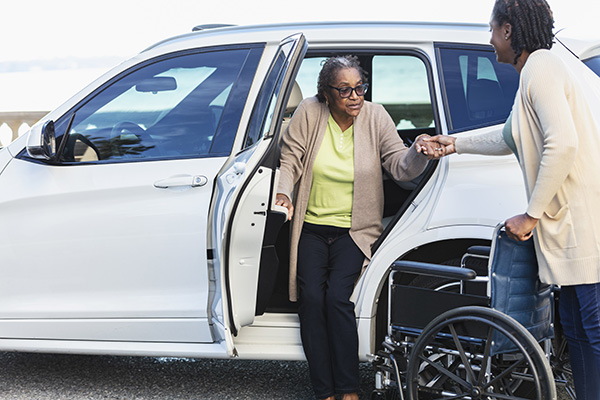
4. Offer transportation to appointments.
Often, patients are no longer able to take themselves to appointments after surgery, and caregivers are still trying to juggle work after a brain tumor diagnosis.
“Transportation to and from appointments would be the best type of outside support,” Alana shared.
Some patients might appreciate a friend or family member joining them for the appointment itself.
“My family attended neurosurgeon appointments with me,” said Katheleen A., who has meningioma. “I suffered frequent disorientation episodes, so having family with me was a crucial part of making it to my doctor’s office.”
For those who live in urban areas, their vehicle might require frequent repositioning to avoid getting a ticket.
“A friend helped with my car to just keep it moving, especially since my husband couldn’t drive,” Alana said. “It was something I just hadn’t thought of doing!”
5. Assist with childcare.
One of the many challenges facing patients and caregivers after a brain tumor diagnosis is managing childcare, especially when one parent has to work and the other is physically unable to take care of a child. Trusted family members and friends can offer to watch the kid(s).
“The worst time for me was the first month after surgery,” Liz shared. “My kids went to my grandparents’ for two weeks. Knowing I had help with my kids was a big plus.”
Trying to keep a routine for kids is important, so offering to pick up a kid for a playdate, take them to an extracurricular activity, or help them with homework can be a relief.
“Childcare is difficult to offer, but planning some extra playdates so that there was some sense of normalcy and emotional support was helpful,” Alana said.
5. Send encouraging messages.
Patients and caregivers can feel lonely in the weeks and months following surgery, so receiving text messages with encouragement can be a welcome support.
“Phone calls were tiring, and we didn’t want to keep explaining,” Kate said. “Simple texts with ‘we love you and are thinking of you’ helped so much. Send words of encouragement, and let your loved one know they do not need to respond!”
Put a recurring reminder on your phone or calendar to ensure you reach out to them consistently. Add their birthday, anniversary, or other significant milestones (even the day they were diagnosed or the day they had surgery) to your calendar so you can check in with them.
“I found it helpful to receive notes and messages letting me know they were thinking of me, hearing me out if I wanted to talk about the surgery or not, and without needing to reply,” said Elizabeth, who was diagnosed with oligodendroglioma. “My work put together a video of everyone sending a virtual message wishing me well.”
Elizabeth added, “Check in weekly or bi-weekly, and don’t ask when appointments are. If you happen to know the timing of the appointment or scan, then send well wishes. Also, check in when they return to work.”
Recovery can take a while, so continue to check in even months later.
6. Understand their brain is recovering.
Depending on their tumor’s location, patients may experience speech, language, motor, cognition, or sensory difficulties after brain surgery.
“Understand that surgery is like a traumatic brain injury (TBI), and your loved one is recovering; they may be tired and not want company,” Alana said. “Keep showing up for them as best you can.”
Given these potential challenges, large social gatherings or even leaving the house may be more than they can handle in the short term.
“Since I had expressive aphasia, social settings were challenging at first for a few weeks,” Elizabeth said. “Friends were prepared to roll with what I had to say or not say and not just ask how I was feeling.”
The patient may continue to face these challenges even after their craniotomy scar has healed.
“Understand that their healing journey is not going to be quick, and they need help doing the smallest of tasks at first,” Nicole said. “Overall, try to bring normalcy into their life as much as possible because their life just got flipped upside down and will never go back to how it was before.”
7. Visit without expectations.
If the person with a brain tumor would like visitors either in the hospital or at home, go into the visit prepared to be the one hosting them and not the other way around. Bring food with you or offer to run an errand on your way there to provide extra support.
“Bringing a meal over and just hanging out with me for an evening was so nice,” Nicole said. “My friends would just let me sit in my chair while they visited me. They didn’t expect anything from me, but would come hang out and try to bring some sense of normalcy with them. Looking back, I would probably be more vocal about wanting my friends to come over more often.”
As time goes on, ask if the person would like to go enjoy an activity. For example, Lisa looked forward to getting a pedicure with friends.
“Your time is the greatest gift you can give,” Kathleen said. “Visit. Sit with them. Hold their hand. Remind them to be patient; recovery takes time. When I was able to walk, just having someone walk beside me was amazing.”
8. Avoid giving unsolicited advice or stories.
After a brain tumor diagnosis, many patients and caregivers are suddenly flooded with advice, suggestions, and stories, which are often well-intentioned but not always helpful.
“Don’t share stories of loved ones with brain tumors that had bad outcomes,” said Katie H., whose 3-year-old son was diagnosed with choroid plexus papilloma. “We didn’t want to hear those stories when we had so much to face.”
Hearing about worst-case scenarios or being offered alternative treatment ideas, especially from people without a neuro-oncology background, can add stress and confusion at a time when patients are working hard to process information from their care team.
That doesn’t mean you can’t support them. If you notice your friend struggling, it’s OK to gently share trusted resources and offer to help. National Brain Tumor Society also hosts monthly virtual support groups where patients and caregivers can connect with others who truly understand the brain tumor experience.
9. Brighten up their hospital stay.
Look for ways to lift their spirits while they’re recovering in the hospital or rehabilitation center after surgery.
“My friends brought decorations and pictures to help me decorate my hospital room, so I was surrounded by good memories,” Nicole said. “They also brought some good snacks, so I wasn’t always eating hospital food. My mom would also go out and grab lunch from a restaurant to change things up.”
Kathleen appreciated visitors to help break up the monotony of her hospital stay.