This website uses cookies that help the website function and that help us understand how you interact with it. Please read our privacy policy for more information.
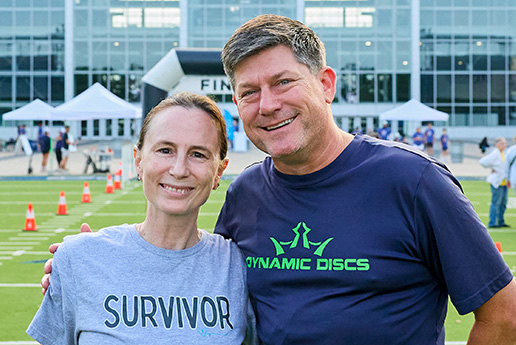
In July 2023, Erika B. was diagnosed with glioblastoma (GBM) after having a seizure and driving through a house. Unfortunately, the cancer returned 27 months later, this time in two places. Following glioblastoma progression, Erika underwent a craniotomy to remove two tumors, tried a clinical trial, and is now doing radiation therapy. In many ways, Erika is facing uncharted territory – there is no standard of care when a GBM returns or grows. Now, like so many in her position, she’s left wondering, “Now what?”
Erika’s raw and honest question — now what? — is one that resonates with far too many patients, caregivers, family, and friends following a GBM recurrence. There is no denying the immense heaviness of discussing what happens when this aggressive disease advances or returns. It is a conversation filled with anticipatory grief and uncertainty. Yet understanding what progression means also helps empower families to navigate the unknown, make deeply personal and informed decisions, and prioritize quality of life.
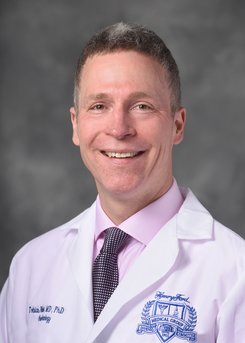
Tobias Walbert, MD
Put simply, glioblastoma progression is used as an umbrella term to mean that the cancer has become active again after a period of stability. Within this, there is a slight nuance: progression typically means an existing tumor or spot is growing, whereas recurrence means a brand-new tumor or spot has appeared. In either case, it indicates that previous treatments are no longer keeping the cancer at bay, signaling that it is time for the care team and patient to evaluate new options and next steps.
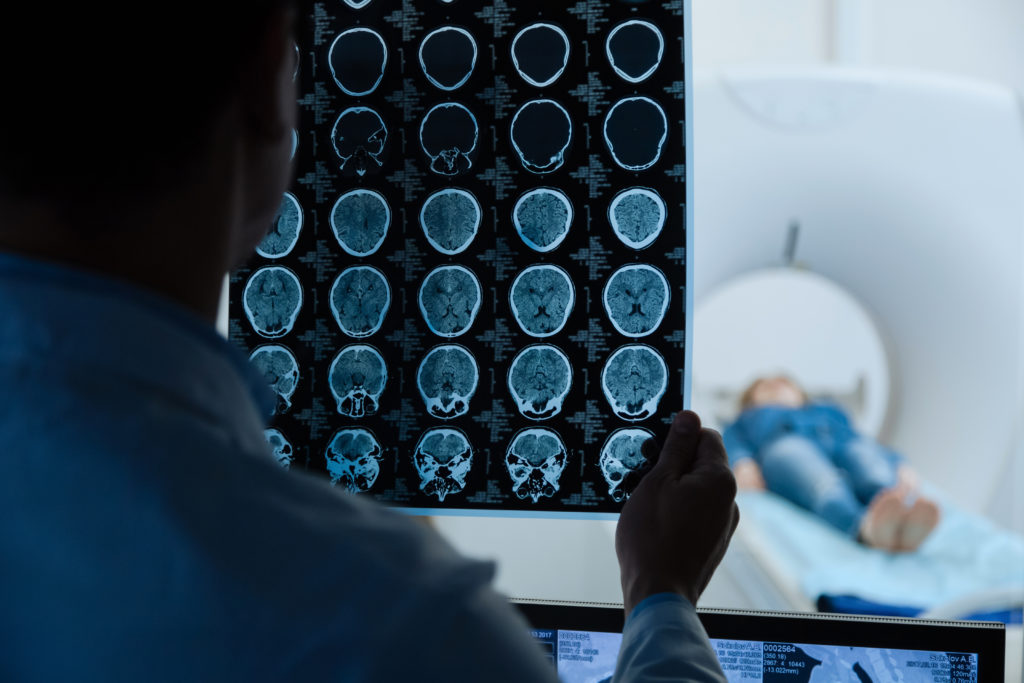
“Most of the time, an MRI is what first suggests the tumor is coming back,” said Tobias Walbert, MD, Director of Neuro-oncology at the Hermelin Brain Tumor Center. “Progression is when we establish for real that what we see is the tumor coming back or growing.”
What is the difference between glioblastoma progression and pseudoprogression?
An MRI might reveal a new spot in the brain that suggests glioblastoma progression (tumor growth). However, before confirming a recurrence, a patient’s health care team must first rule out pseudoprogression and radiation necrosis.
Pseudoprogression is an inflammatory response to treatment that causes temporary swelling and changes on an MRI. Essentially, the scan can make it appear that the tumor is progressing, but it is actually a false alarm. In fact, pseudoprogression can represent a more robust response to treatment.
“We know that the effect of radiation can create a similar picture on the MRI [to tumor progression],” Dr. Walbert said. “It’s most common in the first 90 days after radiation and is seen more in patients who have methylated MGMT. If patients present with what we call pseudoprogression, they actually have better outcomes in the long run once they overcome that.”
Studies have found the incidence of pseudoprogression to be between 20-30% of patients with glioblastoma, according to the Journal of Neuro-oncology.
What is the difference between glioblastoma progression and radiation necrosis?
A common challenge in glioblastoma care is radiation necrosis, which often looks like tumor progression on a scan. Radiation necrosis is dying tissue caused by previous radiation therapy. Not only can it mirror glioblastoma progression on an MRI, but it can also cause swelling that mimics symptoms similar to those that come from tumor growth.
“As the name suggests, radiation necrosis is caused by radiation, but it’s typically seen in the later stages and can be seen even years later,” Dr. Walbert said. “On the MRI [for radiation necrosis], we see that brightness with the contrast that we typically see as well with true progression. While we have some imaging parameters where we can look at, like blood flow for example, it can be very difficult to sort that out.”
Distinguishing between glioblastoma progression and radiation necrosis is a topic a neuro-oncologist will discuss with colleagues at a multidisciplinary brain tumor board, which may include neuroradiologists, radiation oncologists, neurosurgeons, neuropathologists, and others.
“If it is radiation necrosis, you treat that differently than you would treat a tumor coming back,” Dr. Walbert said.
While glioblastoma progression might require a change in chemotherapy, a new clinical trial, or a repeat surgery, radiation necrosis is often managed with anti-inflammatory medications or specialized therapies to reduce swelling. Laser interstitial thermal therapy (LITT) is another surgical alternative to address radiation necrosis.
Lived Experiences
Because scans alone cannot always give a definitive answer, some survivors experience the agonizing emotional rollercoaster of a suspected recurrence that turns out to be radiation necrosis.
“A year later, I experienced disorientation and extreme fatigue. An MRI revealed a gray area around the tumor site. Initially, it was thought to be regrowth, but it was diagnosed as necrosis, a common radiation injury. I underwent 13 weeks of Avastin treatment, which cleared up the issue.” — Chris N.
“I did the six weeks [of radiation], then four months into the adjuvant chemotherapy Temozolomide, a post-radiation scan showed what they thought was recurrence. After a second craniotomy, the sample was a full resection with zero percent recurrence. It was all scar tissue and necrosis.
I am just recovering now from a third craniotomy again because what an MRI and a PET scan showed was potential for recurrence. After receiving the pathology report, it shows necrosis & gliosis again, and what they are considering “a suspicion for a high-grade glioma cell,” but nothing was actually seen. There was no definitive GBM tumor. Our neuro-oncologist is calling this ‘a complex juncture’ in my journey as I technically do not have a recurrence. MRIs & PET scans are not definitive, especially with cases like mine where my initial lesion was less than 1 cm in size.” — Eric P.
Why is glioblastoma recurrence so common?
Glioblastoma is one of the most complex and treatment-resistant types of cancer, not just among brain tumors. Because of its aggressive nature, recurrence is unfortunately the norm rather than the exception. According to an article in the Journal of Clinical Oncology, “most GBM recurs in 6-9 months.”
Glioblastoma is a highly infiltrative tumor, so a skilled neurosurgeon may be able to fully resect the tumor from what they can see with the human eye and surgical tools. However, microscopic cells are almost always left behind, which is why the standard of care includes chemotherapy and radiation therapy.
MD Anderson Cancer Center states, “Even a successful gross total resection for glioblastoma always leaves behind microscopic disease. Glioblastoma has ‘tentacles’ that reach out from the main tumor mass. These tentacles are invisible to the naked eye and even to many of our most advanced imaging technologies.”
The tumor cells that do survive can adapt or mutate in response to treatment. Yale Cancer Center reports, “Most recurrent glioblastomas retain the cellular makeup associated with the primary tumor, but some do not. For example, [unmethylated] tumors with higher levels of the gene MGMT, which is related to chemotherapy resistance, can transition to a more aggressive form when they recur.”
The Psychological Toll: Living Between Scans
Because the statistics around recurrence are so daunting, the emotional weight of a glioblastoma diagnosis extends far beyond physical symptoms. For families, living in the shadow of potential progression can fuel scanxiety (scan-related anxiety).
Even when a scan comes back clear, the fear of the future remains a constant companion.
“We have not experienced progression, but we live a life of waiting for the other shoe to drop,” said Mary Beth O., whose husband was diagnosed with glioblastoma. “I don’t know how we will react if/when that day comes. I will say that anticipatory grief is real and at times overwhelming.”
What are the signs and symptoms of glioblastoma recurrence?
Signs of glioblastoma progression vary from patient to patient.
“It really depends on where the tumor is located, the amount of swelling that the tumor is causing, and which areas of the brain the tumor is pushing on,” Dr. Walbert said. “There are some areas of the brain that are much more forgiving, like the frontal lobe, and then there are other areas where you immediately have issues. Typically, the symptoms are similar to what the patient experienced in the beginning. About 90% of the time, the tumor is coming back in the vicinity of where it was before.”
“Often with recurrence, we see short-term memory issues as well as just feeling foggy or loss of continuation of thoughts,” said Katherine Pahler, RN, the National Brain Tumor Society’s patient navigator. “It’s important to let patients know that this isn’t uncommon, and there are resources to help.”
“Fatigue has been the hardest for me out of all of the symptoms because I feel like fatigue takes away from my quality of life,” said Tresa Roebuck-Spencer*, PhD, a neuropsychologist who had recurrent glioblastoma.
Lived Experiences
Brain tumor community members generously shared the signs and symptoms they or their loved ones experienced during glioblastoma progression.
“Both my brother and mother had GBM. Looking back, I wish we had talked about palliative care sooner for my brother, who was the first one diagnosed. I think having a nurse to help with this change would have been huge. Even realizing maybe we needed diapers or walkers long before accidents or falls for dignity’s sake.
During her recurrence, my mom’s tastes changed (she said everything tasted like metal), she lost control of her bladder and bowels, and lost vision. Her body was shutting down, but mentally she was still there and having conversations until the very last day.
My brother’s recurrence was the complete opposite. He lost the ability to verbalize what he was thinking, but he still ran and lifted weights every day. He could get us to guess his thoughts by acting them out or by using semi-close words. He “was there” mentally, but something broke between the brain and the act of speaking it out. He also got very delusional in the end, terrified and paranoid of everything.” — Elizabeth B.
“We had a recurrence about six months after diagnosis, and we then decided to pursue hospice care.
Watching your high-functioning, young, and athletic husband lose vision in one eye as well as hearing, aphasia, and eventual decrease in ambulation and ability to eat was extremely painful to watch.
Infusions helped bring down the swelling, and high doses of Decadron helped manage the symptoms until they became too severe to manage. One day, you can have a conversation with your loved one, and the next day, they can’t get words out. Your loved one’s personality changes, and their physical appearance changes as well.
My husband decided not to pursue any further treatment due to the factors we were presented with: recurrence in the midbrain, and we had already had an Avastin infusion due to severe swelling.
I believe the team should have been more direct with my husband regarding the reality of our situation, and there should have been conversations about hospice care.” — Brooke G.
“The tumor impaired her vision, but really, nothing else. She didn’t have movement trouble or cognitive trouble. She worked until two months prior to her death. The edema was the worst, though, and the steroid side effects. She wasn’t a complainer. She faced the tumor-treating fields (TTF) as a challenge to have the highest percentage of compliance, like she did everything in life.
Nothing really changed, to be honest, except that after the third resection, she retired and then deteriorated so quickly. Work was her life, though, and with that gone, it was challenging for her to fight, I think. But, like everything, she handled her retirement with grace, too, making sure others were prepared to take over her lab and her research.
She wanted to do everything possible to save her life. For the last resection — her third — I was a bit oppositional. I thought she had endured enough, and I worried she wouldn’t be able to recover. She ended up with an infection post-surgery that never resolved, and it ended up killing her. It was the second month of the COVID lockdown, so I had to say goodbye through an iPad.
Glioblastoma is terminal. There is no cure. There is no effective treatment. We need better medications and interventions. It’s one of the worst cancers you can have, and it robs us of time and the people we love.” — Amanda H.
“He was a doctor, but after the initial surgery, he had cognitive impairment, and he could not even make a cup of tea. The psychological impact of that was huge for him.
We knew recurrence was coming as his cognition was worse. It just felt hopeless, that there was nothing to be done.
Physically, they might look OK, but the reality is so different. Everything is affected when the brain doesn’t work — balance, vision, thinking, personality.” — Kate H.
“As things progressed, his memory and personality were impacted, and trying to maintain the regimen of a complicated medical device became impractical.
We never had an extended period of non-progression. At one point, it showed no increase in size for a few weeks, but never decreased. Those 15 months were only about survival from day to day — managing his many medications, dealing with his personal financial affairs, getting him on disability, driving him to all of his doctors’ appointments and radiation treatments, and updating his friends and family.
Glioblastoma progression is often short, brutal, and heartbreaking. I’ve said many times that you lose your person before you actually lose your person. Glioblastoma renders you utterly powerless, given the scarcity of treatment options. You also never fully grasp the bureaucracy of advocating for your loved one with a terminal diagnosis. I logged hundreds of hours advocating with medical professionals, hospital administrators, my husband’s employer, and my husband’s health insurance provider, as well as explaining (sometimes defending) treatment protocols to family and friends. No one can possibly appreciate that part of a caregiver’s role until they have lived it.” — Kristen H.
“After the initial surgery, we moved to a top-rated university hospital in the city with clinical trials and doctors recognized in the field. We stayed with that team for at least a year until recurrence. We felt nothing was being offered for recurrence, and the tumor was growing, so we moved again to a different local hospital, where surgery was immediately performed. They offered surgical options, gamma radiation tiles, and treatment advice based on clinical trials.
I continue to search for clinical trials. My husband took part in one trial at the university hospital, but he quit. We applied for another trial after the first recurrence, but they closed the trial. That trial went to an expanded access protocol (EAP), and I found the scientist who offered a lower cost, but by then, my husband was feeling OK and didn’t want to pursue it. Some of the things my husband pushes back on regarding trials are too much travel and too much cost. He also gets concerned about potential negative impacts from trial drugs.
Memory, cognition, and aphasia are what my husband struggles with most. I created a medicine chart with real pictures of each pill, and he used that for a long time. We are now at the point where I have to help him package his meds for each day of the week, but he is still able to take them independently using alarms on his phone as reminders. I also created a picture book of all family members because he is beginning to have difficulty finding names.” — Sheryl H.
“His tumor grew back every nine months. My priorities were always to give him the best of the time he had left.
After the second surgery, my husband started to lose his ability to speak. He was a litigator by profession, so the loss of speech was very upsetting to him. After the tumor grew back a third time and then crossed the midline, he chose to stop all treatment and enter into hospice care.
The loss of speech was the most challenging. In the beginning, my husband could use cards and booklets that were helpful for people with aphasia, but over time, he did not want to use them anymore.” — Barbara K.
“He lost movement and eventually feeling on the left side. That, along with the anxiety and sundowning that came towards the end. Just comforting him and trying to stay calm helped, along with advocating for them to stop checking movement in the left side by pinching him, as it caused him pain.
Brain swelling and quality of life. We knew he was in pain, and he was starting to lose himself because of brain swelling after multiple surgeries in a short span. At that point, we knew there was nothing we could do to extend life, so we focused on getting him out of the hospital and getting pain under control.” — Frankie P.
Can glioblastoma recur in a different part of the brain than the original tumor?
Yes, but it is more common for glioblastoma to recur near the original tumor site. According to an article in Surgical Oncology, “Over 90% of recurrences are observed at the site of the primary tumor.”
What are the treatment options available for glioblastoma progression?
Dr. Walbert said, “The question is always in basic strokes: what can we do? Is there room for more surgery? Is there room for more radiation? Is there room for a different chemotherapy or a rechallenge with chemotherapy? Is there a clinical trial that would be a good fit? We have to look at the big picture because if we think of progression, then what we have been doing is either not working or hasn’t worked to the full extent.”
Balancing Treatment and Quality of Life
Choosing a path forward after progression requires open, honest conversations about what matters most to the patient.
“I think it’s important to talk with patients and their caregivers about what the goals are because there are tradeoffs,” Dr. Walbert said. “We must be flexible and talk about different therapies and what might be the unintended effects of them so that everybody is on the same page. What patients want to do or don’t want to do is very different for somebody in their 20s or 40s compared to someone in their 70s or 80s.”
Side effects vary across treatments, so understanding the potential impact on daily living is a key part of making informed decisions about their next steps.
“Since my craniotomy after my recurrence, I have scalp pain — not a headache — that makes me want to burn down the house with me inside it,” Erika said. “It’s a side effect of surgery that can happen to some people. Surgery was still the right decision for me six months later, and I don’t regret it, but choosing your path after recurrence comes with real side effects. They’re not to be ignored.”
Surgery
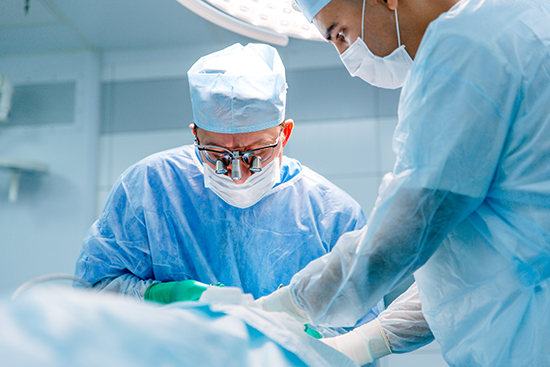
“Surgery can be important even in the context of establishing that the tumor is really coming back and not pseudoprogression or radiation necrosis,” Dr. Walbert said. “Surgery is never a cure for these tumors, but it’s an important tool. It comes down to risks and benefits.”
A second surgery can reduce pressure on the brain, alleviate symptoms, and provide fresh tissue samples to see if the tumor has mutated. There isn’t a standard protocol for retesting tumor biomarkers, but if tissue is available, it’s important for the patient to have that discussion with the provider. For some patients, opting for surgery is also a strategic choice to avoid the systemic exhaustion of medication.
“While my tumor had responded well to chemo, my body did not respond well to chemo, and I had gotten very sick,” Erika said. “The choice to have surgery instead of chemo after progression was a quality of life decision for me along with a couple of other factors that played into it.”
Chemotherapy
Depending on the patient’s history, a care team may recommend trying a completely new chemotherapy drug or returning to one that worked well in the past — a strategy known as a rechallenge.
“For example, if patients are still on chemotherapy after radiation or they just finished a month ago, and the tumor is coming back, then obviously that is not working, and it’s time to move on,” Dr. Walbert said. “It’s a different story if patients have been several months or years out from the five days on 23 days off temozolomide, and then we see a recurrence. There’s good reasoning and data to rechallenge patients with temozolomide if they had a good response the first time around.”
Other standard chemotherapies, such as lomustine, or targeted therapies, such as bevacizumab (Avastin), may also be introduced at this stage to slow tumor growth or reduce brain swelling.
Radiation
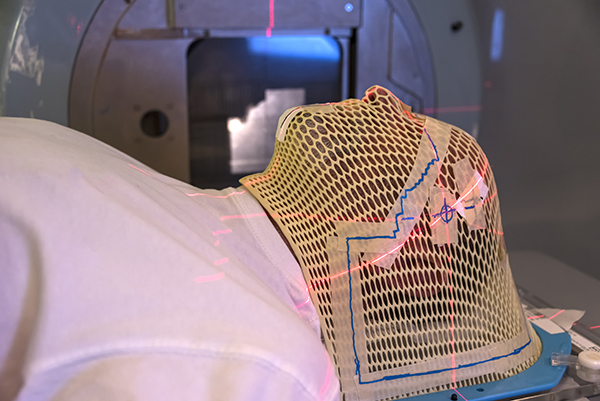
While the brain can only safely tolerate a certain amount of radiation over a lifetime, targeted reirradiation may be used to treat localized recurrence. ESTRO/EANO recommends waiting a minimum of six months between the end of radiation therapy and before beginning reirradiation to allow healthy brain tissue to recover.
Using highly precise techniques like stereotactic radiosurgery or proton therapy, radiation oncologists can deliver a concentrated dose of radiation directly to the recurrent tumor while sparing the surrounding, healthy brain tissue that was already treated during the initial diagnosis. Another option is hypofractionated radiation, which gives a shorter course of radiation therapy at a higher dose. In some cases, surgically implanted radiation tiles (such as GammaTile) can be placed directly into the cavity during a repeat surgery to target remaining cells immediately.
Tumor-Treating Fields (TTF)
Tumor-treating fields are a portable medical device (a wearable cap connected to a battery pack in a backpack) called “Optune Gio” that is attached to the scalp with electrodes and delivers alternating electric fields to disrupt tumor growth. This treatment is approved for use in newly diagnosed and recurrent glioblastoma patients.
Clinical Trials
The NCCN guidelines recommend that patients consider clinical trials throughout their care whenever appropriate. Because both eligibility and available trials can change over time, it’s important to revisit clinical trial options whenever the treatment plan changes.
“I tell people a clinical trial should always be considered when we come to the fork in the road,” Dr. Walbert said. “If we have to make a decision between different treatments because what we are not doing is not working, then it’s time to talk about clinical trials.”
National Brain Tumor Society’s Clinical Trial Finder allows people to search for clinical trials and receive tailored results based on their or their loved one’s location, diagnosis, tumor grade, biomarkers, and treatment history. From there, they can take information about potential clinical trial options with them to discuss with their care team.
However, navigating trials at the time of progression comes with a unique, often frustrating challenge: the treatments a patient has already received can sometimes disqualify them from entering a new study.
“It’s unfortunate that there are so many exclusion criteria to participate in these trials, and many of them are based on past treatment,” Tresa explained. “There were some treatments I tried to put off having — like Avastin — because I knew that once I got Avastin, it may exclude me from future trials. I tried not to take that treatment for as long as I could.”
Erika faced a similar double-edged sword when mapping out her next steps.
“I learned the hard way when I had progression that my choice to have surgery limited my clinical trial opportunities,” Erika said. “If I wouldn’t have had surgery, that would have made my pool [of options] bigger, but since I was multifocal, that also shrinks [my options]. I think that clinical trials are amazing. We just sometimes need help navigating them. I understand why the exclusion criteria exist, but at the same time I wish that there was a way to be more inclusive.”
How can palliative care help improve quality of life?
When navigating glioblastoma progression, managing the disease requires a deep focus on how a patient feels every single day. This is where palliative care becomes an essential tool — though it is often misunderstood. Many families hesitate to ask for it, mistakenly equating it with end-of-life care or hospice.
“Palliative care is an important part of the treatment,” Dr. Walbert said. “When we talk about palliative care to differentiate it from hospice, I explain to my patients that hospice is palliative care toward the end of life. Palliative care is an extra layer of supportive care for any patient with a life-threatening disease, focusing on quality of life and improving symptoms. Palliative care is very comprehensive in that it focuses not just on the patient but the whole family and caregivers.”
While the patient’s neuro-oncologist focuses on treating the tumor itself, a palliative care team works collaboratively alongside them to relieve side effects during and after treatment. This multidisciplinary team can include doctors, nurses, oncology social workers, physical and occupational therapists, psychologists, and speech-language pathologists, all working together to provide symptom relief, emotional guidance, and support.
What else should patients consider at GBM progression?
“When we see progression, it’s appropriate to focus on addressing goals of care and what people want in an advanced care plan,” Dr. Walbert said. “Everybody should be talking about who would be the someone that can speak up for them for their care.”
“I tell my patients that we spend a lot of time focusing on coming into this life when you think about the nursery and the baby shower,” Dr. Walbert said. “Maybe we should be spending a bit more time on the backend as well. We don’t focus as much on that part, although it’s clearly established that we all must leave this world at some point.”
Where can I find support after glioblastoma progression?
The emotional impact of a recurrence can bring a complex wave of cumulative grief, anxiety, and intense introspection.
“I think what a lot of people don’t understand is that grief is cumulative,” Erika said. “I went through denial when I got my MRI results, and I felt like I had to grieve my diagnosis all over again. It’s heavy on top of heavy on top of heavy. I thought to myself, ‘How much heavier can this stupid cancer get?’ GBM progression is much harder than you think. I don’t fear death, but I fear leaving my son and my friends. I don’t think the public understands how hard and painful this really is.”
Navigating this profound weight requires a community of people who truly understand. The National Brain Tumor Society offers monthly virtual support groups for patients called Brain Tumor Support Conversations, and for caregivers called Caregiver Support Conversations. These groups are welcoming spaces where individuals can connect with peers navigating similar paths, share honest experiences without judgment, exchange coping strategies, and find comfort in knowing they are not alone.
“I tell my patients when they are diagnosed or when the tumor is coming back that we can’t control what is given to us, but I truly believe that we can control how we react to things,” Dr. Walbert said. “The role of the neuro-oncologist is to guide their patients in that process. The goal is always going to be the same: we all want to make the best of our lives — with a brain tumor or without — and that piece of dignity should always be present.”
Glioblastoma Awareness Day
On the eighth annual Glioblastoma Awareness Day, July 15, 2026, we come together to amplify the voices, experiences, and urgent needs of everyone living with glioblastoma (GBM), one of the most complex, treatment-resistant, and deadliest types of cancer. National Brain Tumor Society spearheaded this annual event in 2019 to support survivors and their loved ones, to remember those no longer with us, and to honor luminaries working toward better treatments, better quality of life, and a cure.
For everyone with a glioblastoma diagnosis, it’s time for a better chance.