This website uses cookies that help the website function and that help us understand how you interact with it. Please read our privacy policy for more information.
When you’re facing a brain tumor diagnosis, it’s easy to feel like things are happening to you, but informed decision-making helps put you back in the driver’s seat.
To help patients and caregivers navigate the complex choices that come with a diagnosis, Jenna Tozzi, RN, Senior Director of Community at the National Brain Tumor Society, recently spoke with Caroline Crooms, MD, MPH, a neurologist with an interest in neuropalliative care at Mount Sinai Health System.
Informed decision-making isn’t just about understanding test results or treatment. It’s about ensuring your choices reflect your personal values and how treatment outcomes will impact your day-to-day life.
Watch their conversation in the video below or scroll down to read their discussion about informed decision-making and palliative care. With MyTumorID, I decide.
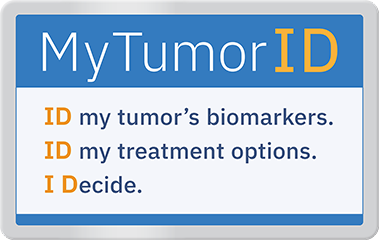
National Brain Tumor Society launched the MyTumorID® campaign to educate and empower patients and care partners to make informed decisions about biomarker testing and clinical trials.
Q: The phrase informed decision-making comes up so much in brain tumor care, and we know it plays such a crucial role. Could you start off by explaining what that means for somebody who’s navigating a brain tumor diagnosis?
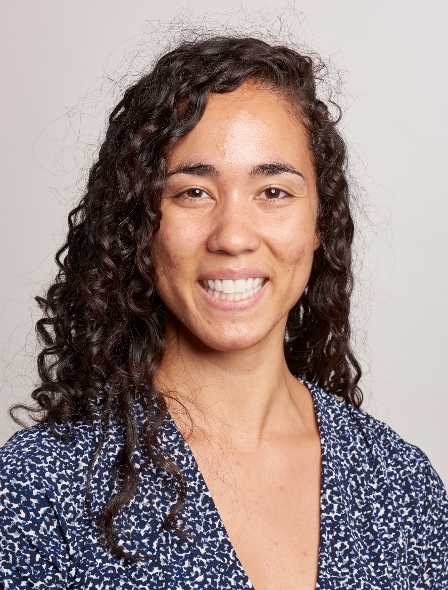
Caroline Crooms, MD, MPH
A: As a palliative care physician, I think of informed decision-making as part of this broader spectrum of serious illness conversations where we’re really trying to understand what is important to somebody, and make sure they have all the information they want, they need, that’s available, and that allows us to make decisions together.
Informed decision-making is something that we’re doing that’s around a specific decision, so making sure that someone has the available information about the significance of the decision to be made, [including] the potential outcomes, benefits, and potential drawbacks.
Being able to have all the information that you want to be able to make that decision, and I think that is part of this bigger spectrum of trying to make sure that we’re treating an individual person and their family and their needs as well as since we’re talking about biomarkers and individual tumor that may not be the same as another person’s.
Q: What does neuropalliative care mean for us?
A: I’m a neurologist, and then I also did a fellowship in palliative medicine, which is a specialty focused on improving and optimizing quality of life for people living with a serious illness. That means things like symptom management, coping with day-to-day changes as a part of a serious illness, and in some cases, planning ahead for the future, or navigating complicated medical decisions, often from a slightly different perspective than we might do informed decision-making as any clinician.
Ultimately, palliative care is an extra layer of support for people with a serious illness, along with their neuro-oncologists and the other specialists involved in their care.
Q: If somebody’s struggling to make these important decisions, how do you help them through this process? Are there steps that you help them take?
A: One of the first things that’s so important is figuring out what somebody already has been told. So just starting out by asking someone what they know, what the other doctors have shared. There are so many different specialists involved in treating a brain tumor, surgeons, oncologists, radiation oncologists, among others.
Sometimes it’s not clear who’s sharing what information, and we’re meeting people at different times, and also different patients and family members have different preferences for how much they hear. For some people, it might just be, “I have a brain tumor, and that’s plenty [of information],” and for others, they might like to know all the ins and outs. [I also ask] what they’ve read on the internet.
Then the next thing is to make sure that we’re sharing information that is very clear and jargon-free, which can be hard for physicians and other medical professionals to do, since we spend so much time steeped in the language of medicine. It’s totally fine for patients and family members to say, “I didn’t quite understand that. Can you explain what it meant?”
The other thing that I think is so important is asking people what’s most important to them, because we’re couching all of this decision-making in the context of somebody’s life. You know that they’re living the things and activities that they value and how they want to be spending their time.
And then another thing that I think sometimes can be overlooked is thinking ahead to the next step, right? So sometimes, for example, if we’re talking about surgery, when someone is first diagnosed, we say, “OK, here’s the surgical plan. We can talk through the benefits of doing the surgery and any potential risks that might be involved, and what happens after the operation is complete.” People are often overwhelmed, and may not think to ask that question. But unfortunately, a lot of the time we end up sort of playing catch up in the information sharing. Having that extra step of, “This is what it means — not just today or tomorrow, but in the next weeks and maybe months.”
It’s also OK to recognize that it often [takes] multiple conversations. Especially when you’re new to a diagnosis, there’s so much to absorb, and you may not think of a question in that given moment. Clinicians expect to be asked questions at a later date, or [for a patient] to say, “Hey, I need to revisit that.” That’s OK, too.
Q: From your perspective, what are some practical tips that you would give somebody, whether it’s a patient or a caregiver, while they’re attending an appointment?
A: I think that taking notes is a big one, because it’s often a wealth of information, and you need to go home and digest. Maybe you’re going to see another physician who will answer those questions. Being able to kind of carry information from place to place would be one [tip].
I also really encourage people to bring at least one other person you know — a family member, a friend, a caregiver — to visits because a lot of the time it’s just too much for one person to absorb. I think it’s important to have that support.
The other thing I would say on that same note is that I really encourage everybody, regardless of a brain tumor diagnosis or anything else, to have someone who could be a health care proxy, a surrogate decision maker in the event of an emergency who’s familiar with the medical context and the personal context to be able to say this is what [you] would want in this situation. I think having someone who’s involved from the get-go can be really helpful in that regard.
I do sometimes help people come up with questions for other physicians or health care professionals involved in their care because you can’t know everything to ask necessarily.
Q: When a patient is faced with trying to understand which treatment option to move forward with, especially if somebody is eligible for a clinical trial, maybe based on their biomarker testing, how would you walk them through trying to understand which is the best way to move forward and feel confident in their decision?
A: As a palliative medicine physician, I’m often viewing my role as supporting the person living with the brain tumor and the other people involved in their life, and thinking about how different decisions affect that, as opposed to [just] how we’re treating the tumor. Both of those things are really important to do together, but that’s my part that I play in it.
I talk to people about how a given treatment might affect their life, the way that they’re spending their time, and what they’re doing with their families and work. When we talk about “this biomarker is associated with maybe a better outcome,” well, what does that really mean? [It is important to ask] that next-step question, so that people can plan.
If we’re talking about a clinical trial, understanding eligibility is one thing. And, of course, with a clinical trial, we’re usually asking the question of what the benefit would be, [including] potential future benefits to other folks living with an illness.
The other thing [to consider] is how burdensome is participating in the trial going to be? That’s going to be different for different people. One person’s burden is very minimal for somebody else, and what one person sees as a really meaningful or useful experience is going to be very different. So I think asking not necessarily just about those big picture things, like a good outcome, [but also asking], “What does that really mean today and then in the coming weeks?”
I think one thing to add in there is function. That’s so important for all of us. Unfortunately, with brain tumors, it’s something we think about a lot. People have motor deficits or speech deficits that affect their functioning. The way we talk about a treatment that might help is going to be very different [depending on how] it’ll affect different aspects of your day-to-day life.
Q: Do you ever help patients with trying to understand if they should seek a second opinion for their diagnosis and or treatment options, and how do you help them sort of navigate the possibility that there could be alternative treatment options presented to them, or clinical trial options, for example?
A: I don’t know that I necessarily am suggesting it very often. I think that it’s really common for people who are living with a brain tumor — it’s such a life-changing diagnosis — and the access to care varies so significantly, depending on where you live, if you’re in a rural area, [or] an urban area.
I would say, certainly living in New York City, [that] many folks I care for have second, third, fourth opinions, which I think is great. Having multiple perspectives can be really helpful. That being said, I think there’s also a lot of benefit to having a longitudinal relationship with your health care team.
There are inflection points where having a second opinion can be helpful — early in diagnosis, if you’re considering clinical trials [because] not every clinical trial is available everywhere. A lot of the time, you have to go looking for them. And then also, if there’s a recurrence, if you’re receiving difficult news about disease progression, and significant changes in treatment options.
Sometimes we have a pretty straightforward treatment plan, and sometimes there are maybe multiple options on the table. That might be a situation where having another opinion, just to make sure you feel you’re getting all the possible information, can be helpful.
Q: For patients who may not be aware of what neuropalliative care is, can you talk about what an initial consult with you or somebody else in the field would look like?
A: I think it depends on what context [in which] I’m meeting somebody. I encourage folks, if they’re able, to access palliative care close to the time of diagnosis, especially if they have an aggressive tumor. Having that extra layer of support can be so valuable.
The palliative care team, ideally, will work closely with the neuro-oncology team to make sure that everyone’s on the same page about how things are going for somebody, what’s important, what we’re hoping for from different treatments. That allows the neuro-oncology team and other specialists to focus on tracking an MRI, interpreting the biomarkers, [and] following response to treatment.
With the palliative care team, maybe you’re talking about coping, you have some room for more in-depth symptom management. For me, if I’m meeting somebody early on, close to their diagnosis, the first thing I want to know is how are they coping? [It’s] a big deal, and sometimes it can be really hard to talk about with people in your personal life who might not be as familiar or who feel just uncomfortable with the topic of a serious illness.
I always ask people about their information preferences. Are they somebody who wants to focus on today? Are they somebody who wants to plan months or years down the line? Are they somebody who wants to let their family know all the particulars of their diagnosis, treatment, and prognosis? Or are they someone who wants to know that themselves?
I always screen for symptoms and just try to build a relationship. I also draw a lot on other areas of medicine, like physical therapy, occupational therapy, and speech, [and I] make referrals if need be, and in some cases, come up with things just on the spot that may help somebody to live better and function better.
A lot of that continues over time. As part of the serious illness conversation that I mentioned is that broader category into which informed decision making falls to check in about how things are going. What do we see coming down the pike? Would they like to talk about prognosis? I’m available to help people talk about all those types of things.
I would just add that I’m usually seeing people in the outpatient (clinic) setting. There are also typically palliative care services in most hospitals, which would include a whole team, usually a physician, nurse practitioner, sometimes a chaplain, and a social worker to provide interdisciplinary support in those moments that might be more feel more like a crisis, which can be really helpful.
I think it’s important to note sometimes people feel freaked out when they hear the term palliative care and think of it as hospice care, which is end-of-life care, and palliative care is meant to help you to live well while you have your serious illness.
Q: If somebody is feeling stuck in making a decision about how to move forward, what are some questions that you can provide them with to be able to make that informed decision?
A: I think it depends so much on an individual person’s circumstance, but I do think that asking, “What would the next weeks or months look like if I choose to pursue this?” [could be helpful]. Maybe anchoring it to specific worries or hopes that a person has. Just using the example of independence, or functional ability, I think asking about, “How will this affect my speech, my fatigue, [and] my ability to work?”
For some people thinking about life expectancy, [they can ask], “Is this something that we expect to extend my life, and if so, by roughly how much, recognizing that there’s a lot of uncertainty there?”
Think about, “What are the different options on the table and how do they affect the things that matter the most to me in my life?”
It’s so complicated to think about getting information from other resources, but I think that the community of people who have brain tumors or whose loved ones have brain tumors — there’s so much to be learned from other people’s experiences. I think having those conversations and then bringing them back to your medical team can be really helpful.
It’s important to remember that you can change your mind. You’re always driving the ship. You can say, “I want to try it and see how it goes.” And then you could say, “You know what? This isn’t really working for me, and I don’t want to do this treatment anymore.” You’re not locked into one thing or another for the most part.
ID Your Tumor. ID Your Options.
Informed decision-making starts with understanding your tumor’s biomarkers and knowing all of your treatment options, including whether clinical trials may be right for you. This knowledge empowers you to take an active role in your care. Staying informed helps ensure your decisions reflect both the latest medical advances and what matters most to you.
That’s why MyTumorID helps you understand what biomarker testing is and why identifying your tumor at the molecular level matters. When you ID your tumor, you can explore treatment options with your health care team and make informed decisions about your care, including whether a clinical trial may be right for you. With MyTumorID, I decide.