Advancing promising research that leads to better treatments and quality of life for patients and families is at the heart of the National Brain Tumor Society’s mission. And thanks to the commitment of our community of donors, researchers, advocates, and partners, 2026 is already off to a strong start.
In just the first few months of the year, NBTS has announced multiple new research grants and collaborations aimed at accelerating progress against some of the most challenging brain tumors. From new grants advancing our understanding of rare pediatric tumors to collaborative funding initiatives targeting glioblastoma, these grants are rooted in a scientific strategy that is laser-focused on transformative new treatments and improved quality of life for patients. They build on decades of research progress and offer hope for the future.
New Funds for Ependymoma Research Through CERN
Through the Collaborative Ependymoma Research Network (CERN), a program of NBTS dedicated to advancing research into ependymoma, we are funding two new initiatives.
One newly-funded project will help advance understanding of spinal ependymoma, a rare form of brain and spinal cord tumor. The research aims to precisely define spinal ependymoma subtypes, reduce diagnostic uncertainty, and lay the groundwork for future, biologically-informed treatment strategies — the kind of foundational work that treatment development will ultimately depend on.
In addition, the 2026 CERN Robert Connor Dawes Scientific Fellowship was awarded to support a promising early-career scientist working within a leading research laboratory. Fellowships like this are critical for sustaining progress in neuro-oncology, ensuring that emerging investigators have the resources and mentorship needed to pursue innovative ideas, build careers focused on brain tumor research, and develop into the next generation of leaders the field will depend on.
Together, these initiatives illustrate NBTS’s commitment to supporting both scientific discovery and the researchers driving that discovery forward.
Collaborating to Accelerate Glioblastoma Research
NBTS recently joined a coalition of philanthropic organizations supporting $4 million in new research grants aimed at advancing novel therapeutic strategies for glioblastoma (GBM) — the most aggressive and common malignant brain tumor in adults.
Led by The Mark Foundation for Cancer Research and The Sontag Foundation, this collaborative effort grew out of a scientific workshop that brought together leading investigators to identify bold new approaches to tackling GBM’s most persistent challenges, including treatment resistance and tumor complexity.
The resulting awards will support five research projects exploring innovative strategies such as identifying new therapeutic targets arising from chromosomal abnormalities, enhancing anti-tumor immune responses, and improving the effectiveness of cellular therapies that are also intended to ignite the body’s immune system to fight glioblastoma.
What’s Ahead in 2026
These early announcements represent only the beginning of what NBTS aims to accomplish in 2026.
NBTS will continue to keep the “pedal down” in advancing high-impact brain tumor research. Our strategic research programs will focus on both pediatric and adult brain tumors — including glioblastoma, astrocytoma, oligodendroglioma, meningioma, ependymoma, diffuse midline glioma, and others.
Across these tumor types, our research priorities focus on four core goals:
- Innovating research methods particularly during a time of rapid technology advancement
- Better treatment selection for clinical trials
- Improving the quality of life of people living with a brain tumor
- Incorporating patient and caregiver experience into research
To advance those goals, NBTS plans to deploy more than $2.5 million in research-related funding and programs in 2026. Key priorities include:
Advancing immunotherapy research.
NBTS-supported studies are exploring ways to harness the immune system to recognize and attack brain tumors. We anticipate that one or two NBTS-funded clinical trials focused on immunotherapy could launch this year.
Investigating DNA damage repair therapies.
Our DNA Damage Response Consortium is evaluating how certain drugs that target DNA damage repair mechanisms may be effective against multiple types of glioma, potentially opening new treatment avenues for both adult and pediatric patients. In just three years’ time, the group has successfully ruled out many drugs that should not be evaluated in humans and have supported two new clinical trials in adult and pediatric brain tumors. In 2026, we’ll be vetting even more potential new treatments through this rigorous program of leading experts from top research institutions
Expanding quality of life research.
In addition to developing new treatments, NBTS remains committed to improving how patients live with brain tumors. In 2026, we will launch a new round of grants to conduct research on ways to improve aspects of survivorship and behavioral and emotional health and support.
Innovating clinical trial design.
NBTS will continue working with researchers, regulators, and industry partners to develop more efficient and patient-centered clinical trial approaches — helping promising therapies reach patients faster.
Since 2014, NBTS has been committed to improving the measure of benefit to patients in clinical trials as well as the clinical trial designs themselves. We continue to advocate for the use of platform trials such as GBM AGILE, as well as better early phase clinical trial designs that improve access and retain the kind of rigor essential to new treatment evaluation.
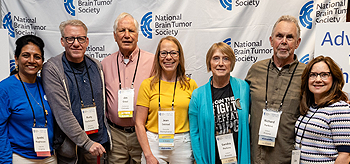
Finally, a unique feature of NBTS’s research program is the involvement of Research Advocates — patients and caregivers who are trained to participate directly in research planning and funding decisions. Their lived experiences provide invaluable insight that helps ensure research addresses real-world patient needs. NBTS will welcome a second class of Research Advocates in 2026, building on the success of the program’s inaugural cohort.
Building on Momentum
All of our research work in 2026 connects to something larger: a scientific strategy shaped by more than two decades and $52 million in NBTS-funded research, alongside our advocacy to increase federal research funding and our efforts to convene leaders across the neuro-oncology field. Together, these efforts have helped drive real progress, including multiple FDA approvals in recent years of new treatments influenced by NBTS-supported research — developments that reflect real momentum, and for NBTS, just the beginning of what we’re working to accomplish.
Scientific breakthroughs rarely happen overnight. They require sustained effort, collaboration, and investment over many years. The encouraging start to 2026 reflects what is possible when we come together with urgency and determination.
With continued support from our community, NBTS will keep pushing forward — funding innovative science, strengthening the research ecosystem, and working every day to bring better treatments and improved quality of life to patients and families facing brain tumors.