This website uses cookies that help the website function and that help us understand how you interact with it. Please read our privacy policy for more information.
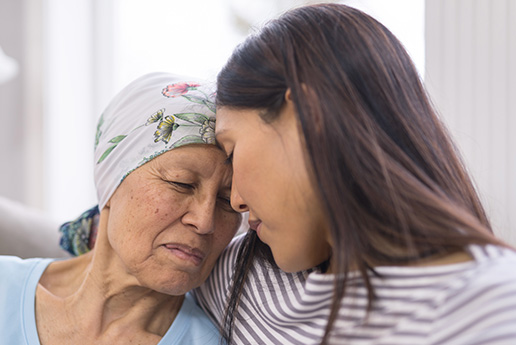
When someone you care about is diagnosed with a brain tumor, life can change in an instant. Between doctor appointments, treatment schedules, rehabilitation, and more, caregivers often put their own needs last. But the reality is that when you’re rested and supported, you’re better able to provide the calm and steady care your loved one needs.
“Self-care is so important because, as a caregiver, I always put my mom first in everything,” said Sarah A., who is caring for her mother with glioblastoma. “However, self-care allows me the opportunity to replenish my cup and care for myself so that I can then provide the best for my mom. Being a caregiver is a 24/7 job, so just taking even 10 minutes for yourself a day makes a world of difference.”
Often, when people hear the term “self-care,” they picture a trip to the spa, which may seem far-fetched when you’re in the thick of it as a caregiver.
Check out these realistic self-care ideas and tips for caregivers supporting someone living with a brain tumor.
Fundamental Self-Care
Fundamental self-care is all about meeting your body’s basic needs — sleep, eating well, hydration, hygiene, and movement — so you can sustain your energy over time. These acts of self-care often have to fit into small pockets of time for caregivers. Without fundamental self-care, caregivers can quickly burn out, so it’s the most important type of self-care to prioritize as a care partner.
Examples of basic self-care for caregivers can look like:
Taking a shower (if a shower isn’t possible, wash your face and use dry shampoo)
Changing into clean clothes
Eating a healthy snack instead of skipping a meal
Taking a mindful walk in nature — even around the hospital grounds — and noticing the colors, sounds, and smells
Keeping a refillable water bottle with you and setting reminders to drink
Standing up every hour if you’re sitting for long periods by someone’s bedside
Putting on your favorite song and moving your body for five minutes
Sarah A.
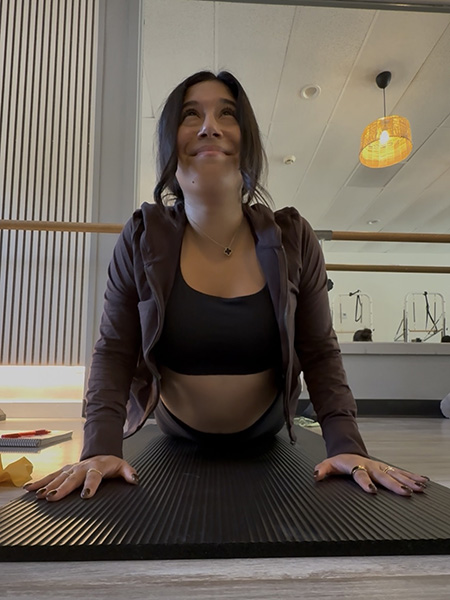
As she cares for her mother, who has GBM, Sarah prioritizes her Pilates class or a training run and blocks it out on her mom’s calendar.
“My biggest self-care activity that I do for myself is trying different workout studios,” Sarah said. “Whether it’s Pilates, yoga, cycling, or something else, I strive to move my body every day. I also enjoy this because I’m able to meet new people, be around good energy, and have time to not think about anything else but the workout that I’m doing and being present in that moment.”
She encourages other caregivers to make time for themselves, no matter how short.
“Some people may not even have the luxury of an hour, and I get that,” Sarah said. “Even if you could get five minutes in the bathroom, sometimes it literally just takes that.”
If time is limited, try doing 10 jumping jacks after using the bathroom, or 10 squats or lunges while you’re waiting for food to heat up in the microwave or on the stovetop.
Taking Self-Care to the Next Level
The next level of self-care is the quiet, practical acts that protect a caregiver’s peace of mind over time. Sometimes it’s simply tackling a task that we’ve been putting off for a while.
Examples of this type of self-care for caregivers include:
Scheduling time for your own health care appointments, because your health matters, too
Going on leave from work when you can no longer sustain basic self-care
Practicing a daily 5-minute grounding ritual
“In terms of my self-care, I didn’t really practice it enough, but I did go on caregiver leave with my work, which was incredibly helpful,” said Jennifer L., who cared for her mother with glioblastoma. “I had been trying to work when she was asleep, and it was not manageable at all.”
“Self-care can be turning off or turning on your Facebook group or your information gathering mode because sometimes taking a break from it gives you clarity,” said Katie N., who is caring for her husband with oligodendroglioma. “When I would find myself spinning out, I knew I needed to turn off the Facebook group.”
“What really made a difference for me was having [other] people around and setting up shifts around her medication schedule,” Jennifer shared. “Even just having the people around you say, ‘I know you feel like you’re losing your mind, but these are normal experiences.’”
Nathan G., who cared for his brother with glioblastoma, said, “Everyone’s going to say, ‘What can I do for you? How can I help?’ I would usually say, ‘Just go visit my brother.’ Sometimes the most helpful thing people can do is simply show up and spend time with your loved one.”
It can be hard for caregivers to ask for help, but it can give you peace of mind to see someone else take a task off your plate. If it’s easier, you can use a care coordination app to digitally share needs with your friends and family.
“I ask others to sometimes pick up my groceries for me, help me with laundry, pick up my mom’s medicine, or keep her company for a bit while I run errands,” Sarah said. “When others show up for me in what may seem like a small way, it actually makes the biggest difference. Sometimes I just need someone to run an errand because I have nothing left in me for that day. I appreciate all my support system that keeps me going.”
Liz P., who co-facilitates NBTS’s Caregiver Support Conversations, has sticky notes with to-do tasks adorning a door frame in her home. When a friend comes over and asks how they can help, she simply directs them to grab a sticky note. They can then pick what works best for them.
“I’m such a list person and so bad at saying, ‘Oh, I could use someone to put the new license plate on my car,’” Liz said.
Going the Extra Mile for Self-Care
Going the extra mile for self-care includes actions that replenish joy and connection to yourself, even in the midst of caregiving. For caregivers of people living with brain tumors, this type of self-care can feel indulgent, but it’s actually the spark that helps you stay emotionally grounded through the uncertainty of caregiving.
Examples of this type of self-care vary from person to person, but may include:
Connecting with a friend
Doing a creative activity for 10 minutes (e.g., coloring, doodling, taking photos, painting, etc.)
Watching a favorite show or sports team on TV
Reading a book
Trying a new recipe or baking something comforting
Drinking a cup of coffee or tea (get a mug warmer or a thermos if you find yourself getting interrupted often)
Gardening
Building Legos
Journaling or writing down five things you’re thankful for each day
Going for a run
Spending time with a pet
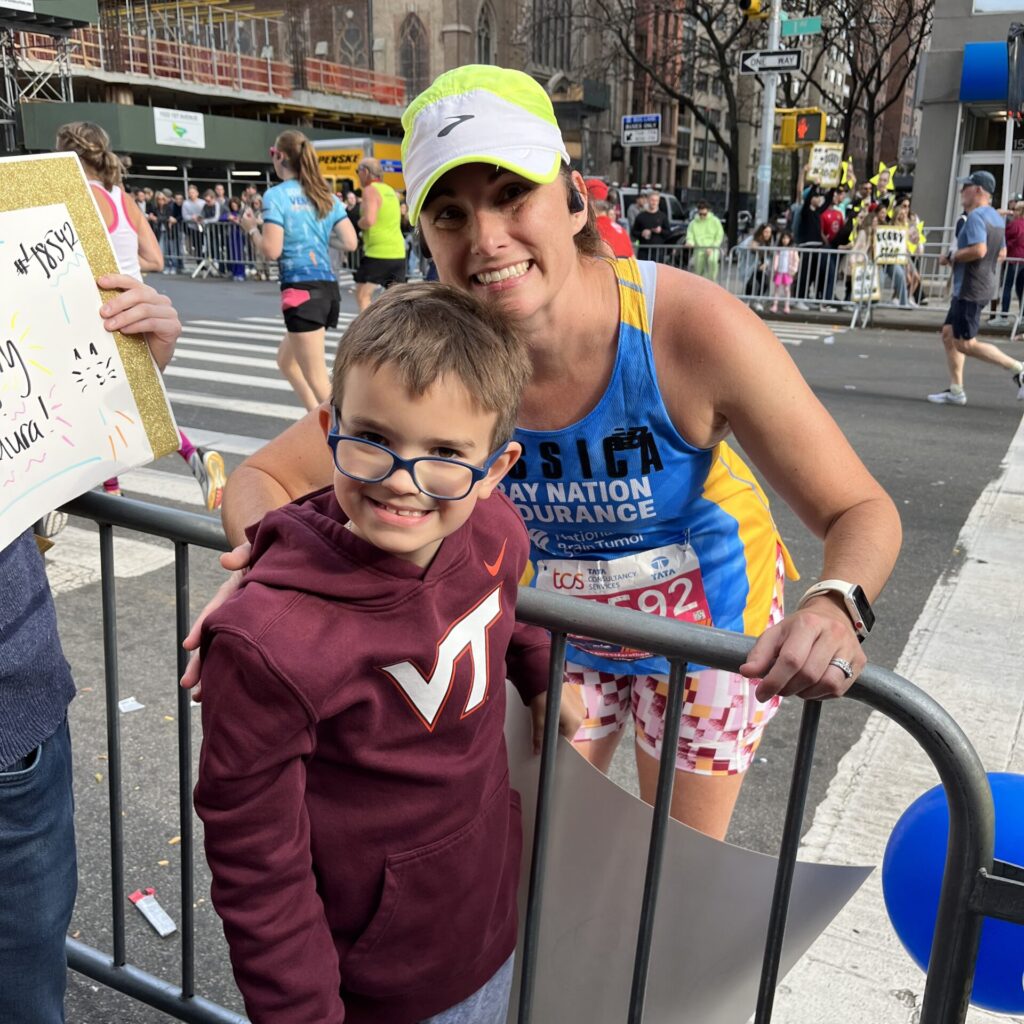
Jessica O.
“Running is my outlet,” shared Jessica O., who trained and ran in the NYC Marathon on the Gray Nation Endurance team in honor of her son, who has juvenile pilocytic astrocytoma. “It makes me a better person and helps to ground me and settle my brain. It’s also my ‘me’ time because, as a mom, it’s tough to find ‘me’ time outside of working, taking care of children, and getting him to appointments. Running is the one time that I have just to be alone. It is freedom. Needless to say, my mood is so different when I’m able to run and have that ‘me’ time.”
Brilliant self-care doesn’t have to be time-consuming or elaborate. Sometimes, it’s just about doing a brief activity that makes you feel like you again.
“I’m a big reader, so if I can get some time before bed to read a little bit, that really helps me,” said Gabrielle W., a mother to a toddler with high-grade astrocytoma.
For others, it’s about creating steady routines that bring comfort and calm.
“For me, self-care happened in the morning through a consistent routine,” said Nathan G., who cared for his brother with glioblastoma. “I would start by listening to audiobooks or reading — something that nourished my mental state. Then I’d do an Italian lesson, followed by yoga or Pilates, almost every day. This morning ritual centered me before the firehose of crises that are inevitably coming your way.”
Self-care can also look like finding small, quiet moments.
“I remember sitting in the vehicle for five glorious minutes of nothingness,” said Tami A. about running an errand when her husband had glioblastoma. “At the time, I didn’t think about myself, but I do remember that one day of just getting into the car, driving the five minutes into town and back, and remembering to take a breath.”
Treat Yourself Self-Care
A massage might be what most people picture when they hear “self-care,” but it doesn’t have to be luxurious or extravagant. Think of it as an intentional indulgence that adds comfort, ease, or delight to your life as a caregiver. As Donna and Tom said on the comedy Parks and Recreation, it goes a long way when you “treat yo’ self.”
Examples of this type of self-care for caregivers include:
Planning something to look forward to — a coffee shop outing, a day trip, or a dinner out
Spending an hour at home alone guilt-free
Buying a tool that will help you save time at home (e.g., a robot vacuum to save you time vacuuming)
Getting grocery delivery
Having respite care once a week
Prioritizing travel or activities during the good week of a chemo cycle
Upgrading your favorite daily item, like cozy slippers or coffee, or getting an ebook reader if you enjoy reading books
Outsourcing a task, such as cleaning, lawn care, or laundry, once a month, to give yourself some breathing room
Using prepped meal kits to simplify meal planning and cooking
Taking a scenic drive on a nice day
Signing up for a local class or workshop that feeds your creativity (many local yoga studios offer free community classes once a week)
Buying a high-quality pillow to improve sleep at home or on a hospital couch
Joining a free group walk or hike through your local parks department or state park
Participating in a free book club or event at your local library
Sharing a wish list of self-care items with your support system for gift ideas or needs
“My mom was between scans, and we thought she’d be stable for at least another month,” said Jaime S., who cared for her mother with glioblastoma. “It looked like we had a window where we could do something for a few days. My family and I went down to the Jersey Shore. It was off-season, but I just wanted to see the beach. That’s my self-care, seeing the beach. I was so glad that we did that for a few days. I just needed that escape because I didn’t get much of it.”
Ask friends or family members for help so you have the opportunity to treat yourself. There may even be free local services available to you, which can help alleviate concerns about cost.
Prioritizing Self-Care
Cleveland Clinic reports that more than 60% of caregivers experience burnout symptoms — exhaustion, social isolation, loss of interest, changes in appetite or sleep, irritability, and more.
It’s challenging to emphasize self-care when you’re taking care of a loved one with a brain tumor, but self-care is an important strategy for preventing burnout.
“Taking care of yourself isn’t selfish — it’s necessary,” Nathan said.
Join Caregiver Support Conversations
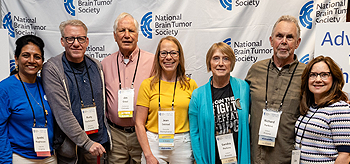
Find community at the National Brain Tumor Society’s Caregiver Support Conversations, a virtual support group that meets on the first Monday of every month. This support group welcomes caregivers currently supporting a person living with a brain tumor to connect with each other on topics that matter to them in a safe, welcoming space.
“Support groups are vital to the caregiver because there is so much information you must learn fast as you go,” said James K., who attends Caregiver Support Conversations. “Support groups have others who you can talk to who understand and are either in the same situation or have been there. Having others who have been down the same road is extremely valuable for help with scanxiety, and to get sources or tips like state respite care, what occupational therapy items to buy to help, tips on travel, fiscal or legal resources, etc. These can only be found in a support group.”