Sign our action alert today — this Glioblastoma Awareness Day, urge Congress to support GBM-specific priorities, including funding research, expanding the Glioblastoma Therapeutics Network, and co-sponsoring the BRAIN Act.
Cookie Policy
This website uses cookies that help the website function and that help us understand how you interact with it. Please read our privacy policy for more information.
I was 18 years old, a freshman in college, when I began slowly losing motor function on the left side of my body. At first, I didn’t understand what was happening. Being away from home for the first time, I downplayed my symptoms and never told my parents how serious things had become.
Everything changed during final exams.
I collapsed while getting my exam sheet from my professor and completely lost function on the left side of my body in an instant, and had to be carried out of the exam hall. No matter how hard I tried, I could not move my arm or my leg; I felt trapped in my own body. That afternoon, my father arrived to help me move out of my dorm and immediately drove me three hours back home. We scheduled an emergency appointment with my family doctor, who quickly realized something was seriously wrong and ordered an MRI.
On the day of the MRI, the technician reviewed the images and instructed us to go straight to the hospital.
That was the night the innocent, whimsical part of me that believed I was invincible died a little.
One incredible doctor sat beside me and explained my diagnosis in detail. For the first time in months, I was scared but also felt relief. There was finally an explanation for what was happening to my body, and there was hope that something could be done.
My prognosis was not encouraging. There was a very real possibility that after surgery, hospice care would become my next home instead of a college dorm room.
Undergoing Brain Surgeries & Radiation
On June 10, 2023 — coincidentally Ependymoma Awareness Day — I underwent my first craniotomy. When I woke up, I could walk again. I could move my hand again. Although I permanently lost much of my sense of touch on my left side, regaining movement felt miraculous.
With the help of an extraordinary team of surgeons, neuro-oncologists, nurses, and physical therapists, I slowly began to recover. However, my journey was far from over.
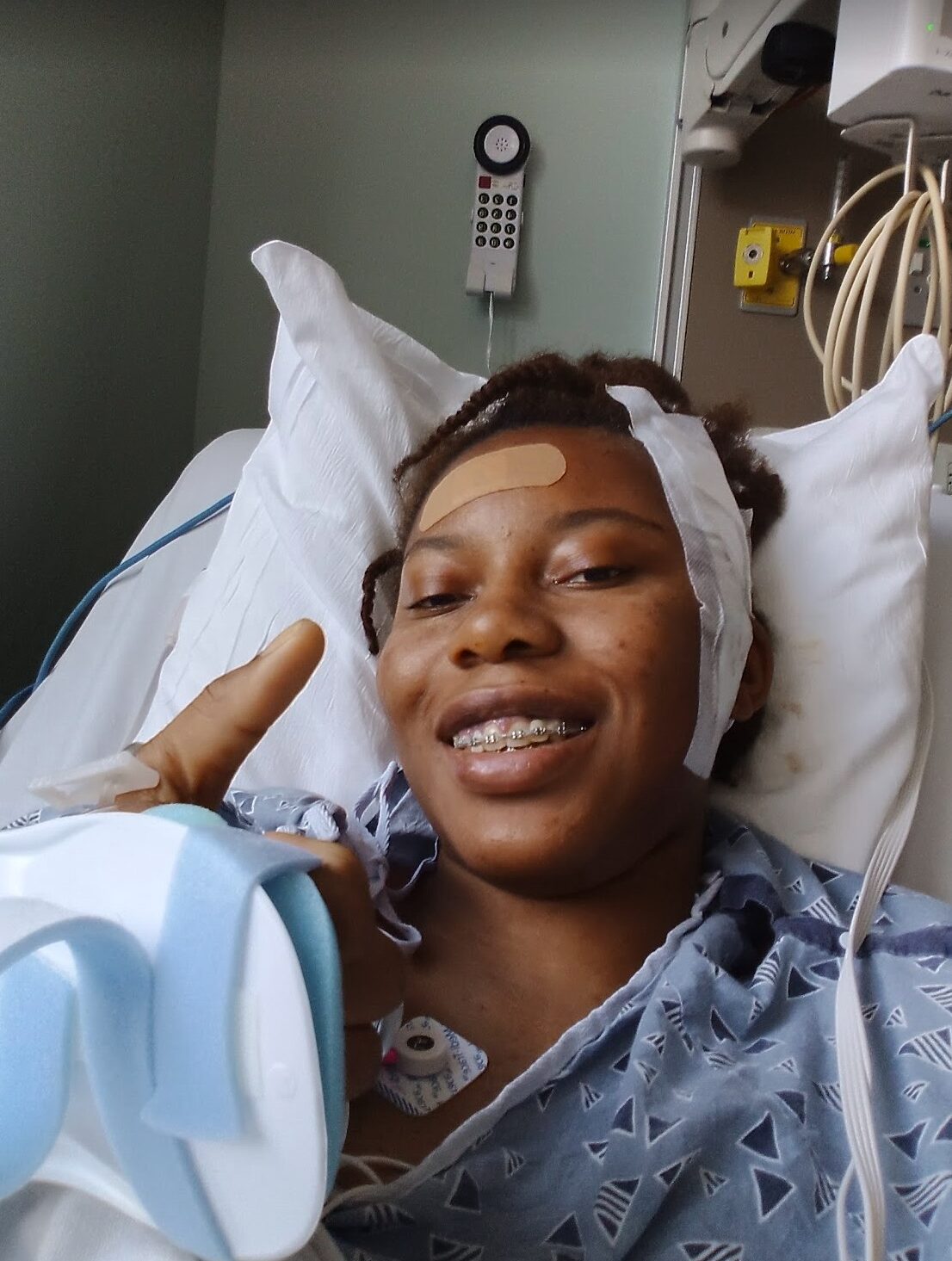
In late July, I underwent a second craniotomy to achieve a more complete tumor resection. My surgical team successfully removed approximately 90% of the tumor, but complications followed. I developed a brain infection, and my doctors faced a difficult decision about whether my bone flap could be saved.
They ultimately decided to try aggressive antibiotic treatment.
At 19 years old, I found myself with a shaved head, staples running across my hairline, constant pain, exhaustion, confusion, and an antibiotic pump hanging from a bag over my shoulder. Yet what I remember most from that time is not the suffering.
I remember my 16-year-old brother carefully changing my antibiotic bags. He learned every procedure and hygiene precaution so he could help care for me. I remember my parents, both nurses, spending their days caring for patients and then taking turns staying by my side in the hospital at night. Their love carried me through some of my darkest moments.
By November 2023, I reached the final stage of my treatment: proton radiation therapy.
Oddly enough, I have many fond memories of that period. Throughout my journey, so much of the fear and pain was softened by the kindness of the people around me. The nurses, doctors, radiation therapists, and even the valet staff brought warmth to difficult days. One valet would always compliment my pink beanie. My radiation therapists remembered my favorite music—I became known as the R&B girl during treatment sessions.
On November 16, 2023, I completed radiation therapy.
Looking Ahead
Determined to honor everyone who had helped save my life, I returned to college with a new purpose: to make a positive impact on the world.
The road since then has not been easy. I still struggle with opening cans, moving some of my left fingers, severe neuropathy, chronic fatigue, and cognitive challenges. There are days when the pain is difficult. There are days when I miss the person I was before cancer.
But there are also days when I look at how far I have come.
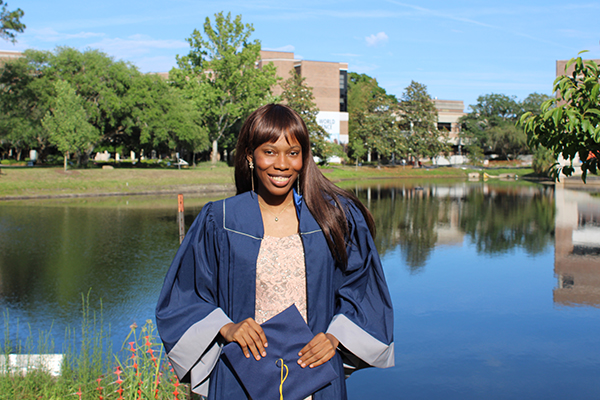
In May 2024, less than a year after my diagnosis, I received the NASA STEM Engagement Award. Today, at 22 years old, I have graduated with my bachelor’s degree and teach robotics to children in underserved communities. I fell in love for the first time, and I am hopeful for the future.
Cancer changed me forever. It took away some abilities, but it also gave me a deeper appreciation for life, family, perseverance, and service to others.
I am not the same person I was before my diagnosis.
I am braver.
I am stronger.
And although my journey with ependymoma continues, I believe that one day things will get even better.
Throughout this journey, I have tried to hold on to one thing: my smile. Even on the hardest days, when I was exhausted, afraid, or uncertain of what would come next, I chose to keep smiling and keep moving forward.
So if there is one thing I hope other patients and families take from my story, it is this: there is still joy to be found, even in the middle of the hardest battles.