This website uses cookies that help the website function and that help us understand how you interact with it. Please read our privacy policy for more information.
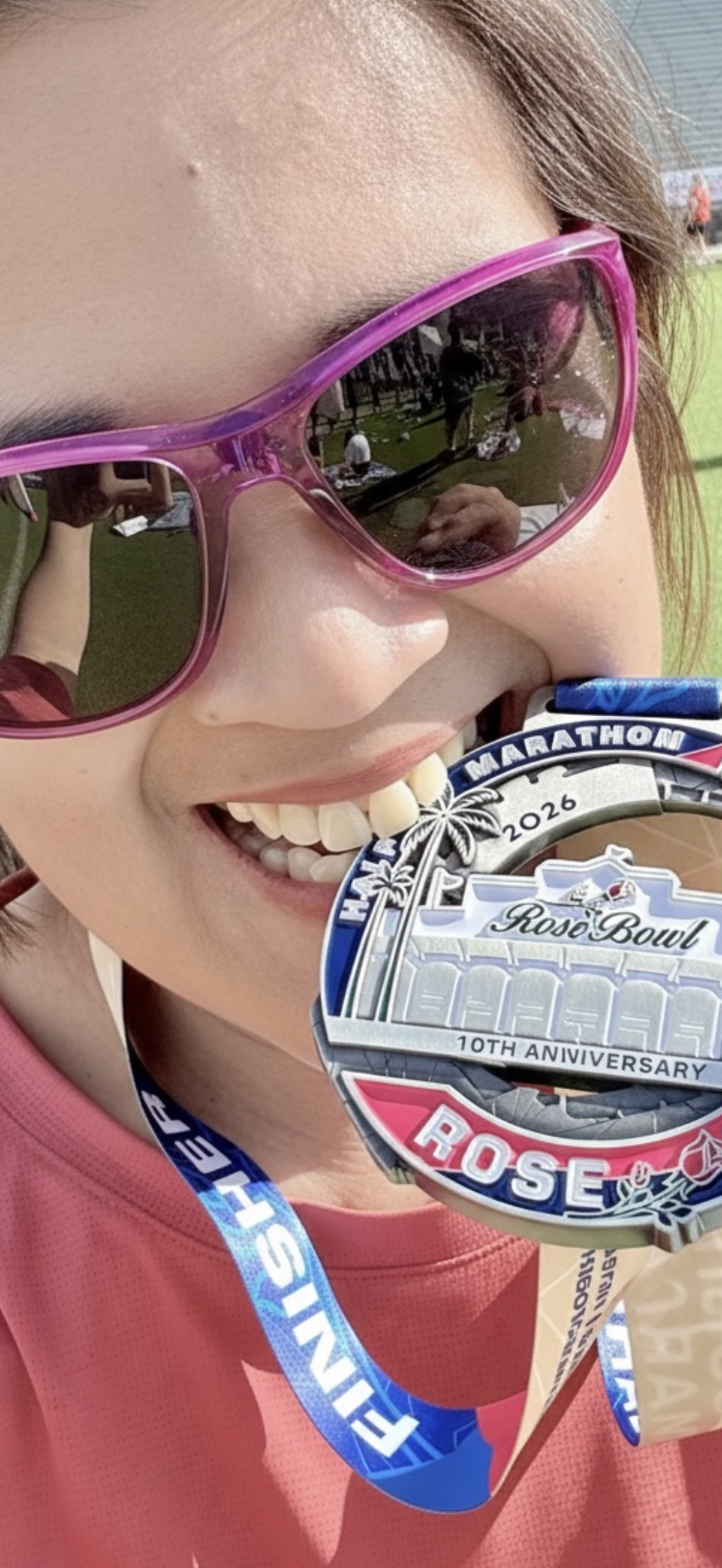
I wanted to share my brain tumor (meningioma) journey. I am a nurse and an active runner. I participate in 5K or 10K races every month and ran my first half marathon last January 2026. Behind that strength, I was facing a silent battle.
On August 7, 2025, I went to the ER to rule out a stroke after experiencing facial numbness and dizziness. I saw my MRI results on the portal before the doctor came in. In an instant, my nursing brain and my ‘wife and mom’ brain collided. I understood the science, but my heart was breaking.
MRI of the Brain Results:
“No evidence of intracranial hemorrhage, midline shift, or mass effect. No evidence of acute infarct.
Small extra-axial, dural-based mass in the left cerebellopontine angle, which may represent a meningioma. Recommend follow-up contrast-enhanced MRI of the brain for further evaluation.
There is a 2.0 x 1.3 x 1.9 cm extra-axial, dural-based mass in the left cerebellar pontine angle posterior to the porous acusticus, which abuts the pons and left middle cerebellar peduncle.”
There is so much weight in a single word. Seeing ‘mass’ on my MRI results was the moment my strength gave way. It was the word that broke me to tears, as I sat there in the ER holding my husband’s hand and trying to make sense of a new reality. I asked God, WHY?
In an instant, my world turned upside down. As a nurse, a runner, and a mom to two boys, my life is defined by movement and strength. But staring at that word — ‘mass’ — all I could think about was the ‘what ifs.’ What if I lose my balance while running? What if I fall while taking my son to school? What if a debilitating headache strikes while I’m mid-shift or mid-stride? The fear of losing the steady ground I’ve built my life on broke me to tears.
On September 15, 2025, I had my first meeting with my neurosurgeon, Dr. Walavan Sivakumar, from Pacific Neuroscience Institute in Torrance, CA. After doing extensive research on his background, I was so impressed that I felt a strong need to consult with him regarding my treatment options.
He recommended removing the mass immediately while I’m still young and active. He explained that it’s likely been growing slowly for about ten years, and removing it now will prevent further pressure on my facial and hearing nerves.
He explained a minimally invasive technique known as a keyhole retrosigmoid craniotomy. By making only a small opening and using advanced imaging tools like endoscopes and microscopes, he can safely remove the tumor with fewer complications on the head and with faster recovery.
I was staying consistent with my running, clocking at least three miles three times a week and participating in a 5K or 10K race every month. On top of that, I was training hard for my half marathon on January 18, 2026. My meningioma could not stop me!
In December 2025, I successfully completed the “12 Days of 5K” challenge in running to raise awareness and support for people fighting cancer
My symptoms had been largely concentrated on the left side of my head and face. I’d been dealing with on-and-off migraines and dizzy spells, accompanied by ringing and slight hearing loss in my left ear. Additionally, I’ve had bouts of numbness in my left face and persistent pain in my left jaw.
Dealing with this illness has been emotionally exhausting. I’ve been crying in private and losing sleep because I was trying so hard to stay strong for my family and keep them from worrying about me.
I had my repeat MRI on January 12, 2026, so my neurosurgeon could compare it to the original from August 2025. I was so relieved to share that the mass was stable! Based on that update, I’ve set my surgery date for March 19, 2026.
Getting a Second Opinion
I was originally scheduled for surgery on January 28, 2026, but I decided to seek a second opinion first to gain additional neurosurgical perspectives. I chose to consult with the Mayo Clinic in Arizona on January 15, 2026, recognizing its reputation as a world-class health care facility.
I had a consultation, which gave me a lot to think about. Their neurosurgeon recommended a ‘watch and wait’ strategy with regular imaging, suggesting that surgery might not be needed for another 10 years. Interestingly, his surgical approach would be a traditional craniotomy, which is a bit different from the minimally invasive option my other neurosurgeon suggested.
I’ve been grappling with the weight of this decision, but I’m taking control and choosing to focus on the positive outcomes. While my initial instinct was to expedite the process, I’ve been mindful of the ‘what ifs.’ I’m aware of the potential recovery challenges and their impact on my passions, like running, and my overall well-being. I’ve considered the risks, including paralysis, stroke, and death.
After thorough research and consultations with loved ones, I’ve decided on the minimally invasive approach over the traditional craniotomy, and I’m feeling empowered by this informed decision.
I’ve stayed dedicated to my love for running, knowing that a strong heart is my best defense and the key to my recovery. My surgeon actually encouraged me to keep moving — he said staying active is going to be my ‘secret weapon’ for healing.
Undergoing a Craniotomy
Just as I was preparing for surgery, influenza A hit me on February 20. Between the fever and the cough, I felt incredibly weak and had to put my training on hold to focus on getting better. The fever and cough made training impossible and left me feeling physically exhausted just weeks before my surgery.
On March 10, 2026, I had my pre-op appointment at AltaMed in West Covina. My primary doctor confirmed that my bloodwork, EKG, and chest X-ray were all normal. My doctor assured me that my surgery risk level is under 1%, but despite the good news, my nerves are definitely increasing as the date gets nearer. I was so scared to think of the words “brain surgery.”
Anxiety took over the night before my surgery. Leaving the house as early as 3 a.m., I kissed and hugged my 10-year-old son, terrified by the thought that I might not be coming back to him. It was one of the hardest goodbyes I’ve ever had to say.
While waiting for my 7:00 a.m. surgery, my nerves were high, but I felt so well-supported. Nurse Jennifer was wonderful, and my anesthesiologist was incredibly kind. When Dr. Sivakumar stopped by, I even joked about backing out! He reassured me that removing this mass was the best decision, and his confidence and positivity really put me at ease. He’s such a positive and overconfident surgeon. His steady confidence in removing the mass in a less complicated approach made me realize I was in the best possible hands!
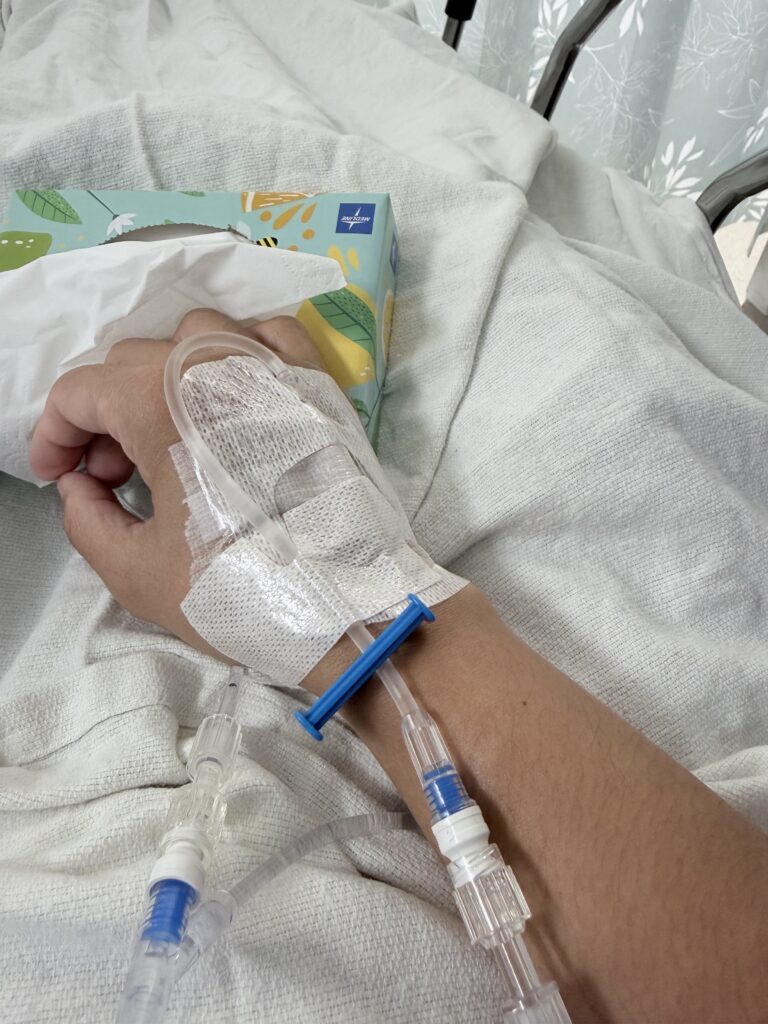
The moment finally arrived at 7:31 a.m. After a quick kiss for my husband, I was rolled toward the OR. I remember the anesthesiologist’s friendly greeting and the feel of the IV line; in less than ten seconds, I was completely out! My doctor said it would be a 4-5 hour surgery, depending on how sticky the tumor is.
The next thing I knew, I was being rolled out of the room, thinking to myself, ‘What is taking so long? I’m still waiting for my surgery!’ Then I heard a voice telling me I was already in the recovery room and the procedure was over. I was so overwhelmed with relief that I burst into tears. When I asked the time, the nurse told me it was 1:06 p.m.
I woke up with no pain, but my throat was so dry, so I asked for ice chips. I was so groggy but not sleepy. I had mixed emotions. My surgeon walked by to tell me the surgery was a success, though he had to leave a very small part of the tumor behind. It was too close to the nerves, and he didn’t want to cause any facial paralysis by forcing it. We’re going to talk more about it once I’m fully awake and the grogginess fades.
Many of my family and friends saw me running, working as a nurse, and showing up for every event, but they didn’t see the private war I was waging against a brain tumor. It was heavy weight to carry, but I kept moving.
I am so grateful to my world-class neurosurgical team at the Providence Little Company of Mary Medical Center and the overwhelming support of my husband, family, and close friends who stood by me. Because of the foundation God helped me build, my recovery has been a miracle: Now I’m tumor-free! My doctors told me my fitness was the ultimate ‘pre-hab.’
Because of my life as an active runner, I was up and walking around the recovery room just two hours after brain surgery, and I was discharged the very next day with zero need for rehab!
Identifying My Tumor
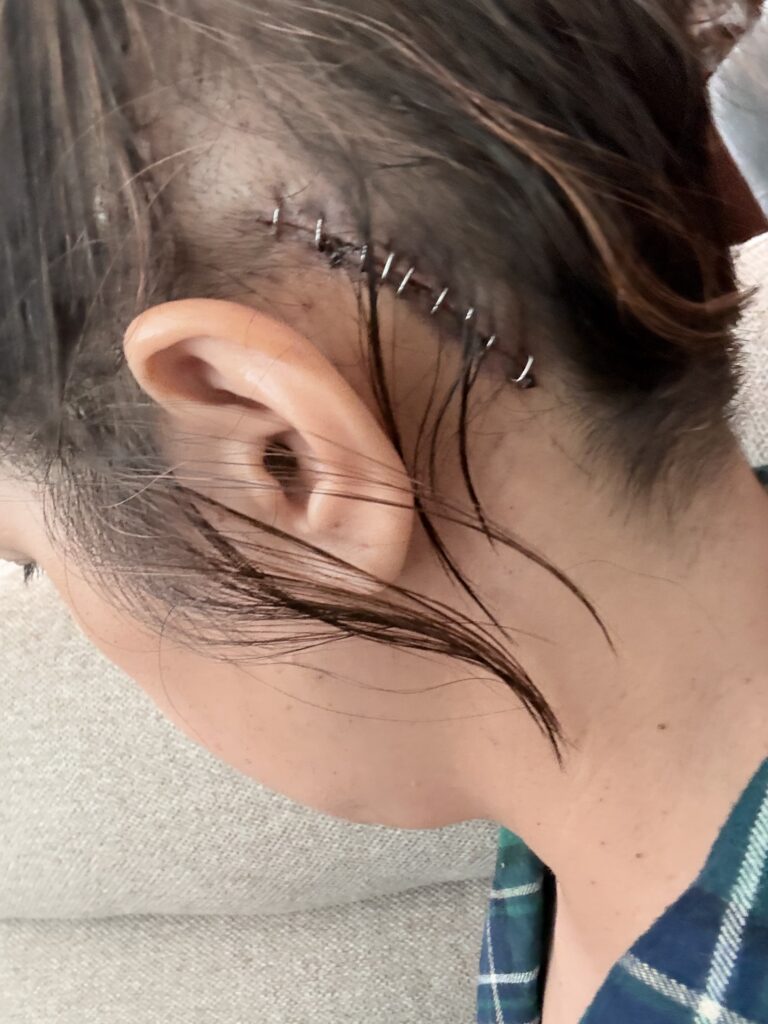
Eleven days after surgery, I had my post-op appointment with my neurosurgeon, and the victory is complete: my MRI is clear, my pathology confirmed a benign grade 1 fibrous meningioma, and my staples are officially OUT!
I am living proof that your health is an investment. My doctors credited my fitness for a ‘miracle’ recovery — walking 2 hours post-op brain surgery and discharged home the next day. I am getting ready for my comeback, and I’m feeling more empowered and driven than ever.
Looking back on this journey with a meningioma, I am reminded that while a diagnosis can reshape a life, it does not have to define it. Every appointment, every recovery milestone, and every moment of uncertainty has taught me the true meaning of resilience. To those just starting their own path: know that you are not alone, and there is an incredible community standing with you. I move forward now with a renewed sense of purpose, carrying the lessons of this experience as a testament to the strength we find when we are tested. Our stories are far from over; they are simply entering a chapter defined by courage, advocacy, and hope.
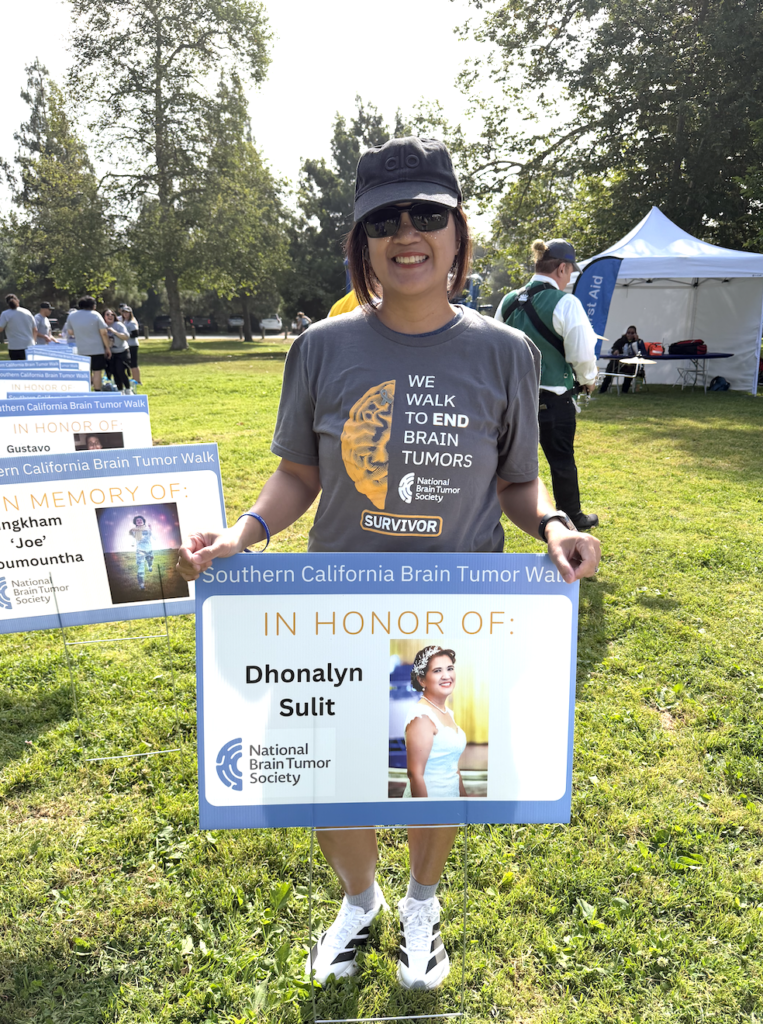
By joining the Southern California Brain Tumor Walk, I hope to offer my support and show others facing a brain tumor diagnosis that they are not alone and that there is strength in our shared journey.