This website uses cookies that help the website function and that help us understand how you interact with it. Please read our privacy policy for more information.
Clinical trials designed in a lab can run into unexpected hurdles when they don’t align with the practical realities of patients’ lives. This gap is why research advocacy is so important. Without the input of a brain tumor research advocate to represent the patient perspective during the early design phases, even the most promising studies can struggle with enrollment simply because real-world barriers weren’t addressed.
But when a trained research advocate is in the room during the planning stages, researchers can learn about potential hiccups from the patient perspective and address them. For example, a trained advocate could point out that families will have a hard time traveling to the medical center three times a week for blood draws, and ask if local clinics could handle routine lab tests instead.
Because of that insight, the protocol is adjusted. The researchers avoid enrollment delays, making the trial much more manageable for participating families. This is research advocacy in action.
To turn these helpful insights into a standard practice, the National Brain Tumor Society (NBTS) launched the first-of-its-kind Brain Tumor Research Advocate program in 2023. This initiative ensures that patients and care partners are active partners in shaping the science.
“I’ve done some things to help advocate as a consumer reviewer on some significant research panels, such as the Department of Defense,” said Krista D-L., whose daughter was diagnosed with ependymoma. “This is so eye-opening to me because you don’t realize how hard scientists are truly working behind the scenes to help come up with a cure. Being a research advocate was priceless and makes me feel part of something way bigger than myself.”
What is research advocacy?
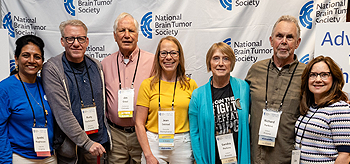
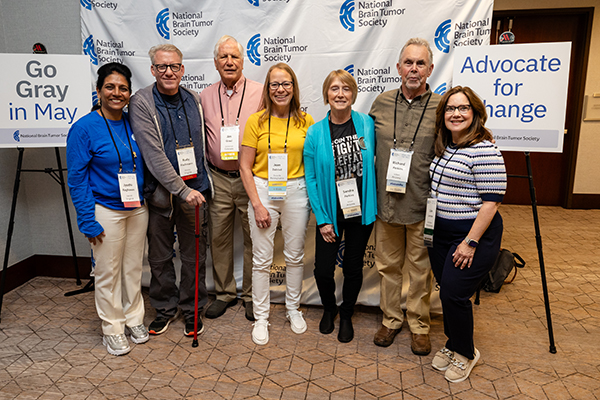
Kim Wallgren, top left, with brain tumor research advocates
At its core, research advocacy is about ensuring that the people most affected by a disease have a seat at the table in research direction and funding.
Research is critical to advancing the detection, treatment, and prevention of diseases like brain tumors. Yet studies are not always designed to answer the questions most important to patients, and funding decisions may not reflect urgent patient needs or priorities.
“Research advocacy is the voice representing the patient and care partner interest within research planning and implementation,” said Kim Wallgren, Executive Director of the CERN Foundation, a designated program of the National Brain Tumor Society, and NBTS’s Brain Tumor Research Advocate project lead. “Research advocates use their lived experience and perspective to shape research activities so they reflect the needs and priorities of the people they are being designed for. Advocates should be included early and often in the process.”
National Cancer Institute defines a research advocate as a “person who serves as a link between patients and scientific researchers.” Research advocacy can also be referred to as Public and Patient Involvement and Engagement (PPIE). Research advocates are patients and care partners trained to provide the patient perspective in:
Helping researchers understand patient experiences, concerns, and priorities
Translating complex scientific information into actionable insights for patients
Participating in advisory boards, committees, and review panels to ensure studies are patient-centered
Through NBTS’s program, brain and spinal tumor research advocates are patients, survivors, or care partners who bring their lived experience and expertise to provide valuable, patient-centered perspectives into scientific research. As research partners, they represent the collective experiences of the community, highlighting medical, logistical, emotional, and financial concerns. Their contributions help influence research design and information sharing, with the goal of improving awareness of research findings and supporting informed decision-making within the community.
Trained research advocates differ from people advocating on a government level on behalf of a disease group to urge policymakers to address the critical issues affecting a community (government advocacy) or advocating for better care for a particular individual in the health care setting (patient advocacy).
How can research advocates impact research?
Scientists who work in a lab often never have the opportunity to talk to a person living with a brain tumor. Research advocacy changes this dynamic by giving scientists the opportunity to connect with patients and caregivers, enabling them to learn from each other.
“By providing input, research advocates can improve the success of research projects by helping identify and mitigate potential risks, ultimately saving researchers time and supporting faster study completion and sharing of results, which is crucial for the brain and spinal cord tumor population,” said Kristin Odom, NBTS’s Brain Tumor Research Advocate project manager.
There are several phases of research in which advocates can help shape it, and each phase offers opportunities for patients and care partners to improve the study by sharing their perspectives.
Three phases of the research lifecycle include:
1. Planning and Preparation
Before a study ever begins, advocates can help lay a patient-centered foundation. In this phase, they help impact research by:
Identifying gaps and setting priorities: Advocates can help researchers pinpoint the most urgent, unanswered questions facing patients and their families.
Reviewing study proposals and peer review: Advocates can serve as reviewers for funding agencies to evaluate applications and help select which research studies to support.
Shaping study and program design: Advocates can assist with clinical study design, pilot testing, surveys, and grant submissions to ensure the approach is realistic and meaningful for participants.
“Thanks to my NBTS training as a research advocate, I have been actively involved in developing a grant application on late treatment effects in long-term glioblastoma survivors, specifically designing the research protocol,” Lisa L. said. “It means a lot to me to know that my own story and experience as a former caregiver to my late husband is informing glioblastoma research for patients.”
2. Conducting Research
Once a study is launched, advocates help keep it on track and moving forward efficiently by:
Assisting with research materials: Advocates can help write and review research documents and updates to ensure the language remains accessible.
Monitoring progress: Advocates can stay engaged as the study unfolds to ensure patient safety, comfort, and compliance remain top priorities.
3. Evaluating and Sharing Results
After data is collected, advocates ensure the findings reach the people who need them most by:
Reviewing results: Advocates can help scientists analyze and interpret outcomes through the lens of lived experience.
Translating and promoting findings: Advocates can summarize scientific findings in more accessible language to share with the broader brain tumor community.
“The brain tumor experience can be devastating to families, and serving as a research advocate can ‘make sense’ of some of the most difficult parts of their life,” Kim said. “To see them have that sense of purpose is incredibly rewarding.”
Do research advocates need to have a background in science?
No, research advocates do not need to have a scientific background.
“The biggest misconception people have about research advocacy is that they need a science background to participate,” Kristin said. “Most research advocates are not scientists. That’s not the role of a research advocate. Their role is to share their story and their lived experience — not only their experiences, but those of the brain and spinal cord tumor community.”
Patients with brain tumors and their care partners learn the skills needed to serve as research advocates through NBTS-led activities, which include initial training followed by monthly continuing education meetings.
“Going through the training program has given me, aside from knowledge, confidence to speak up and provide value from my experiences,” said Lisa C., whose father passed from glioblastoma. “Prior to being a research advocate, I was not involved in the research side of things. Recently, I was involved in the government review panel (Department of Defense’s Glioblastoma Cancer Research Program) — not something I would have felt comfortable with beforehand.”
Where can brain tumor research advocates provide input?
Through NBTS’s Brain Tumor Research Advocate program, research advocates bring the patient and care partner voice directly to influential researchers at the local and federal levels during their three-year cohort. NBTS identifies and matches research advocates with neuro-oncology-focused research opportunities. NBTS’s 2023-2025 cohort of research advocates saw 64 matched opportunities connecting advocates to meaningful research activities.
1. NBTS’s Real-Time Research Review Sessions
Real-Time Research Review Sessions provide a virtual opportunity for researchers to present and receive feedback from our research advocates in real time. During these sessions, researchers can present their research and engage in an open discussion to gain a patient-focused perspective in real time, helping them prioritize research topics, questions, or strategies.
Thus far, 100% of participating researchers have plans to implement changes based on advocate feedback.
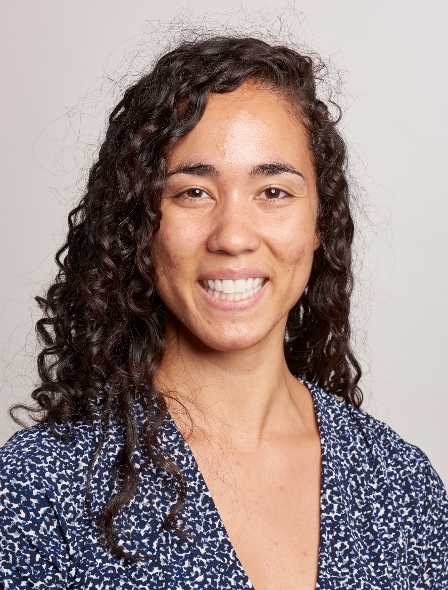
Caroline Crooms, MD, MPH
“I found it extremely valuable to present at a Real-Time Research Review Session,” said Caroline Crooms, MD, MPH, researcher at Icahn School of Medicine at Mount Sinai. “At the most basic level, having patient and care partner advocate input on whether or not the research was worthwhile was very meaningful (and inspiring). Also, the research can never be successful if the intervention and the methods are not acceptable to their subjects, so getting that expert perspective was necessary.”
Through this offering, NBTS brain tumor research advocate involvement has directly influenced the design, communication, and implementation of specific clinical trials. Patient and caregiver feedback has helped with:
Inclusion of fertility measures for future trial participants
Improved transparency and clarity in trial communications
Changes to trial naming to better resonate with patients
Methodology adjustments to accommodate diverse survivor needs
Revisions to recruitment plans to support informed decision-making
NBTS can host one Real-Time Research Review session each month. Neuro-oncology researchers are invited to apply.
Advocates help decide how federal tax dollars are allocated for cancer research by serving on review panels for major institutions at the Department of Defense (DoD) and the National Cancer Institute (NCI). NBTS nominates brain tumor advocates to sit on federal agency panels.
Department of Defense
Each year, Congress charges the Department of Defense to fund cancer research through the Peer Reviewed Cancer Research Program (PRCRP). U.S. military members are at risk for the development of many cancer types due to the nature of their service, with brain cancer being a presumptive cancer associated with military service. The PRCRP aims to support research for cancer prevention, detection, treatment, and survivorship.
Since 2013, NBTS’s advocacy efforts have helped increase the PRCRP appropriation from $15 million to $165 million and have allowed pediatric brain tumors and brain cancer to be eligible for funding year over year. NBTS’s past efforts have led to PRCRP-funded brain tumor research that has driven notable discoveries.
Once a disease is designated as an eligible topic, researchers can apply for funding. Brain tumor research advocates and advocates for other diseases then sit alongside scientists and clinicians to evaluate grant applications for the PRCRP as well as the Glioblastoma Cancer Research Program (GBMRP) and the Rare Cancer Research Program (RCRP), ensuring funding goes to projects with the highest potential patient impact.
“When serving as a consumer reviewer for the DoD, research advocates review biomedical grant applications and provide a unique lens by evaluating the significance to patients, quality of life, as well as ethical considerations that a scientific reviewer may miss,” Kristin said.
Did you know? NBTS has been nominating brain tumor community members to serve on these panels since 2017 — six years before the inception of the Brain Tumor Research Advocate program.
3. NBTS’s Match with a Research Advocate
NBTS encourages advocates to be involved early and often, so researchers can be connected with advocates at any stage of the research process. Researchers can partner with one or more trained brain tumor research advocates who provide input on an individual research project. NBTS works with the researcher to match them with a trained research advocate who fits their needs.
Advocacy also happens directly in the communities where medicine is practiced and developed:
Local Hospitals & Cancer Centers: Advocates partner with local medical centers to ensure the patient experience is prioritized in care delivery and clinical trial operations.
Institutional Review Boards (IRBs): Every clinical trial must be approved by an IRB to ensure ethical and safety standards are met. Research advocates serve on these boards to review new study protocols, ensuring the patient’s dignity and practical needs are protected.
How does NBTS’s Brain Tumor Research Advocate Program foster community?
In addition to monthly meetings and support provided by NBTS, the Mentorship Program empowers advocates from the 2023 cohort to provide one-on-one knowledge and support to the new class.
“I can’t underestimate the importance of the group encouraging each other and sharing in success and difficult experiences,” Kim said. “This sense of reminding each other that ‘we belong’ in these conversations is a huge accomplishment.”
Many of NBTS’s research advocates are involved in other areas of the organization, including participating in Head to the Hill and fundraising through an event, where they can connect with additional members of the brain tumor community.
Is NBTS currently accepting new research advocates?
We are not currently accepting new research advocates, but interested individuals can express their interest in being included in future efforts. The current research advocate cohort is in the middle of a three-year term that will conclude at the end of 2028.
Apply for a Real-Time Research Review Session
During the 75-minute virtual session, researchers can present their work to at least five trained advocates via Zoom. NBTS handles all the logistics, including coordination, confidentiality agreements, and facilitation. The researcher simply brings their 15-minute presentation and listens to real-time advocate feedback to help them prioritize research topics, questions, or strategy.
Sessions can focus on any neuro-oncology research topic — such as quality of life, clinical or translational studies, medications, or patient education materials — to strengthen research and improve patient care.