This website uses cookies that help the website function and that help us understand how you interact with it. Please read our privacy policy for more information.
Having worked in health care for about 20 years, I was alarmed when I noticed my body and mood changing in unusual ways.
During my second pregnancy, I gained almost 100 pounds despite not overeating. Afterward, I had a hard time losing my pregnancy weight even though I was very active, running, hiking, skiing, and doing other exercise.
On top of that, I was dealing with severe depression and felt completely unlike myself. Knowing these symptoms were out of character, I saw an endocrinologist at the University of California, San Francisco (UCSF). She suspected a hormonal issue and ordered an extensive panel, which uncovered abnormal thyroid levels. She then ordered another panel that tested a growth hormone called IGF-1.
Acromegaly and a Pituitary Tumor
When my results posted, my IGF-1 was completely off the charts. I did a quick Google search because I remembered hearing about this particular hormone in my nursing days, and I hoped it wasn’t what I thought it meant.
As suspected, I saw that an elevated IGF-1 points to acromegaly, a condition typically caused by a pituitary tumor called somatotroph adenoma. My endocrinologist referred me to neuroendocrinology, which led to an MRI.
When my husband, who is a neurologist, read the MRI results confirming a pituitary tumor, he broke down in tears. Seeing his reaction told me how serious this was.
Because I lacked the classic facial and bone structure changes associated with acromegaly, my care team initially questioned the diagnosis. We tried weaning off breastfeeding — because some studies showed it can cause high IGF-1 levels — to see if my hormone levels would settle, but nothing changed. Recognizing the complexity of my case, we knew we had to advocate for ourselves and seek a second opinion.
Why Seeking a Second Opinion Was Essential for My Care
Our first neurosurgeon consultation was terrifying. He outlined significant surgical risks, including stroke, permanent pituitary damage requiring lifelong hormone replacement therapy, and potential cognitive deficits. As a mother of two small children, hearing those possibilities was overwhelming.
We then got another surgical opinion, this time at UCSF. This neurosurgeon’s surgical approach was completely different. He explained that he could perform a transsphenoidal resection, accessing the tumor directly through the nasal cavity rather than cutting open the skull (traditional craniotomy). Because he performs hundreds of these procedures a year as one of the top specialists in the country, he felt confident he could remove the tumor with minimal damage to surrounding structures and with a lower risk of side effects.
When somebody is going into your brain for surgery, you want to make sure they’re confident and able to do the right thing. Having moved to San Francisco from New York for my husband’s job, finding a leading expert in our own backyard felt like a direct answer to prayer. We were relieved and confident moving ahead with surgery in February 2025.
Recovery From Transsphenoidal Surgery
I expected to be off work for about a month while I dealt with bleeding, pain, fatigue, and dizziness. Initially, I experienced some vision changes. Although the pain was manageable compared to my past C-sections, I ended up being out for about two months due to really extreme fatigue. I wondered if I was ever going to feel normal again. Recovery was challenging with both physical and cognitive fatigue — it felt like I was pushing through the mud.
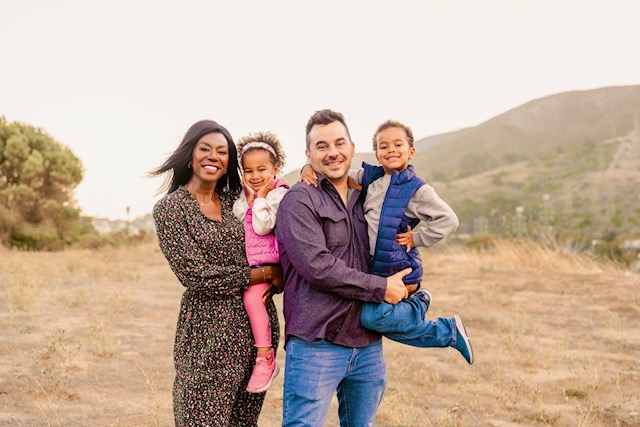
As medical professionals, my husband and I understood that kids know when things are wrong and can feel your energy. To help our children understand my condition, we told them, “Mama has a bubble in her head, and doctors are going to help remove it, but it’s going to take some time to get back to normal.” After weeks passed and I was still resting, they would ask why I was still in bed if the bubble was already gone. As a mother used to managing playdates, laundry, cleaning, cooking, and doing weekend outings, being unable to keep up that pace was tough.
Fortunately, my husband and our local community stepped in with takeout meals, visits, and childcare support. It took about six to eight months after surgery for the heavy fog of fatigue to lift and for me to adjust to my new normal.
My New Normal
After surgery, my doctor explained that some pituitary tumors are like an egg that can be lifted cleanly out, while others are like a mandarin where pieces must be removed incrementally. My tumor turned out to be like a mandarin, with tumor cells spreading across the dura (the protective layer covering the brain).
He had to remove a significant portion of the dura and couldn’t get all of the tumor, meaning I would remain in a “wait-and-see” phase with long-term monitoring. Should the tumor grow back, I’ll either get some precision radiation that targets the cells or start a daily or monthly injection.
We were hopeful that my thyroid issues would resolve after surgery, but they didn’t. I haven’t been able to get off my thyroid medication — my levels plummet when I’ve tried. From time to time, I get headaches, which feel like a really sharp pain on one side of my head.
I’m working with my optometrist now because my prescription has changed, and my vision is a little blurry. It’s not significant, but it’s hard when the words are moving around on the computer.
Thankfully, my fatigue isn’t as bad as it used to be.
Returning to Work
I’m the type of person who likes to push through things. For example, I didn’t really tell people at work what was going on. They just knew I was on medical leave because I didn’t want people to think I couldn’t do my job anymore if they knew I had a pituitary tumor.
My manager was incredibly supportive and gave me the full two months off I needed, without any pressure to rush back. When I returned to work, they allowed me to ramp up my workload gradually, which gave me space to listen to my body, step away from screens, and pace myself.
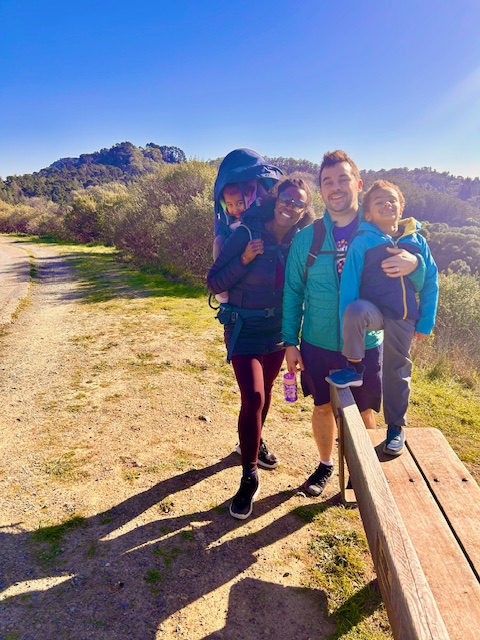
Now when I’m working, I still need to take a break from the screen every couple of hours. I need to go outside, get some fresh air, take a walk, do some stretching, etc.
My Advice for Newly Diagnosed Pituitary Patients
If I could share one piece of advice, it is to listen closely to your body and never ignore your symptoms. The inability to lose weight while exercising and not eating much, combined with depression that was out of character for me, pushed me to get checked out.
Don’t hesitate to ask your doctor for specific tests if you feel something is wrong. The IGF-1 test isn’t a routine blood test, but I think people should ask for it and know about it.
Especially as a mom, we get busy doing so many different things and taking care of other people. I can’t overstate how much we have to also take care of ourselves. If we don’t, we won’t be able to take care of our kids. Take the time to figure it out and get answers.
Most importantly, be your own best advocate. If you aren’t getting clarity or feel dismissed, seek a second or third opinion until you find a team that gives you complete confidence in your care. You deserve the very best support possible for your health and your life.
Why We Direct Our Support to the National Brain Tumor Society
Living through brain surgery gives you a permanent sense of gratitude. I wake up every day thankful to be here with my children, to be functional, and to do meaningful work.
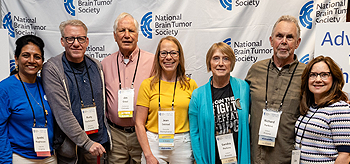
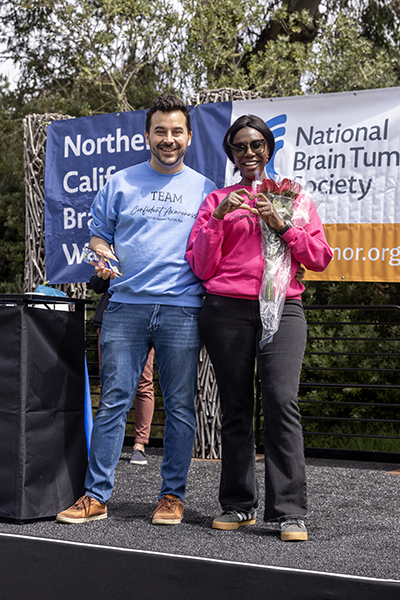
That search led us directly to the National Brain Tumor Society (NBTS). Four months after my surgery, my family and community decided to participate and fundraise for the Northern California Brain Tumor Walk in San Francisco.
Giving back is one of our family’s core values. My husband and I commit to donating 10% to 12% of our income to charitable organizations and our church. After going through my tumor diagnosis and recovery, we wanted to direct our charitable giving specifically to an organization dedicated to helping patients with brain tumors.
In my professional life, I often support patient advocacy walks across various disease areas, but attending the NBTS walk was the first time I walked onto the field as the patient rather than an organizer or supporter. Connecting with fellow survivors, seeing my surgeon there with his family, and listening to the patient story on stage was deeply moving and empowering.
With my professional background, I know how essential community is during a medical crisis. I’ve led so many support groups throughout my career. They’re an opportunity for people to share their story, feel a sense of acceptance, and share tips on how they get through the day.
A brain tumor diagnosis can be an incredibly isolating experience, especially for individuals who do not have local family or strong support networks around them. I know how immensely important it is to be able to come to a group and feel like these are my people. I hope to continue supporting NBTS for a long time.
Benign Brain Tumor Virtual Support Group
Benign is Not Fine Support Conversations is an online support group led by a licensed clinical social worker for patients and caregivers navigating the unique challenges of a benign (non-cancerous) brain tumor diagnosis.
These online support group conversations are held on the second Friday of each month from 12-1 p.m. ET/9-10 a.m. PT.