This website uses cookies that help the website function and that help us understand how you interact with it. Please read our privacy policy for more information.
For high school sophomore Quinn O. and her parents, Alyssa and Tom, the journey with a pediatric brain tumor did not end when chemotherapy stopped. Instead, their experience with juvenile pilocytic astrocytoma (JPA) has evolved into advocacy for the greater brain tumor community. Central to their efforts is a push for the passage of the Bolstering Research And Innovation Now (BRAIN) Act, a landmark, bipartisan bill designed to address the unique challenges of brain tumor research and survivorship.
A Childhood Interrupted: Quinn’s Juvenile Pilocytic Astrocytoma Diagnosis
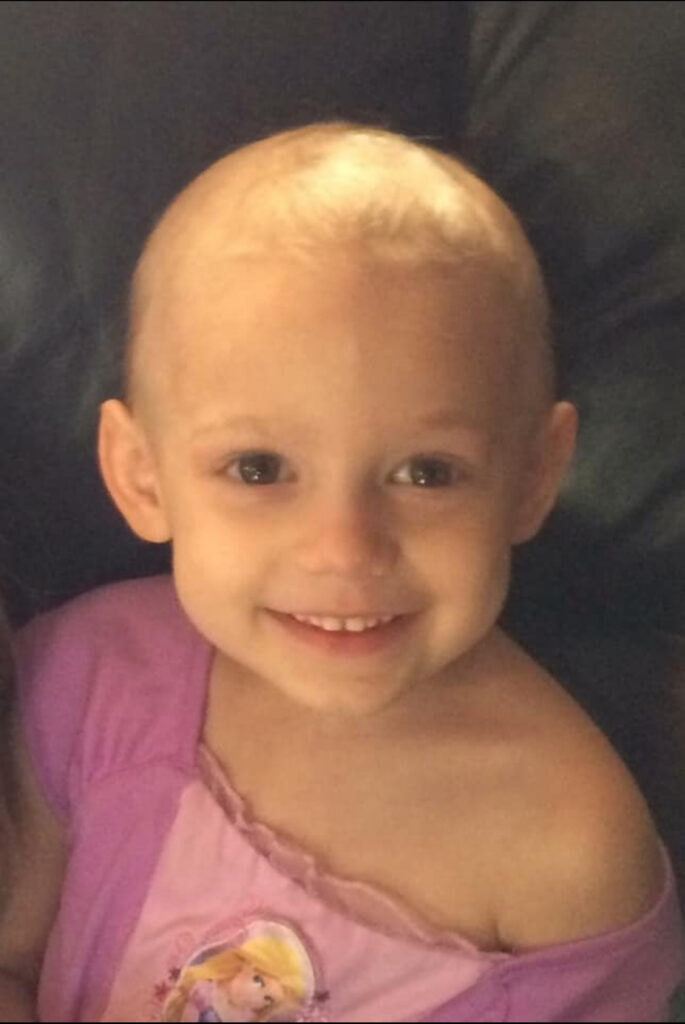
When Quinn was just two years old, she was rushed to the hospital after suffering a grand mal seizure at daycare. There, doctors discovered a brain tumor located in her right parietal lobe and diagnosed her with juvenile pilocytic astrocytoma (JPA).
Quinn underwent a gross total brain tumor resection (removing the tumor), but the relief was short-lived. Eight months later, the tumor returned to nearly its original size. A second surgery followed, along with 18 exhausting months of chemotherapy.
“As a mom, you just go into survival mode,” Alyssa said. “You don’t have time to have all those feelings of ‘woe is me’ or ‘What are we going to do?’ You’re just focused on how to fix it.”
To help her toddler cope with frequent blood transfusions during chemo, Alyssa transformed the procedure into play, calling the transfusions “go juice” because of how quickly it restored Quinn’s color and energy.
“Those were 18 of the longest and scariest months of our lives,” Tom said. “Trying to make counts for weekly chemotherapy sessions, many times having to stay in the hospital for weeks at a time because blood cell counts were alarmingly low. We were just so proud of how well Quinn handled every step of the way. She was our inspiration.”
The Lasting Toll of a Pediatric Brain Tumor: Navigating Long-Term Survivorship
Now nearly 12 years out of treatment, Quinn is a thriving teenager who plays volleyball and coaches young volleyball players. However, surviving a pediatric brain tumor caused ongoing side effects. Quinn lives with challenges that require a 504 plan for school accommodations, including extra time for tests and additional support if needed.
She also has an inability to regulate her body temperature properly — a side effect that led to Quinn having to limit herself during outdoor recess or when playing outdoor sports like soccer. Quinn takes a water bottle with her wherever she goes and will use cooling rags to help her body regulate its temperature in the heat.
“I quit soccer a couple years ago; I play volleyball now,” Quinn said. “It’s much easier with an indoor sport and the AC.”
Despite her own difficulties, Quinn recognizes that many of her peers face even harsher realities. Through camps for brain tumor survivors, she has seen friends left unable to run or play sports due to long-term chemo damage.
“The chemotherapy that I was on was 60 years old, and that’s still the first frontline treatment,” Quinn said. “If there was more development of treatment options, it’d be so much better for everyone.”
Championing Advocacy at Head to the Hill
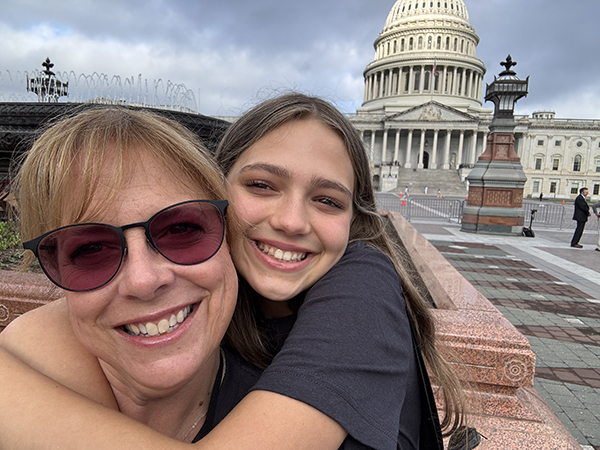
Alyssa and Quinn
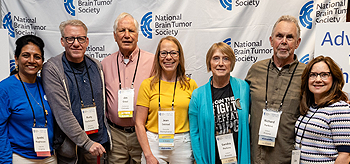
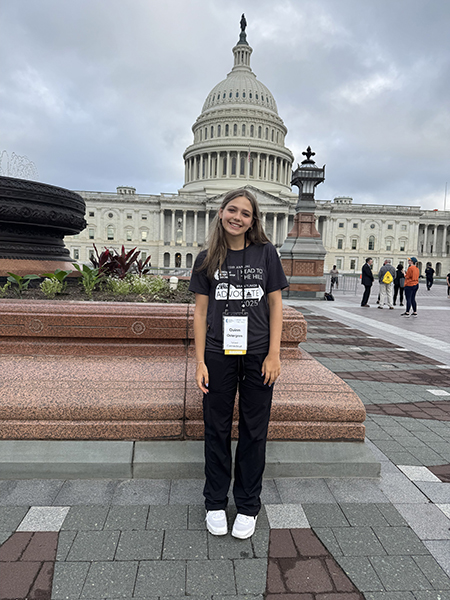
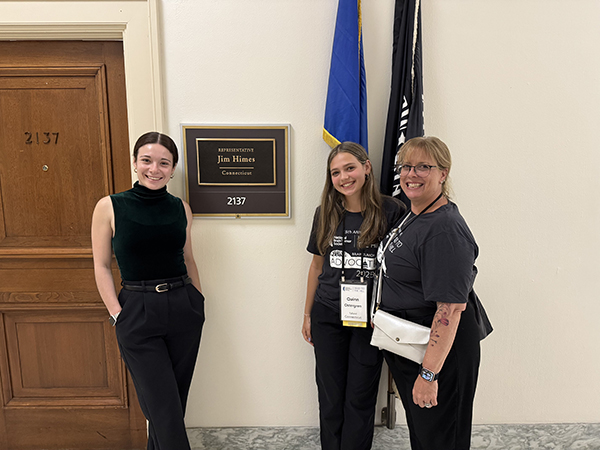
Determined to drive change, Alyssa and Quinn have made advocacy an important part of their lives. Traveling to Washington, D.C. for the National Brain Tumor Society’s annual Head to the Hill event, the mother-daughter duo meets directly with congressional lawmakers and their staff to advocate for brain tumor research funding and critical brain tumor policies.
Alyssa believes that showing up in person is vital to creating lasting impact.
“People will remember a face before they’ll remember a name,” Alyssa said. “I want them to see Quinn or Alyssa [and not just another statistic]. I need to get our face out there because that’s what people are going to remember.”
In 2026, Quinn attended Head to the Hill for her second year alongside her mother, who has been participating since 2020. Quinn was motivated to advocate because she feels a strong sense of responsibility toward others in the community.
“You want your voice to be heard, but also you want to stand up for people that can’t stand up for themselves,” Quinn said. “I want to add more awareness because the options they have are limited, and no one should have to go through that at such a young age.”
Why the BRAIN Act Is Vital for Research and Quality of Life
A key part of their advocacy efforts at Head to the Hill was asking their representatives to support the BRAIN Act. As the first piece of bipartisan legislation designed specifically to meet the unique needs of the brain tumor community, the BRAIN Act addresses policy hurdles spanning basic research, drug discovery, clinical trial access, and long-term survivorship.
“I know that I don’t have a lot of side effects, and I’m so grateful,” Quinn says. “But I feel like the most important thing is keeping the quality of life.”
The BRAIN Act also includes a provision about increasing funding for the Glioblastoma Therapeutics Network to $50 million annually to evaluate, in labs and then in human clinical trials, promising treatments for patients with glioblastoma.
“We were waiting outside our senator’s office at Head to the Hill, and a group of brain tumor advocates from Rhode Island were nearby,” Alyssa said. “One guy told us, ‘I have glioblastoma right now, and it’s behaving itself, but I know it’s going to come back. I have to do Head to the Hill before I can’t talk.’ It’s incredibly inspiring to see these people take the time to speak up.”
A Shared Mission for Hope and Cures
Each year, Alyssa and Quinn meet with the office of Senator Richard Blumenthal (Connecticut), who serves as an original co-sponsor of the BRAIN Act.
“His staff is just wonderful,” Alyssa said. “One of his staff members played volleyball, so Quinn has this connection with them. It feels great to know we helped make a difference in giving his office the information needed to make a decision to sponsor the BRAIN Act.”
Seeing her daughter step up into legislative halls fills Alyssa with pride and hope for the future.
“Ten years from now, Quinn will be doing the same thing,” Alyssa said. “She’ll still be going to Head to the Hill and advocating for the cause.”
The pair encourage other brain tumor community members to become an advocate and register for the Advocate From Your State event, where advocates from across the country meet virtually with their elected officials and urge action.
“Advocacy makes you feel like you’re part of something bigger than yourself,” Alyssa said. “If people are nervous about trying it, the virtual event called Advocate From Your State is a great first step to share your story. When you’re going through it, you really feel powerless, and advocacy makes you feel like you’re doing something.”
By sharing their story and demanding federal action, Alyssa and Quinn are proving that pediatric brain tumor survivors are not just a statistic, but real people in real communities with an important story to tell.
Sign our Childhood Cancer Awareness Month Action Alert
This Childhood Cancer Awareness Month, urge your elected officials to support the BRAIN Act, strengthen federal research funding, and preserve pediatric brain tumor eligibility for certain federal grants. Sign our action alert today to ensure Congress prioritizes our community’s most vulnerable patients.