This website uses cookies that help the website function and that help us understand how you interact with it. Please read our privacy policy for more information.
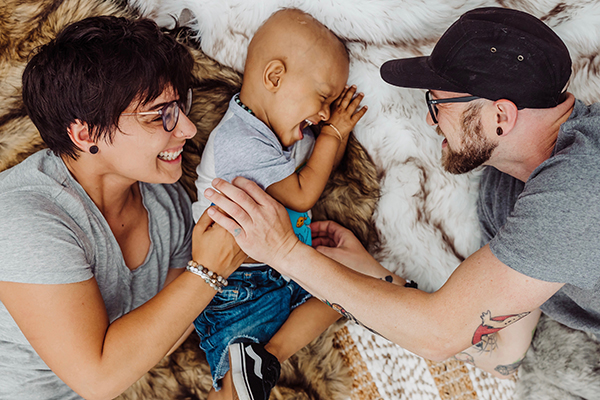
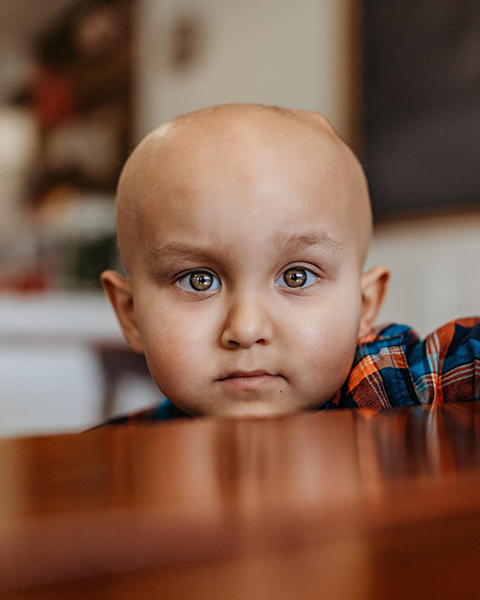
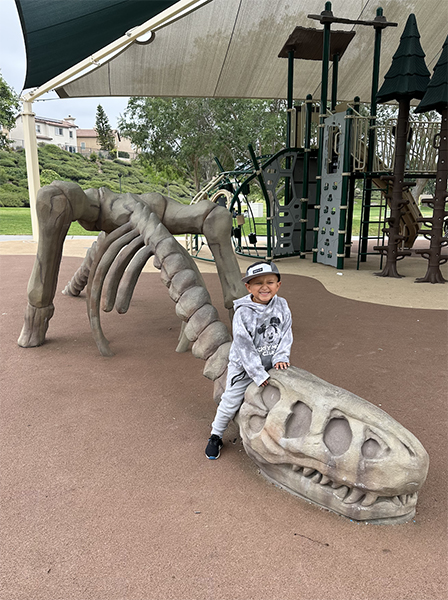
Finn is a seven-year-old hot ticket. He is full of sass, completely obsessed with dinosaurs, and loves cars, cooking, and dressing up. Beneath all that playful energy, he is deeply affectionate and intuitive — he just knows when someone around him needs a hug or a back rub. Looking at him today, you see a boy who is uniquely, unapologetically himself. You would never guess everything he had to overcome just to get here.
My late husband, Ryan, and I adopted Finn. Born ten weeks premature in a car, he was unresponsive at birth and spent his first six weeks in the NICU. We brought him into our lives at three weeks old, and from day one, I was determined to give him every advantage. I was a total health nut, making all his food and sourcing donor breast milk from family. With early intervention, Finn defied the odds and hit his milestones. By twenty months old, he was giggling, talking, eating on his own, and keeping up with all the other kids.
Recognizing Early Symptoms of Pediatric Brain Tumors
In late August 2020, everything changed. Finn stopped walking, regressing to wobbly crawling and table surfing. Every morning, he threw up spit and mucus. Because it was the height of the COVID-19 pandemic, getting an in-person appointment felt nearly impossible. Every ER visit ended with the same brush-offs: postnasal drip, back-to-back viruses, or standard toddler sickness. One doctor even asked me, “When you’re sick, do you feel like walking?”
I felt like a lunatic mom calling the clinic constantly, but my gut insisted that something was wrong. It took about two and a half months of weekly phone calls, visits, and telehealth appointments before someone took my concerns seriously.
Diagnosing Grade 3 Ependymoma
On October 6, I waited outside his pediatrician’s office for two and a half hours until someone finally saw him. As soon as the doctor looked at Finn, he said, “Let me make a couple of phone calls.” The next day, we were at Hasbro Children’s Hospital in Rhode Island. An MRI revealed a brain tumor causing hydrocephalus (the buildup of cerebrospinal fluid in the brain), which required emergency surgery.
Because Finn was still in foster care at the time, I spent midnight frantically calling state contacts to get medical approval. A week later, we got the official pathology: posterior fossa A (PFA) ependymoma, grade 3.
During inpatient rehab in Boston shortly after, we learned tumor cells were also present in his spinal fluid, which changed Finn’s treatment plan moving forward. He would need full brain and spine radiation, but we couldn’t do that yet at his young age.
Chemotherapy, Surgeries, and Proton Beam Radiation Therapy
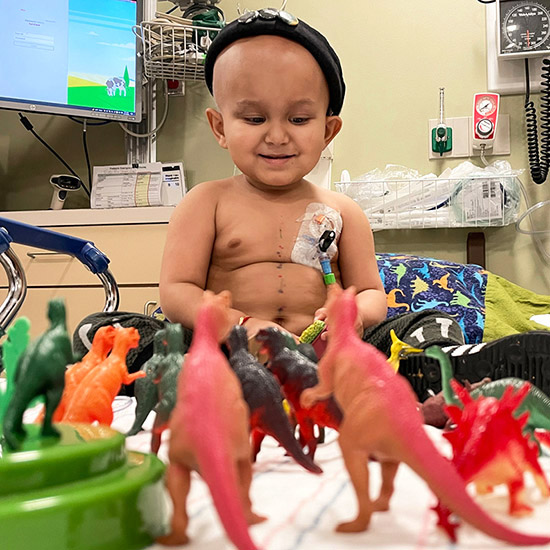
From the start, Ryan and I agreed on one guiding principle: quality of life over quantity. We wanted Finn to be Finn for as long as possible. His first surgery achieved a near-total resection (removal of most of the tumor tissue), followed by a month of inpatient rehabilitation where he had to relearn how to walk and swallow. Then came six heavy months of high-dose chemotherapy.
Kids are remarkably resilient, and Finn amazed us. We eliminated all toxins and chemicals from our home, focused on nutrition, and cherished every good day. During a break in treatment, we even took a trip to Disney World. I will forever treasure the memory of watching his face light up around the characters.
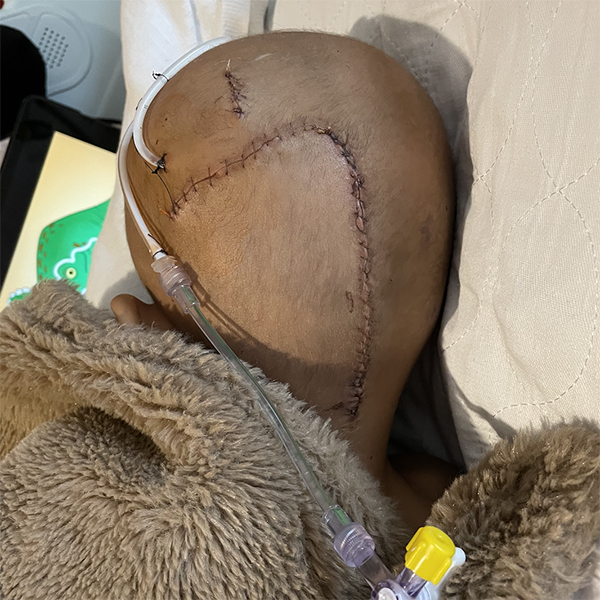
In July 2021, when Finn was two and a half, we pursued a second surgery to remove the remaining tumor. Going into that second procedure was even scarier because we knew the risks, including potential paralysis, but the surgeon accomplished a full resection.
To delay full brain and spine radiation while his brain grew, doctors placed an Ommaya reservoir, which is a device placed under the patient’s scalp to allow chemotherapy to go directly to the cerebrospinal fluid in the brain. He would get intrathecal chemotherapy monthly at the clinic through this device.
For seven to eight months, I administered daily chemotherapy orally at home. It was heartbreaking for me as his mother to physically give him chemo, knowing it was making his hair fall out, but Finn pushed through.
After that, Finn was always stable with no sign of recurrence. After he turned three, Finn had to complete six weeks of full brain and spine proton beam radiation therapy at Mass General Hospital. Though he had to be sedated daily, he sweetly nicknamed the machine “the airplane” and loved visiting the care team.
Radiation made him a little tired, and he had some mild peeling and burns on his ears. All things considered, he looked really good.
Navigating Survivorship and Late Effects of Brain Cancer Treatment
Today, Finn is four years post-treatment. We have moved from scans every three months to every six months, and soon we will transition to annual checks. Each MRI requires him to be sedated, so getting a scan is a full-day process.
While Finn remains stable, surviving brain cancer comes with a complex road of late effects. Chemotherapy caused high-frequency hearing loss, so he wears hearing aids. Radiation caused cataracts that we monitor with neuro-ophthalmology. If the cataracts start to interfere with his vision, his care team will consider surgery.
Because of hormone deficiencies, Finn physically looks three years old despite being nearly eight, and a neuropsychological evaluation placed his developmental age closer to four.
This year, Finn is entering a second-grade special day class with an Individualized Education Program (IEP) that includes OT, PT, speech, hard-of-hearing assistance, and a one-on-one recess aide. He is a total social butterfly — the unofficial “mayor” of his school who wins over everyone from fifth graders to the principal.
The Need for Long-Term Support
Navigating post-cancer life, especially after losing my husband Ryan, has shown me how crucial long-term support really is. When active treatment ends and reality sets in, families need community more than ever.
Ependymoma is unique and affects every child differently, but no family should have to walk through the aftermath alone. We are a community of resilient, broken, beautiful people holding each other up, and I am so grateful for everyone who continues to stand by Finn.
September is Childhood Cancer Awareness Month
Childhood Cancer Awareness Month (CCAM) is a time to recognize, advocate for, and honor children who have been affected by cancer and the families that care for them.
Together, we can support and advocate for pediatric patients and their families today while fueling research that could become the treatments and cures of tomorrow. When you make a gift this Childhood Cancer Awareness Month, you propel research and treatments forward for the more than 18,000 children living in the U.S. with a primary brain tumor today.