This website uses cookies that help the website function and that help us understand how you interact with it. Please read our privacy policy for more information.
When a glioblastoma diagnosis turned Megan G. into a caregiver overnight, she quickly recognized that she needed to advocate for her dad to secure the best care possible.
For as long as Megan can remember, her father John has been the calm, steady center of their family. A 61-year-old health insurance professional from Pittsburgh living in Maryland, he is a father of four, a lifelong Steelers, Pirates, and Penguins fan, and an avid baseball player and youth coach known for his humor and unflappable optimism. His easy-going nature made subtle shifts in his personality all the more jarring.
Recognizing the Early Signs of Glioblastoma
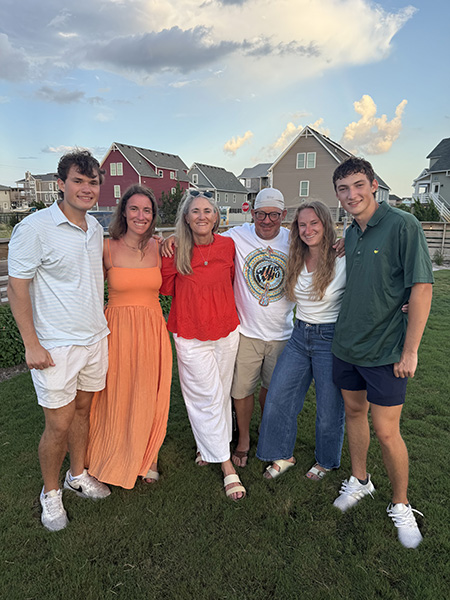
Megan, second from left; Lynn, third from left; and John, third from right; with their family
During a family vacation to the Outer Banks, Megan noticed her dad was acting uncharacteristically irritable and withdrawn. Her mother, Lynn, shared that she also noticed John had been acting unlike himself, but they chalked it up to stress over a possible layoff.
Soon after, a longtime colleague called Lynn about John’s behavior during an in-person meeting, concerned that something was seriously wrong. That’s when John admitted he had been experiencing bad headaches, prompting a trip to the emergency room.
Megan, who lives and works in Washington, D.C., was within thirty minutes of leaving for a Labor Day weekend lake trip with friends when her mother called. Doctors had discovered a mass on her father’s brain. Megan immediately canceled her plans and rushed to be with her family.
Her father was airlifted to a larger hospital for brain surgery. After an agonizing seven-hour wait, the neurosurgeon shared encouraging news that the tumor had well-defined borders separating it from healthy brain tissue, allowing him to cleanly remove all visible tumor tissue.
Two days later, their family met with an oncologist. Two weeks later, a pathology report indicated MGMT-methylated glioblastoma.
When the MGMT gene is methylated, the tumor cell has a harder time repairing itself, so it’s associated with a more favorable therapeutic response to temozolomide, the standard chemotherapy for glioblastoma.
Seeking a Second Opinion
For Megan, the oldest of four siblings, stepping into the caregiving role felt instinctual, but it quickly brought significant emotional weight. Supported by an employer that offered flexible sick leave and drawing on her background working in clinical research, Megan stepped up to help her mother navigate the complex health care system, including getting a second opinion.
“We were trying to decide where to do his treatment, and I was looking for direction on where to go,” Megan said. “My dad’s very loyal, and felt like we needed to go with the hospital that first treated him. Whereas my mom and I thought Johns Hopkins would be a good place to be.”
Jenna quickly became an invaluable resource for the family, providing key questions they could ask John’s oncologist. Reading these questions made them realize that his tumor tissue hadn’t been automatically sent for comprehensive biomarker testing called next-generation sequencing (NGS).
Advocating for this critical step is at the heart of NBTS’s MyTumorID® campaign, which empowers patients and caregivers to understand the importance of biomarker testing so they can learn their treatment options and make informed decisions about their care.
“I went into these appointments feeling prepared to ask all these questions,” Megan said.
Megan’s family ultimately decided to do his radiation therapy at the hospital where they sought his second opinion. “I worked in research, so I wanted him in a place where he could receive cutting-edge treatments,” Megan said. “We thought Johns Hopkins had more research connections, and the vibes were just more comfortable.”
Finding Hope in Glioblastoma Clinical Trials
At Megan’s request, Jenna shared clinical trial opportunities with their family to consider after completing radiation therapy. One option they provided was the KEYNOTE clinical trial, which John eventually enrolled in after signing the informed consent form.
“It literally feels like she’s on our care team with how well she knows my family,” Megan said.
Upon completing radiation therapy, Megan’s father transitioned his care to the Inova Schar Cancer Institute for the clinical trial, which combined tumor-treating fields (Optune Gio) with targeted 30-minute infusions administered every three weeks alongside routine MRI scans.
As part of this trial, John has a two-in-three chance of receiving the trial infusion instead of the placebo infusion. Megan liked knowing the clinical trial added an extra layer of care over two years.
“Even if he ended up getting the placebo, he would still have extra eyes on him, so we still wanted to do the clinical trial regardless,” Megan said.
Through the trial, her father received direct access to a dedicated clinical trial coordinator, specialized clinicians, and streamlined scheduling that lifted the logistical burden from Megan and her mother.
Today, her dad approaches his infusions with humor, regularly calling each visit his routine “tune-up.”
“My parents haven’t stopped living their life at all,” Megan said. “His personality was back to normal at our annual summer beach trip this year. He gets tired sometimes and needs to nap, but that’s it.”
Reflecting on her journey as a caregiver, Megan encourages anyone navigating a new diagnosis to stay proactive and seek out trusted resources.
“Knowledge is power,” Megan said. “Reaching out to the National Brain Tumor Society was a great way to know our options, and NBTS really helped me feel prepared going into these appointments. If you’re not getting what you need, don’t be afraid to ask questions and advocate for yourself.”
Explore Your Clinical Trial Options
As Megan discovered, having the right information changes everything. Yet, one of the biggest reasons patients with brain tumors do not participate in clinical trials is simply because they are unaware of the opportunities available to them.
Through NBTS’s MyTumorID campaign and Clinical Trial Finder, you can search tailored clinical trial options based on your or your loved one’s location, diagnosis, tumor grade, biomarkers, and treatment history, giving you options to bring directly to your health care team.