This website uses cookies that help the website function and that help us understand how you interact with it. Please read our privacy policy for more information.
It often starts with something subtle: a morning headache that vanishes by noon, a sudden bout of clumsiness on the playground, or bouts of morning nausea. For hundreds of families each year, those small signs lead to a life-altering cancer diagnosis: medulloblastoma.
Behind the complex medical terminology, molecular subgroups, and treatment protocols are real people and their families navigating an entirely unexpected journey. National Brain Tumor Society’s Let’s Talk About Medulloblastoma guide combines expert insights with the lived experiences of survivors and families to help people understand the unique experiences and challenges of a medulloblastoma diagnosis.
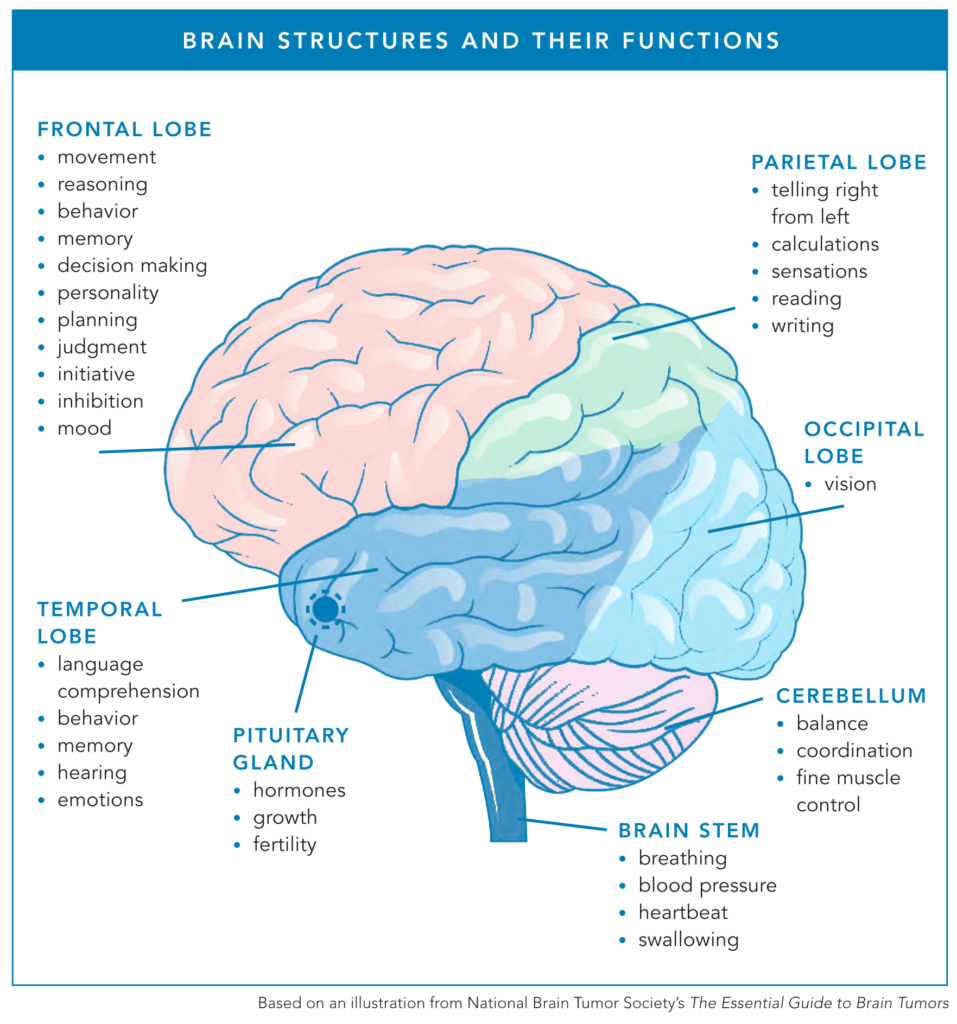
Medulloblastoma is a fast-growing grade 4 tumor that develops from early, immature brain cells called fetal or embryonic cells. The tumor forms in the cerebellum, which is an area in the back of the head that controls balance, coordination, movement, and fine motor skills. This tumor most commonly occurs in children under the age of 10.
“I usually say [to parents of newly diagnosed patients] that there are cells that develop into our brain normally, and sometimes that program that says I’m going to form the brain has an error, and that cell becomes abnormal,” said Tobey MacDonald, MD, Director of the Neuro-oncology Program and Aflac Endowed Chair for Pediatric Neuro-oncology of the Aflac Cancer and Blood Disorders Center of Children’s Healthcare of Atlanta. “The one cell that’s abnormal gives rise to a group of abnormal cells that, when clumped together, we can now see as a tumor, and this forms in the back of the patient’s brain called the cerebellum. It’s nothing they were exposed to or did or didn’t do, but just an act of nature in the process of the brain developing. It was an error that was not corrected.”
Key Statistics
According to CBTRUS, an estimated 430 Americans will be diagnosed with medulloblastoma each year.
In kids ages 0-14, an estimated 278 Americans will be diagnosed each year.
In adolescents and young adults (ages 15-39), an estimated 117 Americans are diagnosed each year on average.
In adults 40 and older, an estimated 35 Americans are diagnosed each year.
Medulloblastoma is one of the most common malignant brain tumors in children. American Cancer Society reports that “about 1 in 5 cancerous brain tumors in children is medulloblastoma.”
National Cancer Institute (NCI) reports that adults diagnosed with medulloblastoma are typically between 20 and 40 years old.
In children and adolescents (ages 0-19), medulloblastomas make up 69.1% of all embryonal tumors, according to CBTRUS.
As of 2019, an estimated 6,070 people are living with medulloblastoma in the U.S., per NCI.
Medulloblastoma is more common in males than females. In group 3 and group 4 medulloblastomas, “males are three times more prevalent than females.”
About 70% of medulloblastoma cases occur in kids younger than 10, with the highest concentration found between ages three and seven.
Risk Factors
According to an article in Clinical and Experimental Medicine, “approximately 5-6% of pediatric medulloblastomas involve germline mutations,” which are gene changes passed from parents through the egg or sperm to their offspring, also known as inherited mutations. The NCI explains that these changes then become “incorporated into the DNA of every cell in the body.”
The National Comprehensive Cancer Network (NCCN), which sets the medulloblastoma standard of care treatment guidelines for physicians to follow, recommends “germline testing and genetic counseling in all diagnosed cases of medulloblastoma.” Germline testing is a laboratory test that looks at an individual’s DNA to see if they have inherited a genetic change that increases their risk of cancer. It is a different test from biomarker testing, which is done on tumor tissue to look for specific mutations, gene alterations, proteins, and/or other biomarkers of that tumor.
What are common medulloblastoma symptoms?
Tobey MacDonald, MD
Most people with medulloblastoma present with signs and symptoms related to increased pressure within the skull, such as headache, nausea, and vomiting.
“Because of the buildup of pressure due to the fluid in the brain that’s being blocked by the tumor (hydrocephalus), you get morning headaches, which tend to worsen over time,” Dr. MacDonald said. “Usually when the morning vomiting occurs, the headache is decreased or alleviated from that. Sometimes you’ll see lethargy with the patient gradually becoming more and more tired due to pressure buildup.”
The most common medulloblastoma symptoms include:
Headache
Nausea
Vomiting
Lethargy
Unsteady gait
Coordination difficulties
Abnormal side-to-side eye movements (nystagmus)
“Because of where this tumor is, it can trap the nerves to our eyes that make movements right and left,” Dr. MacDonald said. “You can get one eye that can’t move all the way out to one side.”
Lived Experiences: Real Stories from the Medulloblastoma Community
Brain tumor community members generously shared the signs and symptoms they or their loved ones experienced before they were diagnosed with medulloblastoma.
“My mom was the one who knew something was wrong with me because I was acting differently. Everybody else thought I was acting up, while my dad thought I needed glasses or something.
She took me to so many doctors’ appointments, trying to find out what was wrong because she knew I wasn’t just acting up.
I was diagnosed with medulloblastoma when I was eight years old.” — Aleyna R.
“In 2019, I was 25 years old, working as a technical writer, living with a roommate, and driving a new car I had just bought. My life was typical for someone my age — until it wasn’t.
That fall, I started experiencing symptoms I couldn’t explain. My balance was off. I was vomiting randomly at work. I fell while walking my friend’s dogs. At first, I dismissed it, chalking it up to getting older or maybe being tired. But deep down, I knew something was wrong.
By the time I made it to my family doctor, I was feeling seriously unwell. Things moved fast from there. A CT scan, an ambulance ride to the ICU at the Cleveland Clinic, and a 17-hour surgery to remove a tumor.
“Emmie was diagnosed on Nov. 4 when she was in pre-K. Emmie got this stomach bug, and she couldn’t come to the Halloween bash at the elementary school because she wasn’t feeling 100%. The doctor gave her an antibiotic because they thought she had a little sinus infection.
A couple of days before Halloween, I had taken her shopping at a store. She’d be fine sitting in the cart, and then all of a sudden she would get completely exhausted and lethargic, and she’d put her head down on the cart. She took a little nap in the cart. We shopped. We bought her some new slippers, and then we got home. She takes a nap. She wakes up from the nap. She vomits. She takes another little rest and wakes up totally fine. She puts on her new slippers, and she’s a dinosaur stomping around the house. Full normal energy. A couple of hours later, she’d get a headache, need ice on her head, and then either nap, wake up, and puke, or she would puke and then take a nap.
On Halloween, I took her to the doctor, and they switched to a different antibiotic in case the first antibiotic was rocking her stomach. I then ended up with a stomach bug, so I assumed that’s what Emmie had. She goes trick-or-treating, walks a mile, comes back, and everything is totally normal.
Her vomiting kept getting progressively worse. She’s getting more and more headaches, more and more lethargy, more and more needing to be close and snuggle. For a 4-year-old to be able to tell me that her head kept hurting and she needed ice, I knew something wasn’t right.
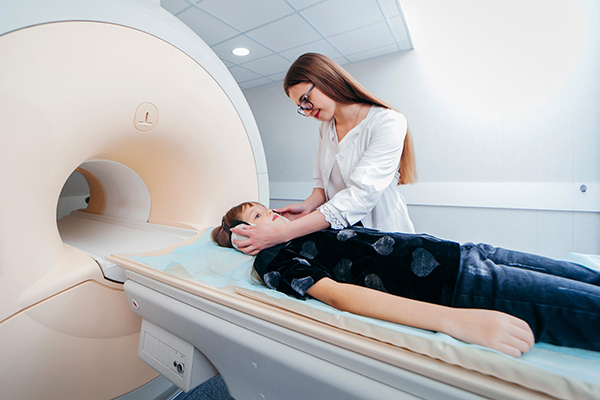
I took her to the pediatric emergency room, and they did a CT that led to an MRI. They didn’t even have to sedate her for the 15-20 minute MRI because she couldn’t move anyway. By 7 p.m. that day, they told me she had a brain tumor, and they suspected medulloblastoma. They would know for sure once a biopsy was done, and they airlifted us to a children’s hospital in Miami.
After getting a shunt to drain excess CSF, she had a fully sedated MRI. Having seen the results, they didn’t want to wait for surgery at a later date. Instead, they took her straight into emergency surgery and had a 99% resection of the tumor, which was about the size of a walnut.
They took the tumor and sent it off for pathology. The initial in-hospital testing confirmed medulloblastoma. That’s when the doctors sat us down and explained medulloblastoma: ‘In this scenario, this is the percentage of survival. This is the trait. This is the plan. This is what we want to do.’
We went to the local ER on Nov. 4. Surgery was performed the following day on Nov. 5. By Nov. 10, we were preparing to go home with a plan for chemotherapy to begin on Nov. 20.” — Jillian F.
“In late spring 2021, Kasey threw up, so we kept her home. After she went back to school, Kasey’s school called us to say that she had thrown up and wasn’t feeling well. She came home from kindergarten. It happened again a couple of days later, and then she was getting headaches as well. Her number one symptom was vomiting.
We took Kasey, who was five, to her pediatrician. A referral to a gastro doctor was made to evaluate whether it was an allergy or an intestinal thing. It got to the point that she had vomited a number of times over a 24-48 hour period, so the pediatrician said to take her to the hospital for an IV because she was losing so much fluid. The hospital suggested a CT, which is when they saw the tumor.
They sedated her so she could have a drain to relieve the pressure in her brain before they transferred her by an emergency ambulance ride three miles down the road to Children’s National.
We’ve had some really tough days, but those early days of being scared, not knowing what to do, and having decisions to make about what you were going to have done were probably some of the hardest days for me. There was way too much put on parents who had no idea what to do and who were completely blindsided.
Kasey’s tumor was in somewhat of an indeterminate group three or group four; they could tell us what she wasn’t. It was just group three/group four, and we’ve learned that’s not uncommon.” — Joe Z.
“It was mid-August 2011 when we learned Theo would be a big brother! The joy we felt was indescribable. Shortly after that revelation, we noticed Theo’s first recognizable symptom: he began tilting his head to the left. As we got ready to celebrate his first birthday that weekend, we took Theo to the pediatrician, thinking he might have an ear infection and that we didn’t want to interfere with the festivities. At his sick visit, the doctor didn’t see anything concerning and sent us on our way. Family and friends came to Theo’s barnyard birthday bash and, even though he didn’t seem as chipper as usual, he dug right into his birthday cake!
Three days later, however, Theo’s balance rapidly deteriorated, and he could no longer sit unsupported. We were back at the pediatrician’s office, this time with a different doctor. This doctor noticed a slight change in his head circumference and told us she was looking for signs of pressure in his head, but she didn’t see any. She determined that because Theo would be seeing his regular doctor in two days, he should be re-examined and sent for scans if there was no improvement.
His regular pediatrician got right to business. He very calmly spoke to us about hydrocephalus and said that he wanted to see a CT scan to see the cause. We went directly to the emergency room, where the scan confirmed a mass in Theo’s brain.
Theo underwent surgery to remove 80% of the mass that was situated between his brain stem and cerebellum. Pathology took an eternity, but it was eventually determined to be medulloblastoma – a malignant tumor requiring several rounds of chemotherapy, as well as a stem cell transplant.” — Lori S.
“I actually remember that time pretty vividly. In January 2014, I started just getting this really weird feeling of nausea, like uneasiness, and then it got coupled with headaches and eye pains in the mornings every time I woke up.
The first day or two wasn’t really alarming, but by day three or four, I realized something didn’t feel right. I was just feeling very sick, and then throughout the day I would just get these really bad headaches, and they would go away throughout the day at different times. What was consistent was a headache and eye pain every morning when I woke up.
Now, when I think about it, it’s a lot like a boy who cried wolf. I played tennis growing up pretty actively and competitively. As a 12-year-old, I didn’t really want to complain about an injury or pain that much because I didn’t want to be labeled a complainer or someone bothered by small little tweaks.
We tried different remedies, including cutting back on screen time. I would practice just shutting my eyes in the middle of the day, sometimes in bed. Sports were such a big part of my life, especially tennis, that magically, when I was playing tennis for two hours or so a day, the headaches would be gone, and I wouldn’t complain about them.
It was alarming to think, ‘Alright, so when you’re watching TV, when you’re playing tennis, they’re not there, but when you’re doing homework, and you’re trying to read a book, that’s when the headaches come back up, and the eye pain comes back up.’
After about three weeks, we went to the pediatrician to get checked out. Everything seemed fine, so it felt like it was time to see some specialists. I went to the eye doctor, who saw that my vision was a little off and recommended reading glasses. They felt that this was causing my headaches. After a week of glasses, it didn’t help, so we went to a GI doctor, who recommended a three- or four-day regimen.
The GI regimen didn’t really help either, so we went back to the pediatrician. At this point, it had been two months of this. My doctor looked at my dad and said, “We just have to do a CT scan just to rule anything out, and then we can come back and move forward aggressively on what we can do to fix this.” Even though it was back when I was in seventh grade, I remember these words clearly.
The scan found a mass in my brain. We met with two different doctors, who both believed it was medulloblastoma. I heard the word ‘tumor,’ and just thought it was going to be one or two weeks off of school to recover from surgery. I thought surgery would get rid of my headaches and eye pain. I had no inkling that medulloblastoma meant cancer.
It wasn’t until I was in Philly about 25 days after surgery that I was talking to the doctor at the radiology center, who told me I would start losing my hair around week one or two. I questioned that, and then someone told me, ‘You’re going to lose it anyway when you go through chemotherapy.’ That’s when it really clicked that medulloblastoma is cancer, and that this is going to be a long process.
Around the first or second round of chemo, I learned that it was the WNT-activated subtype, so my prognosis was a lot better than other subtypes.” — Nitin R.
“What began as lightheadedness and vertigo — initially attributed to low blood sugar — led to other symptoms.
A month or two before she was diagnosed, Libby joined a few girls from her volleyball club to do some preseason training. She couldn’t stay because she couldn’t track the ball, but we thought she was just out of practice. It wasn’t until we were on vacation and she got really dizzy walking down the steps that we realized she needed to see a doctor.
Libby’s optometrist observed nystagmus — uncontrollable back-and-forth eye movements — during the exam and encouraged us to take her to the hospital. An initial scan led to a full brain-and-spine MRI that revealed a tumor the day after her 16th birthday.
I still have a video of Libby talking to her friends right before the surgery. We had no idea what would happen. Looking at it now, it’s even sadder because that’s the last time things were normal. She was having a very normal conversation with her friends, and none of us knew what our lives would be like after that surgery.” — Paul R.
“Eve was six when she was diagnosed with medulloblastoma. She never let me cut her hair up until her sixth birthday. She had very long, flowing mermaid Rapunzel hair. When she got her first haircut, she wanted to donate a 12-inch braid to a kid who needed it. A couple of weeks later, she was the kid who needed it.
The first thing I noticed was when we were out on the Hudson River in Manhattan at a mini-golf place, and the sun was bright. I remember looking at her face, and it looked gray to me. She had these very subtle little blue veins around her right eye, and I just remember her being lethargic. She seemed not as vivacious as she usually is, and then about a week after that, she started vomiting.
It got really scary because one day we were at one of my friend’s houses, and we were having a great day watching a movie. Out of nowhere, she started holding her head and screaming. It was so scary, and then she vomited.
I took her to so many doctors. The first, who was her pediatrician, said she was absolutely fine. No more testing was needed. I then took her to urgent care, and I actually got kind of scolded. They said that it was psychosomatic, and that I should see a psychiatrist as a mother, almost like a Munchausen accusation.
After a while, I felt like I was gaslighting myself. Then one day, she was throwing up in school, and the school nurse called me. He was very upset, and I could hear the fear in his voice. We drove her to the ER, and she was diagnosed that day. It took a few weeks for people to take it seriously.
I had a childhood friend of mine who was a doctor, and I kept calling him during those few weeks. He would tell me that children with brain tumors don’t usually throw up in the afternoon, and that they only throw up first thing in the morning. Eve only threw up in the evenings. To this day, he feels so bad.
I learned after surgery that it was medulloblastoma. They biopsied it and sent it to St. Jude to determine the subtype. I just remember I couldn’t pronounce ‘medulloblastoma’ for the first day and had to keep asking them to repeat what it was called.” — Susie K.
Why does biomarker testing matter in medulloblastoma cases?
Biomarker testing, also called molecular testing or tumor profiling, analyzes a patient’s brain tumor tissue at the molecular level to identify the genes, proteins, or other biological data that are expressed.
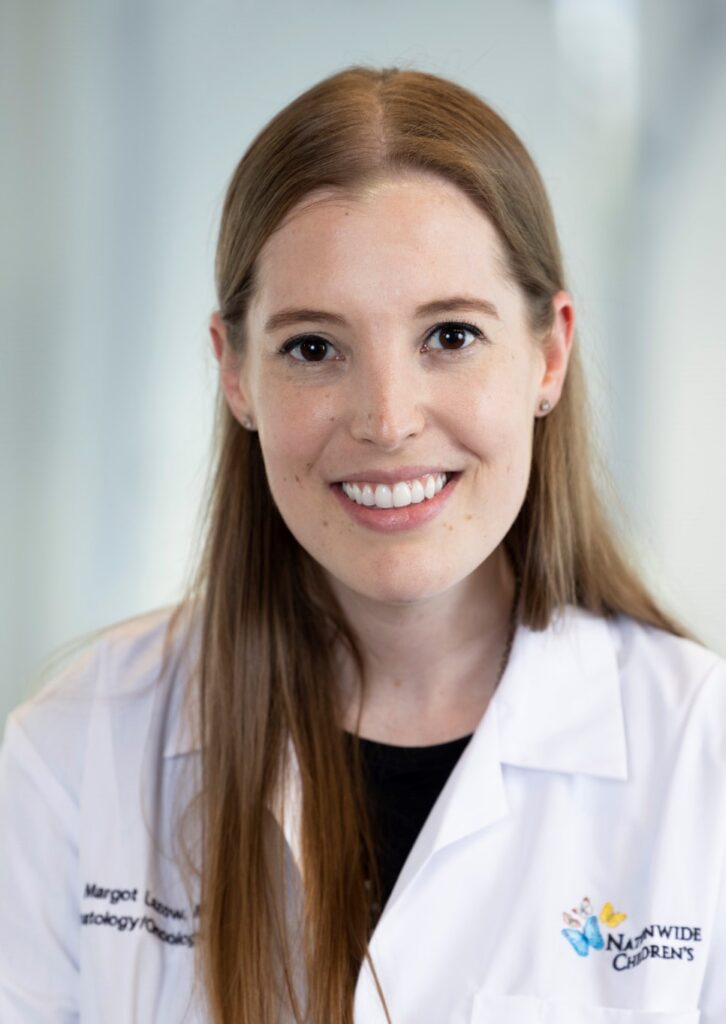
Margot Lazow, MD, MS
“For some pediatric brain tumors like medulloblastoma, the molecular subgroup that we get from methylation really informs our understanding of the disease, prognosis, and often how we treat it,” said Margot Lazow, MD, MS, a pediatric neuro-oncologist at Nationwide Children’s Hospital. “So now it’s considered standard of care that we would obtain methylation testing.”
Medulloblastoma tumors can only be accurately identified by knowing their molecular makeup. Testing the tumor not only informs the diagnosis but also provides prognosis and guides treatment decisions.
Doctors use a process called risk stratification to determine the tumor’s risk of recurrence and how aggressive treatment needs to be. Medulloblastoma tumors can be considered low, average (also called standard), high, or very high risk. Doctors decide a tumor’s recurrence risk by reviewing the following information:
Molecular features of the tumor
How the tumor looks under a microscope (histology)
Patient’s age
How much tumor was left after surgery
Whether the cancer has spread or not
“It’s critical today to have the molecular subgrouping known,” Dr. MacDonald said. “We also want to know if you have biomarkers that put you at high risk or not. If the tumor doesn’t have any of those high-risk biomarkers, it allows us to give less radiation to the brain and spine, which reduces long-term late effects.”
Examples of high-risk biomarkers include:
A mutation in the TP53 gene in SHH-activated medulloblastoma
MYC amplification (increased amounts of the gene called MYC) in non-WNT/SHH medulloblastoma
MYCN amplification (increased amounts of the gene called MYCN) in SHH-activated tumors
By integrating molecular subgrouping with specific biomarkers, medical teams can avoid a one-size-fits-all approach. Instead, they can escalate therapy when necessary to overcome aggressive disease while de-escalating treatment whenever possible to protect a child’s long-term brain development.
One Family’s Biomarker Testing Experience
For Jillian F., biomarker testing completely changed the team’s approach in treating her daughter Emmie’s medulloblastoma. After Emmie’s first chemo treatment, her liver levels weren’t coming down like the team wanted, and her kidney levels were spiking. While they were trying to regulate her levels, the pathology report came back with the biomarker testing results.
Emmie
They learned that Emmie’s tumor had a double BRCA2 mutation, and further testing confirmed a diagnosis of Fanconi anemia (FA)— a rare genetic disorder.
Because both Jillian and her husband were carriers, it was an even rarer FA subgroup called complementation group D1 (FA-D1). An article in Best Practice & Research Clinical Haematology gives a 97% probability that children with FA-D1 will be diagnosed with cancer by age 7. The Genetic and Rare Diseases Information Center reports that the “spectrum of childhood cancers [includes] Wilms tumor, brain tumor (often medulloblastoma), and ALL/AML.” This additional FA-D1 diagnosis came as a complete surprise to the family because they had no idea they were carriers until after Emmie’s brain tumor surgery.
Because Fanconi anemia severely impairs the body’s ability to repair damaged DNA, standard high-dose medulloblastoma chemotherapy would have caused widespread, life-threatening toxicity to her healthy tissue. This discovery forced the medical team to halt traditional chemotherapy immediately.
“They couldn’t treat with traditional chemo because we would have destroyed everything in her DNA makeup,” Jillian said. “The goal was to get her stable, get this treated, and then we’ll do a bone marrow transplant.”
Non-WNT/non-SHH medulloblastoma (this includes group 3 and group 4 medulloblastoma)
Within these four subgroups, there are additional molecular subtypes.
WNT-Activated Medulloblastoma
The least common subgroup is WNT-activated (pronounced “wint”), which accounts for about 10% of all medulloblastomas.
“It usually occurs in older kids, closer to the teenage years, and survival is quite good with the current treatment that we have,” Dr. MacDonald said. “About 90-100% of children with WNT medulloblastomas will survive.”
These tumors are driven by a mutation in the WNT signaling pathway, which plays an important part during embryonic development, sending chemical commands that tell young cells when to multiply, where to travel, what specialized job to take, and how to stay alive while a body builds itself. When functioning normally, this messaging system ensures organs like the brain form with the right shape, size, and cell types. However, if a mutation locks these commands on permanently, the cells won’t get the signal to stop dividing and become mature brain cells. Over time, these immature cells accumulate and form a medulloblastoma tumor.
Most of these mutations occur in the CTNNB1 gene, which can allow these immature cells to keep dividing. While this mutation fuels tumor formation, researchers hypothesize that it also prevents the tumor’s blood vessels from developing a normal blood-brain barrier, so chemotherapy can more effectively penetrate the tumor than other brain cancers.
A small percentage of these tumors result from an inherited (germline) mutation in the APC gene. That’s why people with a rare genetic disorder called Turcot syndrome have a higher risk of developing WNT-activated medulloblastoma.
Current clinical trials for WNT-activated medulloblastoma are evaluating whether doctors can reduce radiation and/or chemotherapy doses to spare young patients from long-term side effects.
Sonic Hedgehog (SHH)-Activated Medulloblastoma
About 30% of medulloblastomas fall into the Sonic Hedgehog (SHH)-activated subgroup. In adults, this type makes up 60% of all cases, according to Acta Neuropathologica.
During embryonic and early childhood development, the Sonic Hedgehog signaling pathway — a sequence of chemical interactions between specific proteins — tells cerebellar precursor cells to divide and multiply. Once the cerebellum fully forms, this chemical signaling sequence stops completely. Genetic mutations can alter the proteins that turn this pathway off, so the precursor cells continue to divide indefinitely and form a tumor mass.
The specific SHH medulloblastoma genetic mutation(s) can differ by tumor, with the 2021 WHO Classification of Tumors of the CNS identifying these alterations: TP53, PTCH1, SUFU, SMO, MYCN, and GLI2.
Given these many differences, scientists have further divided these tumors into two groups based on TP53 status (SHH-activated and TP53-wildtype or SHH-activated and TP53-mutant) and four molecular subgroups (SHH-1, SHH-2, SHH-3, and SHH-4) to help categorize cases.
TP53 is a gene that tells the body how to make a protein called p53, often nicknamed the “guardian of the genome.” Its job is to monitor cells for DNA damage; it either repairs the damage or tells the cell to self-destruct if it cannot be fixed, preventing tumors from forming. When a TP53 mutation occurs, this protective protein stops working, allowing damaged cells to grow and divide uncontrollably. As a result, SHH-activated and TP53-mutant medulloblastoma is considered more aggressive.
While most SHH-activated medulloblastomas are caused by spontaneous DNA mutations (called somatic mutations), an estimated 20-25% of cases result from inherited genetic mutations present in all cells from birth. For example, inherited PTCH1 or SUFU mutations cause Gorlin syndrome, and inherited TP53 mutations cause Li-Fraumeni syndrome.
Non-WNT/SHH Medulloblastoma
Non-WNT/SHH medulloblastomas (comprising group 3 and group 4) originate from distinct developmental structures and cell types in the central midline of the cerebellum. Unlike WNT-activated or SHH-activated medulloblastoma, there is no identified pathway in which mutations are responsible for non-WNT/SHH medulloblastoma.
“Something goes awry very early on in the cells that form a specific part of the cerebellum,” Dr. MacDonald said. “Group 3 and group 4 are along the same continuum. Group 3 and group 4 are probably from the same cells but at a different maturation point of the developing cerebellum, with the later point being group 4, the earlier being group 3.”
Group 3 Medulloblastoma
Group 3 medulloblastoma represents about 25% of all medulloblastoma cases and occurs primarily in infants and young children.
“Group 3 medulloblastoma is the most aggressive one with a high percentage of metastatic disease in up to 50% of kids,” Dr. MacDonald said.
About 20% of these tumors have a specific genetic error in which a cell contains extra copies of the MYC gene, called MYC amplification. This extra genetic material leads to overproduction of the MYC protein, which directly accelerates cellular division and protects tumor cells from natural cell death.
Group 4 Medulloblastoma
Group 4 medulloblastoma is the most common subgroup, accounting for 35% of all medulloblastoma cases. According to an article in Anticancer Research, an estimated one-third of group 4 medulloblastoma patients have metastasis at diagnosis.
About 80% of these tumors have the isochromosome 17q (i17q) genetic alteration, which involves the loss of the short arm and duplication of the long arm of chromosome 17.
Can medulloblastoma metastasize?
Medulloblastoma frequently expands into or near the fourth ventricle, a tent-shaped cavity in the brainstem through which cerebrospinal fluid (CSF) flows before traveling around the spinal cord and the rest of the brain. Because of this location, medulloblastoma can spread to other parts of the brain and spinal cord more readily than other primary brain tumors, as its embryonic cells can shed into circulating CSF that then carries them elsewhere.
“When these cells metastasize, they are pretty much restricted to the brain and spine,” Dr. MacDonald said. “We used to look at the lung, liver, and bones when I first started 30 years ago, but we don’t anymore because it’s so rare for the tumors to go out of the central nervous system into other organs or parts of the body. Metastasis beyond the CNS can occur at the very terminal phase of the disease, and it can be a rare complication after a shunt is placed that drains the built-up CSF into the abdominal cavity.”
Dr. MacDonald estimates that about 30% of all medulloblastoma patients will present with metastatic disease at the time of diagnosis. Each molecular subgroup differs in the percentage of patients who will present with metastatic medulloblastoma.
WNT-activated medulloblastoma: Less than 10% of patients at diagnosis
SHH-activated medulloblastoma: Between 15-20% of patients at diagnosis
Non-WNT/SHH medulloblastoma: Between 40-50% of patients at diagnosis
“Metastatic disease puts you in the high-risk group and makes us go to more aggressive treatment,” Dr. MacDonald said. “But it doesn’t necessarily mean that you will do less well.”
Did You Know? Leptomeningeal spread (LMS) is when cancer has spread to the CSF or the thin layers around the brain and spinal cord called leptomeninges. LMS “remains the major cause of mortality in children with medulloblastoma,” according to an article in Science Translational Medicine.
Research supported by the National Brain Tumor Society, through its DNA Damage Response Consortium, at Yale Cancer Center is pioneering a novel nanoparticle therapy to target medulloblastoma that spreads into the CSF. Scientists engineered bioadhesive nanoparticles carrying targeted drugs (PARP inhibitors) to deliver them directly into the CSF, where they stick to tumor surfaces and slowly release treatment over three weeks. This approach bypasses the blood-brain barrier, targeting metastatic cells without the severe toxicity of traditional therapies. In the study, mouse models of medulloblastoma saw significant improvements in survival and the prevention of LMS, making this approach a potential promising new treatment strategy.
How common is relapsed or recurrent medulloblastoma?
An article in The Lancet reports that “relapse occurs in around 30% of children with medulloblastoma.”
There is no standard of care for recurrent medulloblastoma, so care teams will consider life-prolonging treatment options like surgery, re-irradiation, clinical trials, and chemotherapy.
Prognosis remains poor for relapsed/recurrent medulloblastoma “with a median survival of less than six months.” Sadly, 10% of all childhood cancer deaths are due to relapsed medulloblastoma.
How is medulloblastoma treated?
Standard treatment for medulloblastoma involves a combination of surgery, radiation therapy, and chemotherapy, with specific protocols tailored to the patient’s age and level of risk.
Surgery
Regardless of subgroup, brain surgery (craniotomy) is the first step to remove as much of the tumor as possible.
“We know that maximal safe surgical resection of the tumor has the best outcome,” Dr. MacDonald said. “We just need the tumor to be almost gone through surgery, but it doesn’t have to be all gone.”
Unfortunately, surgery comes with a risk of complications, including posterior fossa syndrome.
What is posterior fossa syndrome?
Posterior fossa syndrome (PFS), also called cerebellar mutism syndrome, is a set of neurological, motor, and emotional deficits that can occur following surgical resection of a tumor from the posterior fossa region of the brain, most commonly medulloblastoma. According to St. Jude Children’s Research Hospital, “about 25% of children who have surgery to remove medulloblastoma will develop posterior fossa syndrome.”
“We don’t know the exact cause — only that any surgery to that area, whether it’s a tumor or not, can cause this problem,” Dr. MacDonald said. “Obviously, there is a communication loop within the cerebellum that we don’t fully understand, but when it’s disturbed by surgery or the tumor removal, it can cause a very gross exaggeration of problems with coordination and speech.”
Typically, posterior fossa syndrome symptoms begin within one to three days after surgery. Posterior fossa syndrome symptoms include:
Severe reduction or complete loss of speech
Motor skill challenges, such as the inability to walk
Mood changes
Difficulty swallowing
In the long term, if symptoms haven’t resolved within a few weeks, patients may experience persistent cognitive difficulties with attention, executive function, and processing speed.
A study published in Neuro-Oncology found that posterior fossa syndrome was more common in patients with group 3 and group 4 medulloblastomas (30-35%) and less common in patients with SHH-activated medulloblastoma (7%).
Lived Experiences with Posterior Fossa Syndrome
“When I woke up from surgery, I couldn’t breathe on my own. I couldn’t speak. I spent 72 nights in the hospital. During that time, I developed a deep vein thrombosis, a pulmonary embolism, and pneumonia. I was nonverbal for six weeks.
During that time, I understood everything going on around me, but I couldn’t express myself. I didn’t want my family and friends to leave the hospital room because I couldn’t advocate for myself, but I had no way to say it. I remember desperately trying to put the Blink-182 song ‘Don’t Leave Me’ on my phone as a way to communicate what I couldn’t say out loud. It was one of the only tools I had.
My sister made emoji-style cards to help me communicate. I was too weak to hold them up, so I’d squeeze her hand for “yes” and blink tightly for “no.” That was our system.
I’m lucky my tumor was operable, but the cost of successfully treating the tumor was severe physical disability.
I was eventually diagnosed with posterior fossa syndrome, which is a rare complication that affected my speech and movement. I have small cognitive challenges, like occasionally struggling to find the right word.
I understand everything people say to me, but I know they sometimes assume otherwise based on how I speak. It’s one of the most frustrating parts of recovery. I’ve had to develop strategies to help people understand me. I speak more slowly, repeat myself if needed, and try to lead with confidence because I know what I have to say matters.
Recovering my voice has taken years, but I’ve come a long way, and I’m proud of that.
The effects of PFS have been lasting and life-altering. I use a wheelchair. I have dysarthric speech and double vision. I’ve lost a great deal of independence — driving, managing personal hygiene with ease, and other everyday things I used to take for granted.
I’ve always been involved in some kind of rehabilitative therapy, and I’ve made significant progress. Coming from a place where nearly anything physical was a challenge, it’s amazing to think about where I am today.” — Gavin P.
“After the surgery, she was fine and talking, and then there was a slow progression where she could not talk, walk, or raise her hand. She had trouble swallowing, and that poor girl couldn’t communicate.
In the early days after surgery, we had to pivot to find ways to communicate. At first, she couldn’t write on an iPad. Thanks to a family acquaintance who was a speech therapist, we used a book with tabs so Libby could turn to a page and point to the food or object she wanted. We also relied on thumbs-up or thumbs-down hand motions.
She could not tell us how she was feeling. She couldn’t explain to us what was going through her head, and that was just so heartbreaking to us.
The posterior fossa syndrome symptoms did not go away 100%. She has double vision, so she has to wear a frosted patch on her glasses to help her see. Her speech is still a bit slurred, so she has to really enunciate and take care when she’s speaking.” — Paul R.
Radiation Therapy
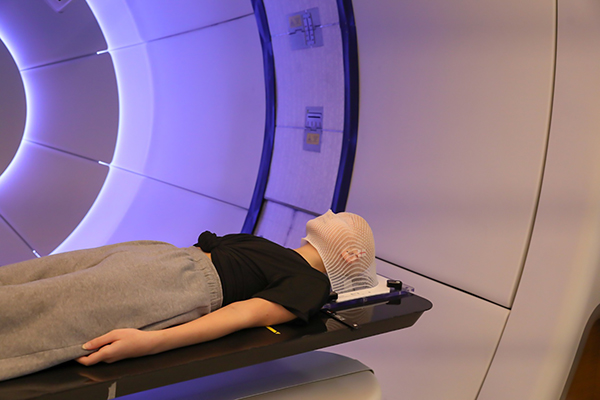
Radiation therapy is an essential component of medulloblastoma treatment for patients older than three years of age. Because medulloblastoma cells frequently spread through cerebrospinal fluid, treatment typically involves craniospinal irradiation (CSI), which delivers radiation to the entire brain and spinal cord. The tumor’s risk level determines how much CSI the patient receives.
“Radiation for those outside the infant range has caused the greatest improvement in survival,” Dr. MacDonald said.
The younger the patient is when getting radiation therapy, the greater the risk of having lasting side effects. As a result, doctors try to avoid radiation in children three years of age or younger, which is classified as the infant group.
“Radiation is never good for anyone’s brain,” Dr. MacDonald said. “Even now, if you’re four or five years of age, we might look to these radiation-sparing treatments that we now have. The hardest part is for parents to make an informed decision with all the information I give them about whether to do a full-dose radiation or a lower-dose radiation, with the parents trying to balance survival with disability and learning.”
Chemotherapy
NCCN guidelines state that medulloblastoma patients over the age of three, regardless of risk level, should have chemoradiation followed by maintenance chemotherapy. Chemoradiation is when someone receives radiation therapy and chemotherapy at the same time. The chemoradiation regimens used will slightly vary based on the tumor’s risk level.
For infants and young children, high-dose chemotherapy protocols (often combined with autologous stem cell rescue) serve as a way to treat the disease while delaying or entirely avoiding the severe neurocognitive risks associated with craniospinal radiation.
To reach cancer cells deep within the brain, infants require significantly higher chemotherapy doses than standard protocols allow. However, these elevated doses severely damage the bone marrow, stopping the production of normal blood and immune cells. Care teams overcome this with a multi-step rescue process:
Harvesting: Blood stem cells are collected from the infant early in treatment.
Freezing: These stem cells are frozen and stored safely, protecting them from exposure to the high-dose chemotherapy.
High-Dose Treatment: The patient receives intense chemotherapy on a specialized transplant floor to eliminate remaining brain tumor cells.
Reinfusion: The patient’s own stem cells are thawed and returned to their bloodstream, allowing their bone marrow to rebuild healthy blood cells rapidly and preventing life-threatening infections.
“We’ve been actually really successful with this regimen in some groups,” Dr. MacDonald said. “The Sonic Hedgehog group in infants has a nearly 80% survival without any radiation, so that’s been a very beneficial outcome of the high-dose chemotherapy. For infants with group 3 medulloblastoma, we added a chemotherapy called high-dose methotrexate at the beginning of the treatment. Survival improved significantly, from about 30% to almost 70%. That was a big step, especially when avoiding radiation, which can have devastating effects at that age.”
When should a patient consider a clinical trial for medulloblastoma?
NCCN, which sets the medulloblastoma standard of care guidelines for physicians to follow, “encourages enrollment in molecular classification-based clinical trials, if available.”
The two most important windows of opportunity for considering a medulloblastoma clinical trial are at initial diagnosis to access optimized therapies that minimize side effects, and if the disease recurs after standard treatment.
“Every time we seek to improve our current treatments, we usually take what we know works the best to date, and then add a new treatment or strategy to it to either make the standard treatment work better, or in the case of the good-risk disease, we’ve added something (or reduced the intensity of the treatment) where we try to protect against the damaging late effects of treatment and preserve function, such as your hearing or your learning,” Dr. MacDonald shared. “We’re trying to use standard therapy, but then make it better. So, if a national clinical trial is available when you’re first diagnosed, you should look at it and discuss with your oncologist to see if it is the right fit for you. Patients who relapse and have received radiation as part of their standard therapy should also look to see if a clinical trial is available to them.”
NBTS’s Clinical Trial Finder helps people search for clinical trials and receive tailored results based on their or their loved one’s location, diagnosis, tumor grade, biomarkers, and treatment history.
How do medulloblastoma treatment and side effects impact quality of life?
Survivors can navigate late effects of medulloblastoma and its treatment for the rest of their lives.
“I wish the general public understood that once treatment is finished, it doesn’t mean the child is fine,” Susie said.
Common quality of life challenges include:
Hearing loss
Neurocognitive difficulties
Hormonal complications
Risk of stroke and secondary malignancies
School and relationship challenges
“Theo has overcome more challenges than most people are faced with in a lifetime,” Theo’s mom Lori said. “Some of the effects of his tumor and treatment are hearing loss, vision issues, speech delay, extensive dental issues, fine and gross motor deficits, and growth hormone imbalance. As his parents, we sometimes worry that Theo will view these challenges as barriers. But, more often than not, Theo proves to us and everyone else that nothing can stop him.”
Hearing Loss
An estimated 75% of children who receive medulloblastoma treatment will experience some hearing loss (also called ototoxicity), according to St. Jude Children’s Research Hospital. A common chemotherapy drug called cisplatin can damage cochlear hair cells, impacting one’s hearing. In 2022, the FDA approved sodium thiosulfate to reduce the risk of hearing loss associated with cisplatin in patients one month and older with solid tumors, like medulloblastoma, that have not metastasized.
Neurocognitive Difficulties
Long-term neurocognitive late effects caused by medulloblastoma treatment can include:
Slower processing speed
Executive dysfunction
Increased distractibility
Academic struggles with math, reading, spelling, and problem-solving
Working memory deficits
As shared in a Neuro-Oncology editorial, “adult survivors of medulloblastoma who were diagnosed during childhood have up to a fivefold increased prevalence of neurocognitive deficits when compared with siblings in terms of memory, attention, and processing speed.”
A Neuro-Oncology article found that there are a few risk factors for intellectual and academic decline after treatment in medulloblastoma survivors: hearing loss, posterior fossa syndrome, younger age at diagnosis, and high-risk disease requiring higher doses of radiation.
“Eve is going to be 18 next month, and she just graduated high school, which is surreal,” her mother Susie said. “After years of neurocognitive testing, I think her biggest challenge is a slowed processing speed, and that just affects everything in the classroom. She’s capable of understanding material — just needs it way slower and with repetition.”
Life-long Hormonal Challenges
Survivors must often navigate endocrine abnormalities, most commonly experiencing growth hormone deficiency (94% of survivors). Other hormonal complications may include thyroid problems or early or delayed puberty. Many significant endocrine abnormalities require lifelong management, doctor appointments, and medication.
NCCN guidelines recommend follow-up endocrine tests at least annually for five years after treatment. More frequent testing can be done “if thyroid-stimulating hormone or growth failure is suspected.”
Stroke & Secondary Malignancy
Medulloblastoma survivors face an increased risk for stroke (5-10%) as well as an elevated risk of developing new tumors later in life. A long-term study of nearly 1,000 survivors found meningiomas accounted for one-quarter of secondary tumors in medulloblastoma survivors.
“Cancer survivorship is a journey that never ends, whether you are an adult, adolescent, or child,” childhood medulloblastoma survivor Elizabeth A. said. “Even though I may want to put my experience behind me and move on, I can’t. Along with other late effects from my treatment, I was diagnosed last year with three benign meningiomas, which my doctors say are from the radiation therapy I received 20 years ago. Now, a whole new journey of uncertainty has begun as my care team focuses on treating and managing these new tumors and their side effects.”
Fertility Concerns
Medulloblastoma treatment may impact the patient’s fertility. For example, patients receiving a chemotherapy regimen for high-risk disease have a 70% chance of reproductive side effects.
Pre-pubertal patients may not have developed mature eggs or sperm, but their gonads (ovaries or testes) are still susceptible to damage from cancer treatment. That’s why the NCCN panel recommends “referring patients to infertility risk/fertility preservation counseling, especially for those who are or will be treated with chemotherapy.”
There are fertility preservation options for pre-pubertal and post-pubertal patients that can be discussed with a reproductive specialist.
Difficulties Navigating School and Relationships
Medulloblastoma survivors may experience challenges far beyond medical side effects. Returning to school, securing necessary accommodations, and maintaining friendships after a life-changing diagnosis can be an uphill battle for both children and parents.
The Social Cost of Missing School
Extended treatment means missing shared childhood milestones, which can make social re-entry difficult and isolating.
“A few skills you learn in third grade, I sometimes still struggle with because I never really got to go to third grade,” Aleyna R. said. “Having cancer as a kid can affect your relationships. You don’t get to really be with people as much during treatment, so your relationships get affected. I know to this day, a lot of people I went to school with in elementary school, they had these groups that were formed that year while I was gone, and I never got to be in a group, so really up until high school, I was an outsider.”
Physical side effects can compound that social disconnect. After receiving a shunt to drain built-up cerebrospinal fluid, Aleyna experienced severe dizziness on roller coasters, preventing her from joining friends on outing activities to carnivals and theme parks.
For many young patients, staying on pace with peers becomes their primary anchor to normal life.
“It was a struggle to know that everyone is progressing and going through life around me,” Nitin said. “Normalcy was the biggest thing on my mind throughout the entire journey. That’s why I was so determined to finish seventh grade, which is when I was diagnosed, so I could still be in the same grade as my friends and eventually graduate with my friends.”
To maintain a physical presence in the classroom during extended hospitalizations, some families rely on creative tools. When Kasey Z. missed class, her family used Monkey in My Chair, a program that places a large stuffed monkey in an absent child’s desk to keep classmates connected to them throughout treatment.
Fighting for Educational Support
Beyond the social hurdles, parents face the exhausting administrative burden of advocating for formal learning accommodations while simultaneously managing critical medical care.
“She was a functioning kid as a kindergartner and then first grader,” Joe said. “The impacts of radiation and chemo hadn’t been seen yet, but she was missing a ton of school, and the last thing we had the energy or patience for was catching up on schoolwork at home. It was really frustrating. You’re focused on treatment, you’re focused on surgery, you’re focused on all the medical things, but you shouldn’t have to go toe to toe with the school system to get your kid support.”
Filling the Home With Love
Navigating medical systems, social isolation, and academic disruption can feel overwhelming. Families can find strength by focusing on the environment they create at home and in the hospital.
For Susie, a key piece of advice from her daughter’s care team shifted her entire mindset through the hardest moments: “I remember a neurologist saying to me, ‘You’re going to be seeing all of these doctors and specialists for a long time, but what I would recommend — and studies have shown — is to fill the room with love every time you’re around her. The body and the system really pick up on that.’ I always kept that in perspective because you can’t necessarily control what happens, but you can control what you do with it. Filling the room with love looks like not taking anything for granted. We find every opportunity for laughter, happiness, and adventure.”
September is Childhood Cancer Awareness Month
Childhood Cancer Awareness Month (CCAM) is a time to recognize, advocate for, and honor children who have been affected by cancer and the families that care for them.
Together, we can support and advocate for pediatric patients and their families today while fueling research that could become the treatments and cures of tomorrow. When you make a gift, you propel research and treatments forward for the more than 18,000 children living in the U.S. with a primary brain tumor today.
When Theo was just one year old, he was diagnosed with medulloblastoma. His treatment included surgery, chemotherapy, and stem cell transplant. Now 15, Theo is thriving in spite of his significant hearing loss, which was a side effect of the chemotherapy. And that’s why Theo and his mom Lori travel to Washington, D.C., each year to fundraise for the National Brain Tumor Society and advocate for research funding to find better treatment options with less impact on one’s quality of life.